Phillip Tolliday – författare
Visar alla böcker från författaren Phillip Tolliday. Handla med fri frakt och snabb leverans.
7 produkter
7 produkter
Inbunden, Engelska, 2011
711 kr
Skickas inom 5-8 vardagar
E-bok
Engelska, 2011779 kr
Läs direkt efter köp
The most outstanding theological thinker of the twentieth century is proving to be the most pivotal theological figure of the twenty-first century as well. It is no wonder some have referred to Karl Barth as a "Father" of the Church. Karl Barth, widely acknowledged as the most influential theologian of the modern era, continues to provoke and inspire Christian theological reflection in a distinct and enduring way. His work has occasioned appreciation, critique, and rejection, but however one responds to Barth, one must reckon with him in pursuing the theological task.This volume draws together scholars whose essays exhibit work "after Barth" in engaging the doctrine of the Trinity and its related themes. Barth''s thought, as evidenced amongst his most expert commentators, allows for a variety of interpretations, the details of which are being hammered out on the pages of academic journals and volumes such as this one. It is this variety of responses to and interpretations of Barth''s theology that gives such vibrancy to the essays in this volume by seasoned Barth scholars and voices new to the conversation. Contributors include: Ivor J. Davidson, Bruce L. McCormack, John C. McDowell, Paul D. Molnar, Murray A. Rae, and a Foreword by John B. Webster.
Häftad, Engelska, 2011
472 kr
Skickas inom 5-8 vardagar
Inbunden, Engelska, 2020
1 925 kr
Skickas inom 11-20 vardagar
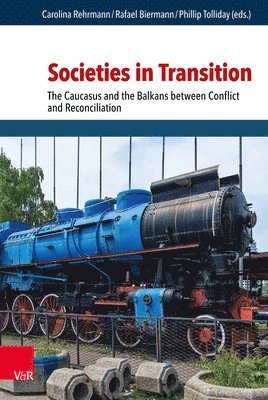
Since the end of the Cold War, the collapse of the Soviet Union and the dissolution of Yugoslavia, the Mediterranean and Black Sea regions have been faced with multiple upheavals of interethnic violence, bloody secessions and ethnic cleansing. Up to the present, both regions are confronted with unresolved border, minority and security issues, matters of recognition, protracted traumata and claims for justice. After the fall of the iron curtain, simmering ethnic tensions turned into hot wars that created new states, new power-political hierarchies and a heritage of violence. Reaching back to the early 1990s, several international and national transitional justice measures have been applied to face these heritages and lay the foundations for a common future. For the former Yugoslavia, they range from broad criminal trials to a series of restorative justice mechanisms
Inbunden, Engelska, 2016
1 702 kr
Skickas inom 11-20 vardagar
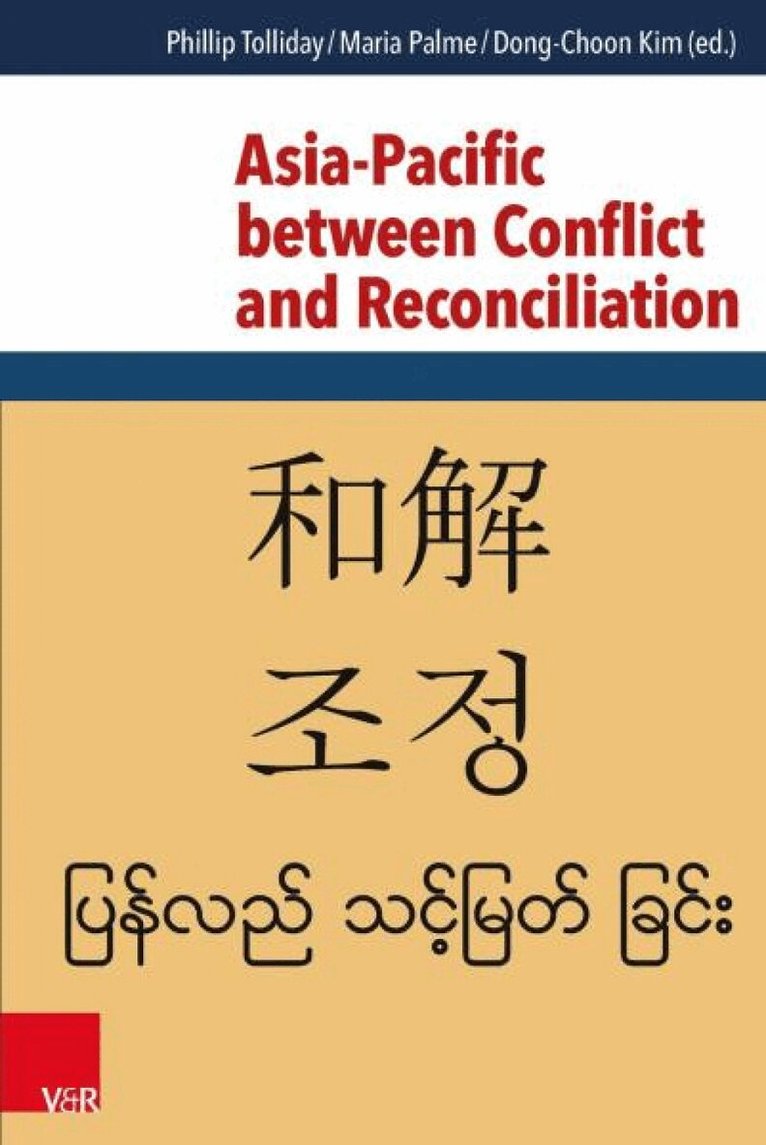
Asia, so often seen from a Eurocentric perspective as exotic, other and different, is now manifestly an economic and political powerhouse. Shaped by the West, it is now playing its part in shaping the West.The third volume in the RIPAR series on “Societies in Transition” turns its focus on reconciliation to Asia-Pacific. Case studies are drawn from New Zealand, Australia, Korea, Japan, Cambodia, Myanmar, Sri Lanka, and China, including comparative case studies from Central Asia, East Asia and Germany and the U.S.Contributions by Jude Lal Fernando, Leo D. Lefebure, Martin Leiner, Liu Liangjian, Seiko Mimaki. Ann-Sophie Schöpfel, Sentot Setyasiswanto, Christoph Sperfeldt, Deborah Stevens, Bo-Hyuk Suh, Priyambudi Sulistiyanto, Farrah Tek, Phillip Tolliday, Annette Weinke and Maung Maung Yin.
E-bok
PDF, Engelska, 20201 470 kr
Läs direkt efter köp
Since the end of the Cold War, the collapse of the Soviet Union and the dissolution of Yugoslavia, the Mediterranean and Black Sea regions have been faced with multiple upheavals of interethnic violence, bloody secessions and ethnic cleansing. Up to the present, both regions are confronted with unresolved border, minority and security issues, matters of recognition, protracted traumata and claims for justice. After the fall of the iron curtain, simmering ethnic tensions turned into hot wars that created new states, new power-political hierarchies and a heritage of violence. Reaching back to the early 1990s, several international and national transitional justice measures have been applied to face these heritages and lay the foundations for a common future. For the former Yugoslavia, they range from broad criminal trials to a series of restorative justice mechanisms; in the North and South Caucasus they encompass numerous mediation measures and primarily restorative justice efforts.The present volume is concerned with strategies of conflict resolution and prevention subsumed under the concept of reconciliation. It aims at understanding the socio-emotional root causes of political cleavages and daily realities of (post-) conflict societies, especially regarding the impact of competing narratives and unprocessed pasts on exclusive identities and strategic political choices. Applying reconciliation theory, insights from collective memory and transitional justice to a series of selected field studies, it sheds light on the origins of interethnic violence, aims at finding explanations for the fact that many of the above-mentioned conflicts have become intractable and discusses the chances and challenges for transforming interests, emotions, perspectives, roles and identities between and within the respective societies.
E-bok
PDF, Engelska, 20161 246 kr
Läs direkt efter köp
Asia, so often seen from a Eurocentric perspective as exotic, other and different, is now manifestly an economic and political powerhouse. Shaped by the West, it is now playing its part in shaping the West.The third volume in the RIPAR series on "Societies in Transition" turns its focus on reconciliation to Asia-Pacific. Case studies are drawn from New Zealand, Australia, Korea, Japan, Cambodia, Myanmar, Sri Lanka, and China, including comparative case studies from Central Asia, East Asia and Germany and the U.S.Contributions by Jude Lal Fernando, Leo D. Lefebure, Martin Leiner, Liu Liangjian, Seiko Mimaki. Ann-Sophie Schöpfel, Sentot Setyasiswanto, Christoph Sperfeldt, Deborah Stevens, Bo-Hyuk Suh, Priyambudi Sulistiyanto, Farrah Tek, Phillip Tolliday, Annette Weinke and Maung Maung Yin.