Phillip Vannini – författare
410 kr
Skickas inom 10-15 vardagar
374 kr
Läs direkt efter köp
People are key elements of wild places. At the same time, human entanglements with wild ecologies involve extractivism, the growth of resource-based economies, and imperial-colonial expansion, activities that are wreaking havoc on our planet.Through an ethnographic exploration of Canada’s ten UNESCO Natural World Heritage sites, Inhabited reflects on the meanings of wildness, wilderness, and natural heritage. As we are introduced to local inhabitants and their perspectives, Phillip Vannini and April Vannini ask us to reflect on the colonial and dualist assumptions behind the received meaning of wild, challenging us to reimagine wildness as relational and rooted in vitality. Over the three years they spent in and around these sites, they learned from Indigenous and non-Indigenous peoples about their entanglements with each other and with non-human animals, rocks, plants, trees, sky, water, and spirits. The stories, actions, and experiences they encountered challenge conventional narratives of wild places as uninhabited by people and disconnected from culture and society. While it might be tempting to dismiss the idea of wildness as outdated in the Anthropocene era, Inhabited suggests that rethinking wildness offers a better – if messier – way forward.Part geography and anthropology, part environmental and cultural studies, and part politics and ecology, Inhabited balances a genuine love of nature’s vitality with a culturally responsible understanding of its interconnectedness with more-than-human ways of life.
374 kr
Läs direkt efter köp
People are key elements of wild places. At the same time, human entanglements with wild ecologies involve extractivism, the growth of resource-based economies, and imperial-colonial expansion, activities that are wreaking havoc on our planet.Through an ethnographic exploration of Canada’s ten UNESCO Natural World Heritage sites, Inhabited reflects on the meanings of wildness, wilderness, and natural heritage. As we are introduced to local inhabitants and their perspectives, Phillip Vannini and April Vannini ask us to reflect on the colonial and dualist assumptions behind the received meaning of wild, challenging us to reimagine wildness as relational and rooted in vitality. Over the three years they spent in and around these sites, they learned from Indigenous and non-Indigenous peoples about their entanglements with each other and with non-human animals, rocks, plants, trees, sky, water, and spirits. The stories, actions, and experiences they encountered challenge conventional narratives of wild places as uninhabited by people and disconnected from culture and society. While it might be tempting to dismiss the idea of wildness as outdated in the Anthropocene era, Inhabited suggests that rethinking wildness offers a better – if messier – way forward.Part geography and anthropology, part environmental and cultural studies, and part politics and ecology, Inhabited balances a genuine love of nature’s vitality with a culturally responsible understanding of its interconnectedness with more-than-human ways of life.
699 kr
Skickas inom 10-15 vardagar
624 kr
Skickas inom 10-15 vardagar
642 kr
Skickas inom 10-15 vardagar
2 438 kr
Skickas inom 10-15 vardagar
895 kr
Skickas inom 10-15 vardagar
2 664 kr
Skickas inom 10-15 vardagar
601 kr
Skickas inom 10-15 vardagar
2 438 kr
Skickas inom 10-15 vardagar
2 664 kr
Skickas inom 10-15 vardagar
629 kr
Skickas inom 10-15 vardagar
2 438 kr
Skickas inom 10-15 vardagar
2 269 kr
Skickas inom 10-15 vardagar
2 198 kr
Skickas inom 10-15 vardagar
219 kr
Skickas
673 kr
Läs direkt efter köp
Mobilities in Remote Places explores the meanings, challenges, and opportunities of remoteness as practiced and experienced by those who live and work in some of the world’s most remote communities.
As mobilities around the world proliferate in countless forms, the meanings of remoteness undergo significant change. Places once considered impossibly distant have appeared to become closer, more accessible, and less distinct from global centers of geopolitical power. But instead of disappearing altogether, configurations of remoteness evolve, manifesting themselves through new possibilities, new challenges, and new insecurities. Drawing from a variety of case studies from around the globe, the contributors of the book examine remoteness as an outcome of evolving mobility constellations. Rather than defining remoteness as an absolute or objective time–distance condition, the book shows how remoteness is a practice, experience, and representation that is situated, relational, and emergent.
This collection of original and thought-provoking chapters will be of interest to students and researchers in the humanities and social sciences with an interest in mobilities, place, and human geography.
673 kr
Läs direkt efter köp
Mobilities in Remote Places explores the meanings, challenges, and opportunities of remoteness as practiced and experienced by those who live and work in some of the world’s most remote communities.
As mobilities around the world proliferate in countless forms, the meanings of remoteness undergo significant change. Places once considered impossibly distant have appeared to become closer, more accessible, and less distinct from global centers of geopolitical power. But instead of disappearing altogether, configurations of remoteness evolve, manifesting themselves through new possibilities, new challenges, and new insecurities. Drawing from a variety of case studies from around the globe, the contributors of the book examine remoteness as an outcome of evolving mobility constellations. Rather than defining remoteness as an absolute or objective time–distance condition, the book shows how remoteness is a practice, experience, and representation that is situated, relational, and emergent.
This collection of original and thought-provoking chapters will be of interest to students and researchers in the humanities and social sciences with an interest in mobilities, place, and human geography.
908 kr
Läs direkt efter köp
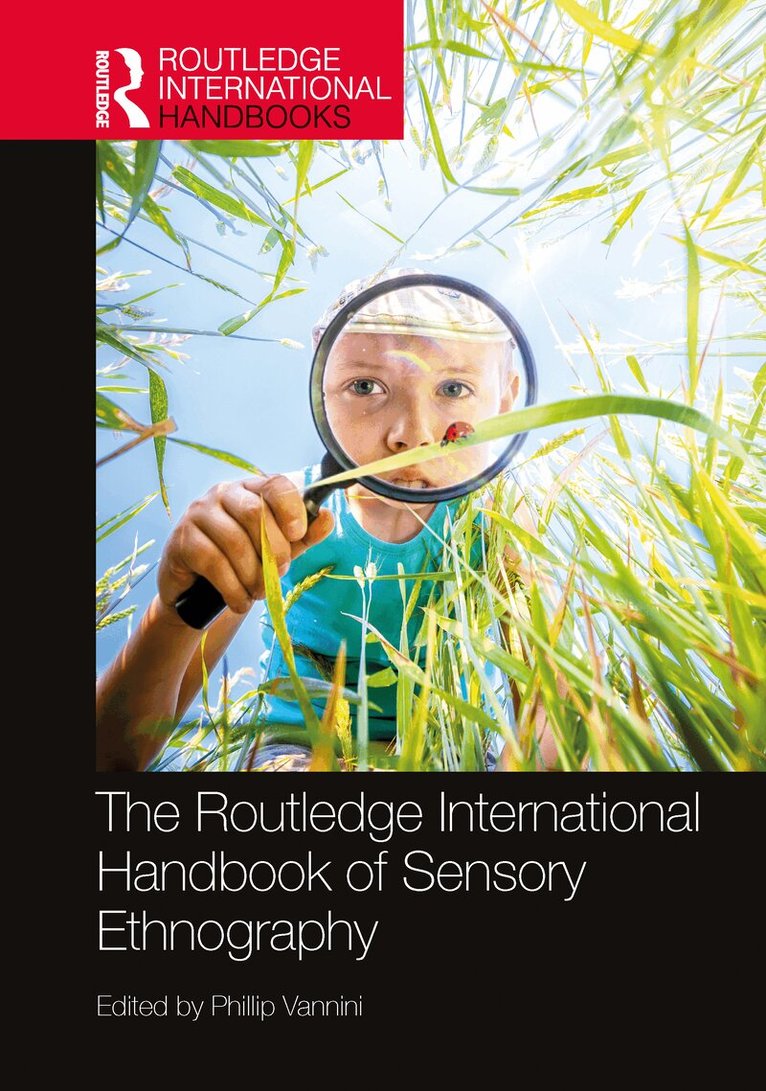
The Routledge International Handbook of Sensory Ethnography reviews and expands the field and scope of sensory ethnography by fostering new links among sensory, affective, more-than-human, non-representational, and multimodal sensory research traditions and composition styles. From writing and film to performance and sonic documentation, the handbook reimagines the boundaries of sensory ethnography and posits new possibilities for scholarship conducted through the senses and for the senses.
Sensory ethnography is a transdisciplinary research methodology focused on the significance of all the senses in perceiving, creating, and conveying meaning. Drawing from a wide variety of strategies that involve the senses as a means of inquiry, objects of study, and forms of expression, sensory ethnography has played a fundamental role in the contemporary evolution of ethnography writ large as a reflexive, embodied, situated, and multimodal form of scholarship. The handbook dwells on subjects like the genealogy of sensory ethnography, the implications of race in ethnographic inquiry, opening up ethnographic practice to simulate the future, using participatory sensory ethnography for disability studies, the untapped potential of digital touch, and much more.
This is the most definitive reference text available on the market and is intended for advanced undergraduates, graduate students, and researchers in anthropology, sociology, and the social sciences, and will serve as a state-of-the-art resource for sensory ethnographers worldwide.
908 kr
Läs direkt efter köp
The Routledge International Handbook of Sensory Ethnography reviews and expands the field and scope of sensory ethnography by fostering new links among sensory, affective, more-than-human, non-representational, and multimodal sensory research traditions and composition styles. From writing and film to performance and sonic documentation, the handbook reimagines the boundaries of sensory ethnography and posits new possibilities for scholarship conducted through the senses and for the senses.
Sensory ethnography is a transdisciplinary research methodology focused on the significance of all the senses in perceiving, creating, and conveying meaning. Drawing from a wide variety of strategies that involve the senses as a means of inquiry, objects of study, and forms of expression, sensory ethnography has played a fundamental role in the contemporary evolution of ethnography writ large as a reflexive, embodied, situated, and multimodal form of scholarship. The handbook dwells on subjects like the genealogy of sensory ethnography, the implications of race in ethnographic inquiry, opening up ethnographic practice to simulate the future, using participatory sensory ethnography for disability studies, the untapped potential of digital touch, and much more.
This is the most definitive reference text available on the market and is intended for advanced undergraduates, graduate students, and researchers in anthropology, sociology, and the social sciences, and will serve as a state-of-the-art resource for sensory ethnographers worldwide.
3 677 kr
Skickas inom 10-15 vardagar
769 kr
Skickas inom 10-15 vardagar
2 435 kr
Skickas inom 10-15 vardagar
628 kr
Skickas inom 10-15 vardagar
2 435 kr
Skickas inom 10-15 vardagar
628 kr
Skickas inom 10-15 vardagar
2 435 kr
Skickas inom 10-15 vardagar
628 kr
Skickas inom 10-15 vardagar
3 677 kr
Skickas inom 10-15 vardagar