Pier Franco Beatrice – författare
Visar alla böcker från författaren Pier Franco Beatrice. Handla med fri frakt och snabb leverans.
4 produkter
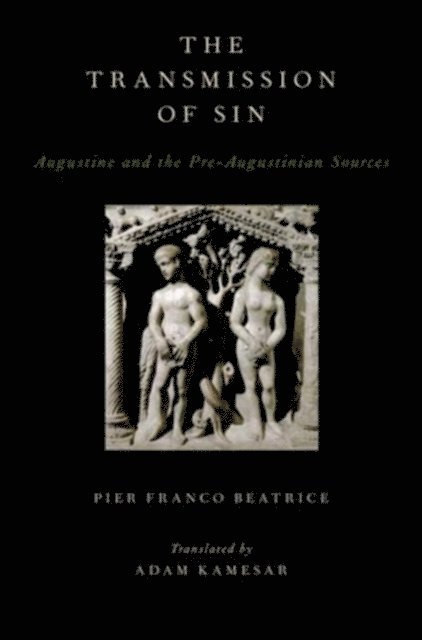
Transmission of Sin
Augustine and the Pre-Augustinian Sources
E-bok, 2013
1264 kr
Lägg i varukorg
Originally published in Italian in 1978, The Transmission of Sin is a study of the origins of the doctrine of original sin, one of the most important teachings of the Catholic Church. While the doctrine has a basis in biblical sources, it found its classic expression in the work of St. Augustine. …
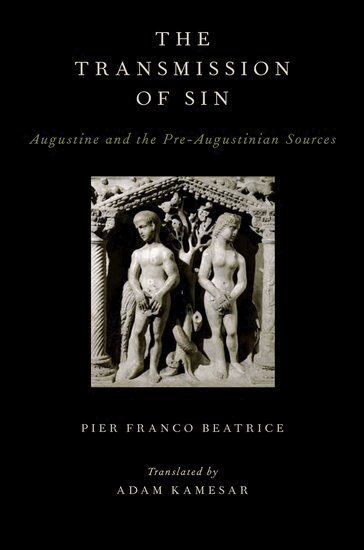
The Transmission of Sin
Augustine and the Pre-Augustinian Sources
Inbunden, 2013
2077 kr
Lägg i varukorg
Originally published in Italian in 1978, The Transmission of Sin is a study of the origins of the doctrine of original sin, one of the most important teachings of the Catholic Church. While the doctrine has a basis in biblical sources, it found its classic expression in the work of St. Augustine. …
Anonymi Monophysitae Theosophia
An Attempt at Reconstruction
Inbunden, 2001
3652 kr
Lägg i varukorg
The Theosophy, written by an anonymous Monophysite theologian in the early years of the sixth century CE, is a work in four books with a final world chronicle. Heir to a long apologetic tradition, it aims at demonstrating that there is a basic harmony between Christian faith and pagan theology. For …
Philosophy of the Few against the Christians
An Inquiry into the Textual Transmission of Porphyry’s Philosophy according to the Chaldean Oracles
Inbunden, 2023
3795 kr
Lägg i varukorg
This book gives us a new perspective on the Philosophy according to the Chaldean Oracles by Porphyry of Tyre (ca. 232/305 CE), demonstrating that much of what we thought we knew about this work and its fragments is mistaken. Here, for the first time, the attempt is made at reconstructing the …