Pier Paolo Viazzo – författare
Visar alla böcker från författaren Pier Paolo Viazzo. Handla med fri frakt och snabb leverans.
3 produkter
3 produkter
Del 8 - Cambridge Studies in Population, Economy and Society in Past Time
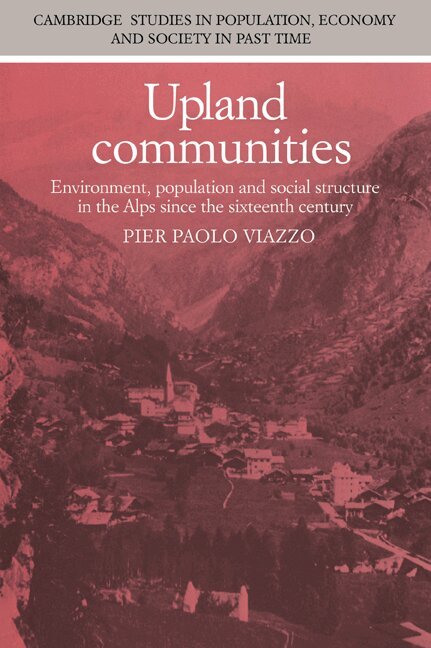
Upland Communities
Environment, Population and Social Structure in the Alps since the Sixteenth Century
Häftad, Engelska, 2006
649 kr
Skickas inom 7-10 vardagar
This book follows the social, economic and demographic transformations of the Alpine area from the late Middle Ages. Its aim is to reassess the image of the upland community which emerges from the work of historians, geographers and social anthropologists. The book therefore deals at length with such problems as the causes and consequences of emigration and patterns of marriage and inheritance in favouring or hampering the adjustments of local populations to changing economic or ecological circumstances, and tackles the vexed question of the relative importance of cultural and environmental factors in shaping family forms and community structures. Although its foundation lies in a long period of anthropological fieldwork conducted in an Alpine community, Upland Communities relies on the methods and conceptual tools of historical demography. Combined with a long-term historical perspective, its broad comparative approach unveils an unexpected diversity in regional and spatial demographic patterns and questions a number of deep-rooted but ultimately misleading notions concerning mountain society and its alleged backwardness in the past.
Del 8 - Cambridge Studies in Population, Economy and Society in Past Time
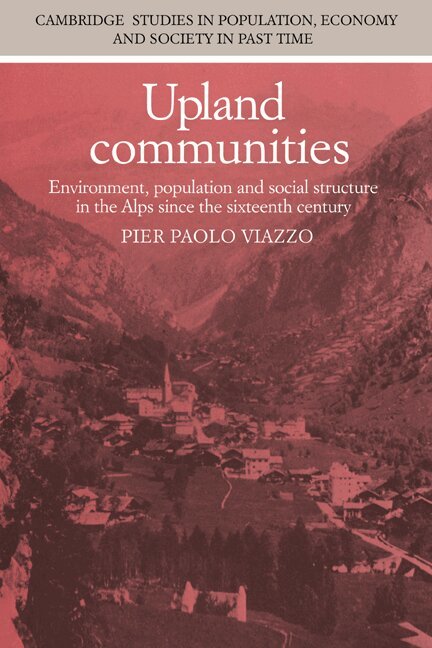
Upland Communities
Environment, Population and Social Structure in the Alps since the Sixteenth Century
Inbunden, Engelska, 1989
1 624 kr
Skickas inom 7-10 vardagar
This book follows the social, economic and demographic transformations of the Alpine area from the late Middle Ages. Its aim is to reassess the image of the upland community which emerges from the work of historians, geographers and social anthropologists. The book therefore deals at length with such problems as the causes and consequences of emigration and patterns of marriage and inheritance in favouring or hampering the adjustments of local populations to changing economic or ecological circumstances, and tackles the vexed question of the relative importance of cultural and environmental factors in shaping family forms and community structures. Although its foundation lies in a long period of anthropological fieldwork conducted in an Alpine community, Upland Communities relies on the methods and conceptual tools of historical demography. Combined with a long-term historical perspective, its broad comparative approach unveils an unexpected diversity in regional and spatial demographic patterns and questions a number of deep-rooted but ultimately misleading notions concerning mountain society and its alleged backwardness in the past.
E-bok
PDF, Engelska, 20233 367 kr
Läs direkt efter köp
Of the many changes that have taken place in Western society during the past two centuries, few have been more significant than the steep fall in infant and child mortality. However, the timing and causes of the decline are still poorly understood. While some scholars attribute it to general improvements in living standards, others emphasize the role of social intervention and public health reforms. Written by specialists from several disciplinary fields, the twelve essays in this book break entirely new ground by providing a long-term perspective that challenges some deep-rooted ideas about the European experience of mortality decline and may help explain the forces and causal relationships behind the still tragic incidence of preventable infant and child deaths in many parts of the world today. This book will become a standard work for students and researchers in demography, social and economic history, population geography, and the history of medicine, and it will be of interest to anyone concerned with current debates on the policies to be adopted to curb infant and child mortality in both developed and developing countries.