Piers Thompson - Böcker
Visar alla böcker från författaren Piers Thompson. Handla med fri frakt och snabb leverans.
6 produkter
6 produkter
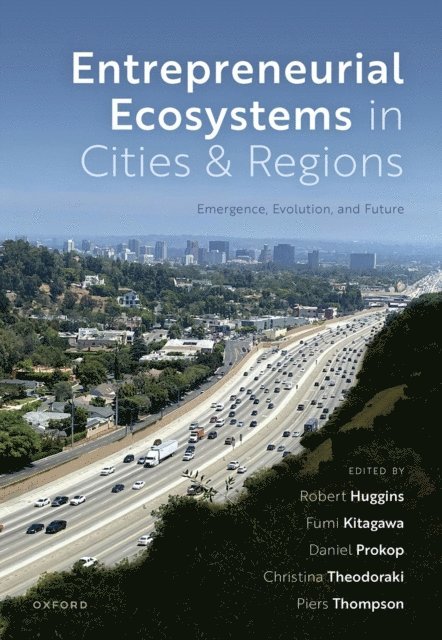
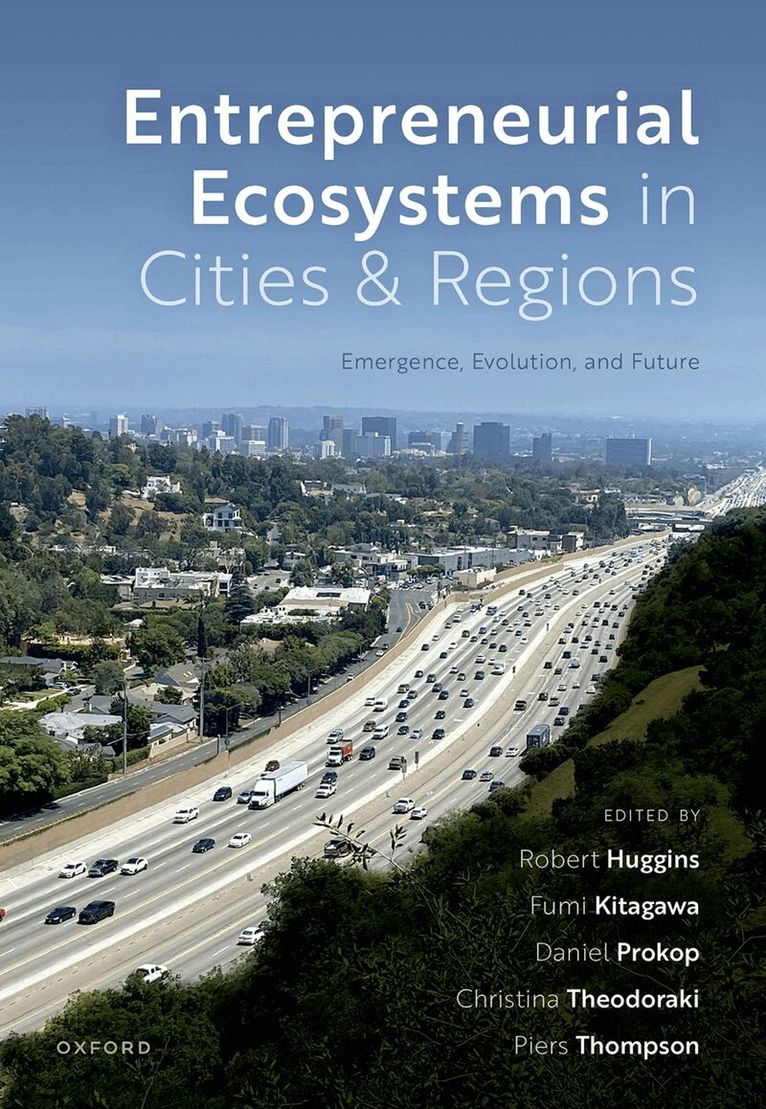
Entrepreneurial Ecosystems in Cities and Regions
Emergence, Evolution, and Future
Inbunden, Engelska, 2024
1 926 kr
Skickas inom 5-8 vardagar
The concept of 'entrepreneurial ecosystems' has emerged as a means for theorizing and making policy-decisions concerning entrepreneurship and economic development within and across cities and regions. Entrepreneurial Ecosystems in Cities and Regions assembles original contributions from scholars across the world to provide an in-depth analysis of a concept that has the capability to capture a dynamic global economy with entrepreneurial innovation at the crux of its future development. It addresses wider issues concerning the evolution of new forms of industrial organisation. The book develops an agenda and understanding that aims to build upon the early explosion of interest within academic, policy, and practice circles by providing new and important insights that contribute to knowledge, direct future investigations, and to increase the effectiveness of research-based policy and practice.Entrepreneurial Ecosystems in Cities and Regions builds a framework for establishing a robust and sustainable concept that can help propel an understanding of how cities and regions around the world can use entrepreneurship and innovation as a catalyst for their future economic, social, and environmental development. The volume highlights the need to account for urban and regional contextual factors when determining the strength or otherwise of entrepreneurial ecosystems, and illustrates that these factors can lead to the development of entrepreneurial activity of quite a different nature across cities and regions.
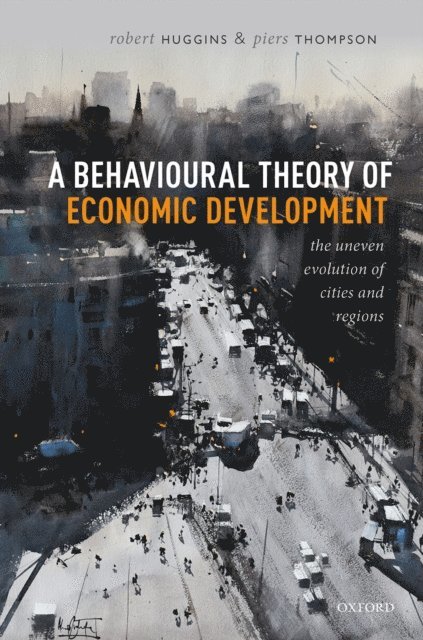
A Behavioural Theory of Economic Development
The Uneven Evolution of Cities and Regions
Inbunden, Engelska, 2021
1 583 kr
Skickas inom 5-8 vardagar
Innovation, entrepreneurship, knowledge, and human capital are widely acknowledged as key levers of development. Yet what are the sources of these factors, and why do they differ in their endowment across regions? Motivated by a belief that theories of economic development can move beyond the generally accepted explanations of location and the organization of industries and capital, this book establishes a behavioural theory of economic development illustrating that differences in human behaviour across cities and regions are a significant deep-rooted cause of uneven development. Fusing a range of concepts relating to culture, psychology, human agency, institutions, and power, it proposes that the long-term differentials in economic development between cities and regions, both within and across nations, is strongly connected to the underlying forms of behaviour enacted by humans on an individual and collective basis. Given a world of finite and limited resources, coupled with a rapidly growing population -- especially in cities and urban regions -- human behaviour, and the expectations and preferences upon which it is based, are central to understanding how notions of development may change in coming years. This book provides a novel theory of the role of psychocultural context and human behavioural and institutional frameworks in uneven economic development on a global scale.
2 220 kr
Skickas inom 10-15 vardagar
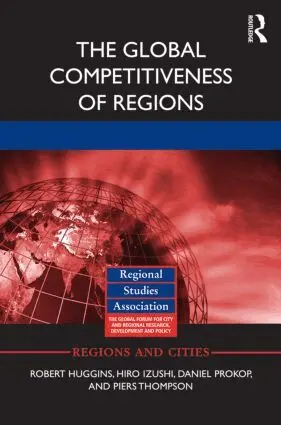
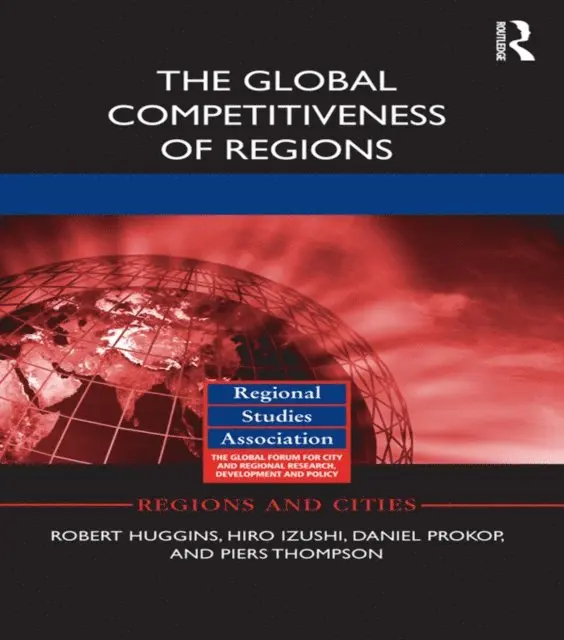
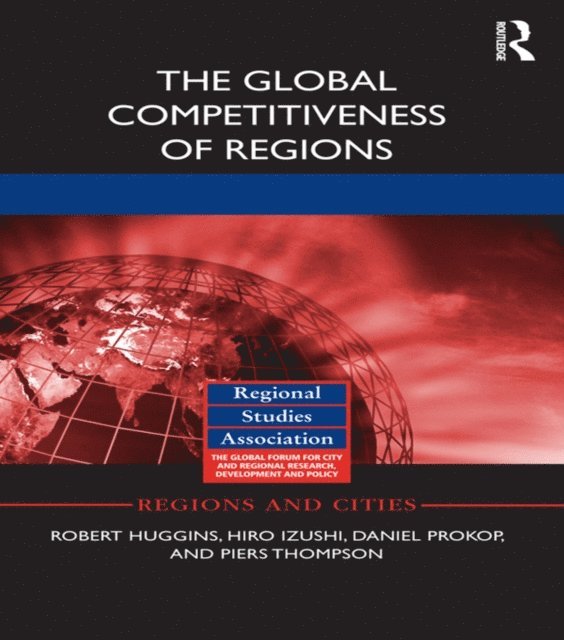
The aim of this book is to consider theoretically the notion of the global competitiveness of regions, as well as giving attention as to how such competitiveness may be empirically measured. With this in mind, the book has three specific objectives: first, to place the concept of regional competitiveness within the context of regional economic development theory; second, to present a rationale and method for quantifying the global competitiveness of regions; and, third, to undertake the most geographically widespread analysis of regional competitiveness differences across the globe. With regard to the third goal, the analysis incorporates more than 500 regions across Europe, North and South America, Asia-Pacific, the Middle East, and the so-called BRIC economies of Brazil, Russia, India, and China.The importance of the concept of competitiveness has increased rapidly in recent years, with the issues surrounding it becoming, at the same time, more empirically refined and theoretically complex. The focus on regions reflects the growing consensus that they are the primary spatial units that compete to attract investment, and it is at the regional level that knowledge is circulated and transferred, resulting in agglomerations, or clusters, of industrial and service sector enterprises. This growing acknowledgement of the region’s role as a key spatial unit of organisation has led to attention turning to competitiveness at a more regional level.The book explores the results of the World Competitiveness Index of Regions (WCIR), covering the rankings and results of the 2014 edition. The WCIR provides a tool for analysing the development of a range of regional economies across the globe. It enables an illustration of the changing patterns of regional competitiveness on the international stage to be generated. In fundamental terms, the WCIR aims to produce an integrated and overall benchmark of the knowledge capacity, capability, and sustainability of each region, and the extent to which this knowledge is translated into economic value and transferred into the wealth of the citizens of each region.
775 kr
Skickas inom 10-15 vardagar
The aim of this book is to consider theoretically the notion of the global competitiveness of regions, as well as giving attention as to how such competitiveness may be empirically measured. With this in mind, the book has three specific objectives: first, to place the concept of regional competitiveness within the context of regional economic development theory; second, to present a rationale and method for quantifying the global competitiveness of regions; and, third, to undertake the most geographically widespread analysis of regional competitiveness differences across the globe. With regard to the third goal, the analysis incorporates more than 500 regions across Europe, North and South America, Asia-Pacific, the Middle East, and the so-called BRIC economies of Brazil, Russia, India, and China.The importance of the concept of competitiveness has increased rapidly in recent years, with the issues surrounding it becoming, at the same time, more empirically refined and theoretically complex. The focus on regions reflects the growing consensus that they are the primary spatial units that compete to attract investment, and it is at the regional level that knowledge is circulated and transferred, resulting in agglomerations, or clusters, of industrial and service sector enterprises. This growing acknowledgement of the region’s role as a key spatial unit of organisation has led to attention turning to competitiveness at a more regional level.The book explores the results of the World Competitiveness Index of Regions (WCIR), covering the rankings and results of the 2014 edition. The WCIR provides a tool for analysing the development of a range of regional economies across the globe. It enables an illustration of the changing patterns of regional competitiveness on the international stage to be generated. In fundamental terms, the WCIR aims to produce an integrated and overall benchmark of the knowledge capacity, capability, and sustainability of each region, and the extent to which this knowledge is translated into economic value and transferred into the wealth of the citizens of each region.
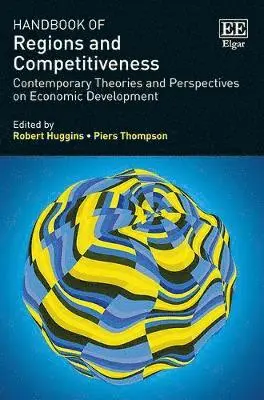
Handbook of Regions and Competitiveness
Contemporary Theories and Perspectives on Economic Development
Inbunden, Engelska, 2017
4 120 kr
Skickas inom 7-10 vardagar
The field of regional development is subject to an ever-increasing multiplicity of concepts and theories seeking to explain uneven competitiveness. In particular, economic geographers and spatial economists have rapidly developed the theoretical tools by which to approach such analyses. The aim of this Handbook is to take stock of regional competitiveness and complementary concepts as a means of presenting a state-of-the-art discussion of the advanced theories, perspectives and empirical explanations that help make sense of the determinants of uneven development across regions. Drawing on an international field of leading scholars, the book is assembled and organized so that readers can first learn of the theoretical underpinnings of regional competitiveness and development theory, before moving on to deeper discussions of key factors and principal elements, the emergence of allied concepts, empirical applications, and the policy context. International in its scope, including global empirical analysis, the book is a definitive resource in terms of providing access to some of the seminal research and thinking on regional competitiveness. This contemporary Handbook is an ideal reference for students and academics in the fields of economic geography and spatial economics. It will also appeal to policymakers and other stakeholders involved in regional economic development.Contributors include: K. Aiginger, P. Annoni, M.J. Aranguren, D. Audretsch, P.-A. Balland, R. Boschma, R. Camagni, R. Cellini, J. Crespo, P. Di Caro, L. Dijkstra, J. Fagerberg, M. Firgo, U. Fratesi, R. Harris, R. Huggins, J. Jansson, C. Ketels, I. Lengyel, E. Magro, E.J. Malecki, A. Mamtora, R. Martin, P. McCann, H. Menendez, P. Ni, R. Ortega-Argilés, I. Periáñez, A. Richardson, A. Rodríguez-Pose, L. Saez, J. Shen, M. Srholec, M. Storper, P. Sunley, M. Thissen, P. Thompson, G. Torrisi, I. Turok, F. van Oort, Y. Wang, A. Waxell, C. Wilkie, J.R. Wilson
Handbook of Regions and Competitiveness
Contemporary Theories and Perspectives on Economic Development
Häftad, Engelska, 2019
800 kr
Skickas inom 7-10 vardagar
The field of regional development is subject to an ever-increasing multiplicity of concepts and theories seeking to explain uneven competitiveness. In particular, economic geographers and spatial economists have rapidly developed the theoretical tools by which to approach such analyses. The aim of this Handbook is to take stock of regional competitiveness and complementary concepts as a means of presenting a state-of-the-art discussion of the advanced theories, perspectives and empirical explanations that help make sense of the determinants of uneven development across regions. Drawing on an international field of leading scholars, the book is assembled and organized so that readers can first learn of the theoretical underpinnings of regional competitiveness and development theory, before moving on to deeper discussions of key factors and principal elements, the emergence of allied concepts, empirical applications, and the policy context. International in its scope, including global empirical analysis, the book is a definitive resource in terms of providing access to some of the seminal research and thinking on regional competitiveness. This contemporary Handbook is an ideal reference for students and academics in the fields of economic geography and spatial economics. It will also appeal to policymakers and other stakeholders involved in regional economic development.Contributors include: K. Aiginger, P. Annoni, M.J. Aranguren, D. Audretsch, P.-A. Balland, R. Boschma, R. Camagni, R. Cellini, J. Crespo, P. Di Caro, L. Dijkstra, J. Fagerberg, M. Firgo, U. Fratesi, R. Harris, R. Huggins, J. Jansson, C. Ketels, I. Lengyel, E. Magro, E.J. Malecki, A. Mamtora, R. Martin, P. McCann, H. Menendez, P. Ni, R. Ortega-Argilés, I. Periáñez, A. Richardson, A. Rodríguez-Pose, L. Saez, J. Shen, M. Srholec, M. Storper, P. Sunley, M. Thissen, P. Thompson, G. Torrisi, I. Turok, F. van Oort, Y. Wang, A. Waxell, C. Wilkie, J.R. Wilson