Pietro Greco - Böcker
Visar alla böcker från författaren Pietro Greco. Handla med fri frakt och snabb leverans.
7 produkter
7 produkter
318 kr
Skickas
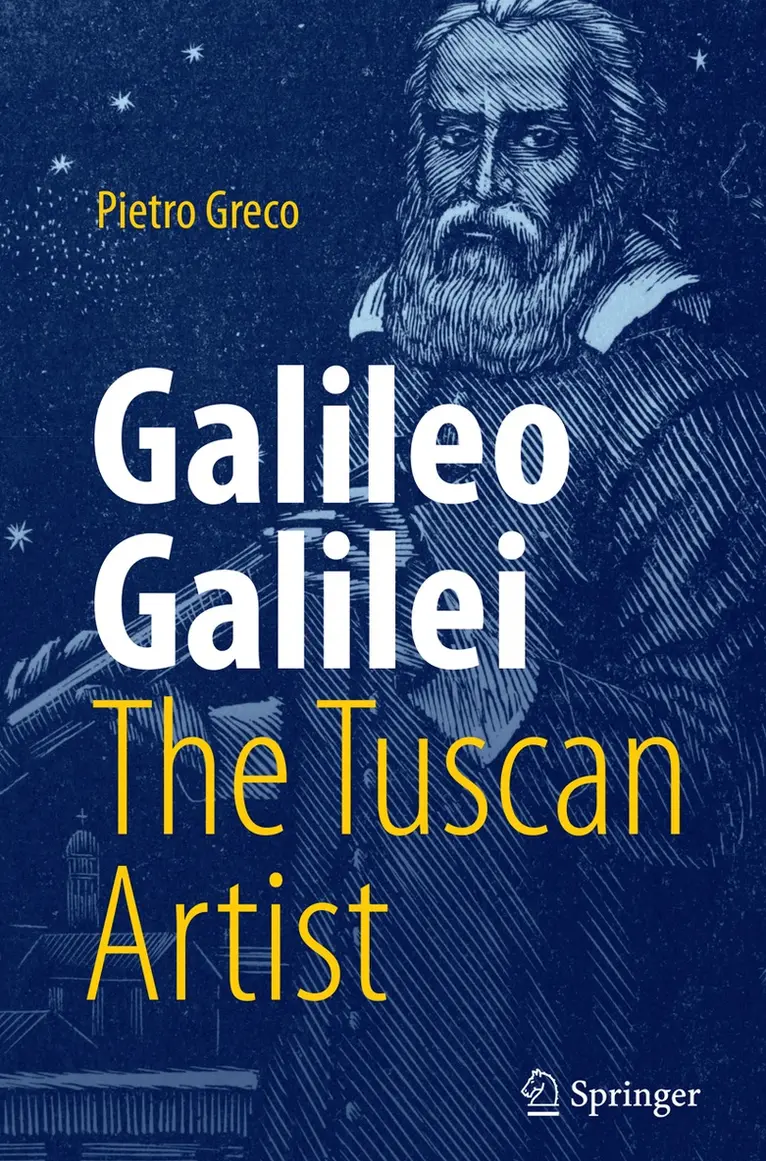
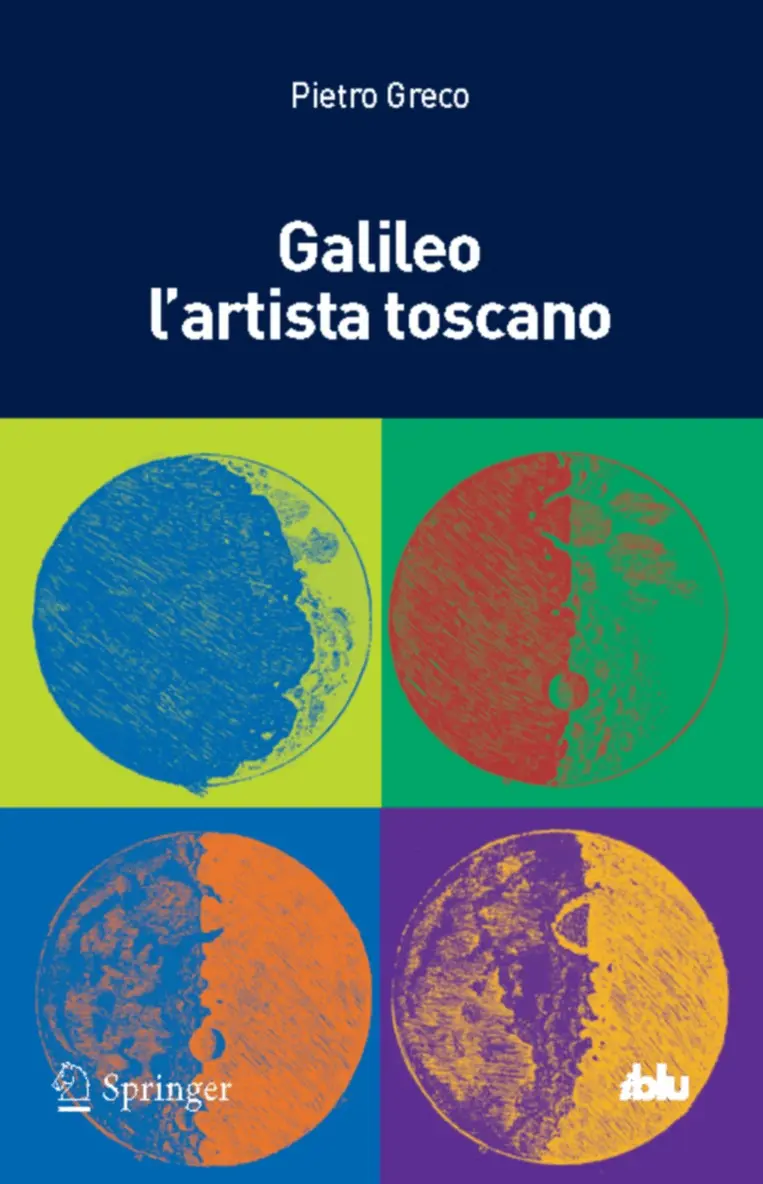
This book is a distinctively original biography of Galileo Galilei, probably the last eclectic genius of the Italian Renaissance, who was not only one of the greatest scientists ever, but also a philosopher, a theologian, and a man of great literary, musical, and artistic talent – “The Tuscan Artist”, as the poet John Milton referred to him.
443 kr
Skickas
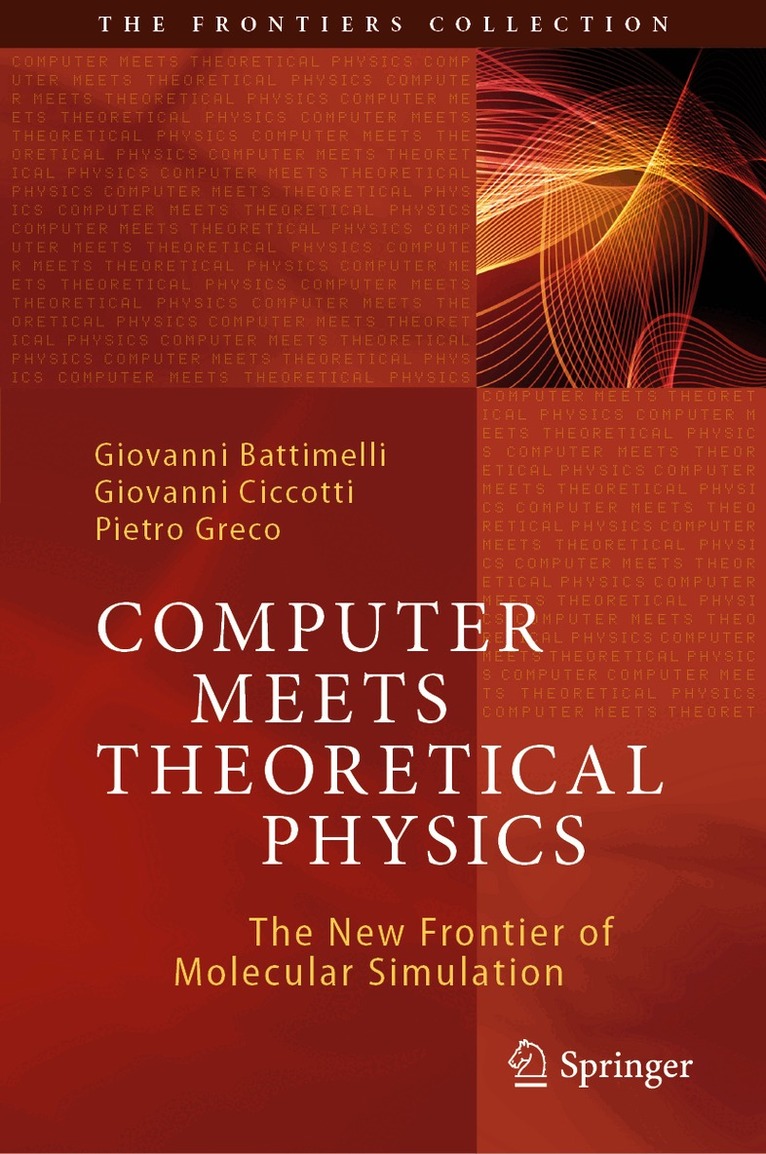
This book provides a vivid account of the early history of molecular simulation, a new frontier for our understanding of matter that was opened when the demands of theoretical physicists were met by the availability of the modern computers. Since their inception, electronic computers have enormously increased their performance, thus making possible the unprecedented technological revolution that characterizes our present times. This obvious technological advancement has brought with it a silent scientific revolution in the practice of theoretical physics. In particular, in the physics of matter it has opened up a direct route from the microscopic physical laws to observable phenomena. One can now study the time evolution of systems composed of millions of molecules, and simulate the behaviour of macroscopic materials and actually predict their properties. Molecular simulation has provided a new theoretical and conceptual tool that physicists could only dream of whenthe foundations of statistical mechanics were laid. Molecular simulation has undergone impressive development, both in the size of the scientific community involved and in the range and scope of its applications. It has become the ubiquitous workhorse for investigating the nature of complex condensed matter systems in physics, chemistry, materials and the life sciences. Yet these developments remain largely unknown outside the inner circles of practitioners, and they have so far never been described for a wider public. The main objective of this book is therefore to offer a reasonably comprehensive reconstruction of the early history of molecular simulation addressed to an audience of both scientists and interested non-scientists, describing the scientific and personal trajectories of the main protagonists and discussing the deep conceptual innovations that their work produced.
540 kr
Skickas inom 10-15 vardagar
This book provides a vivid account of the early history of molecular simulation, a new frontier for our understanding of matter that was opened when the demands of theoretical physicists were met by the availability of the modern computers. Since their inception, electronic computers have enormously increased their performance, thus making possible the unprecedented technological revolution that characterizes our present times. This obvious technological advancement has brought with it a silent scientific revolution in the practice of theoretical physics. In particular, in the physics of matter it has opened up a direct route from the microscopic physical laws to observable phenomena. One can now study the time evolution of systems composed of millions of molecules, and simulate the behaviour of macroscopic materials and actually predict their properties. Molecular simulation has provided a new theoretical and conceptual tool that physicists could only dream of whenthe foundations of statistical mechanics were laid. Molecular simulation has undergone impressive development, both in the size of the scientific community involved and in the range and scope of its applications. It has become the ubiquitous workhorse for investigating the nature of complex condensed matter systems in physics, chemistry, materials and the life sciences. Yet these developments remain largely unknown outside the inner circles of practitioners, and they have so far never been described for a wider public. The main objective of this book is therefore to offer a reasonably comprehensive reconstruction of the early history of molecular simulation addressed to an audience of both scientists and interested non-scientists, describing the scientific and personal trajectories of the main protagonists and discussing the deep conceptual innovations that their work produced.
350 kr
Skickas inom 5-8 vardagar
This book is a distinctively original biography of Galileo Galilei, probably the last eclectic genius of the Italian Renaissance, who was not only one of the greatest scientists ever, but also a philosopher, a theologian, and a man of great literary, musical, and artistic talent – “The Tuscan Artist”, as the poet John Milton referred to him.
278 kr
Skickas inom 10-15 vardagar
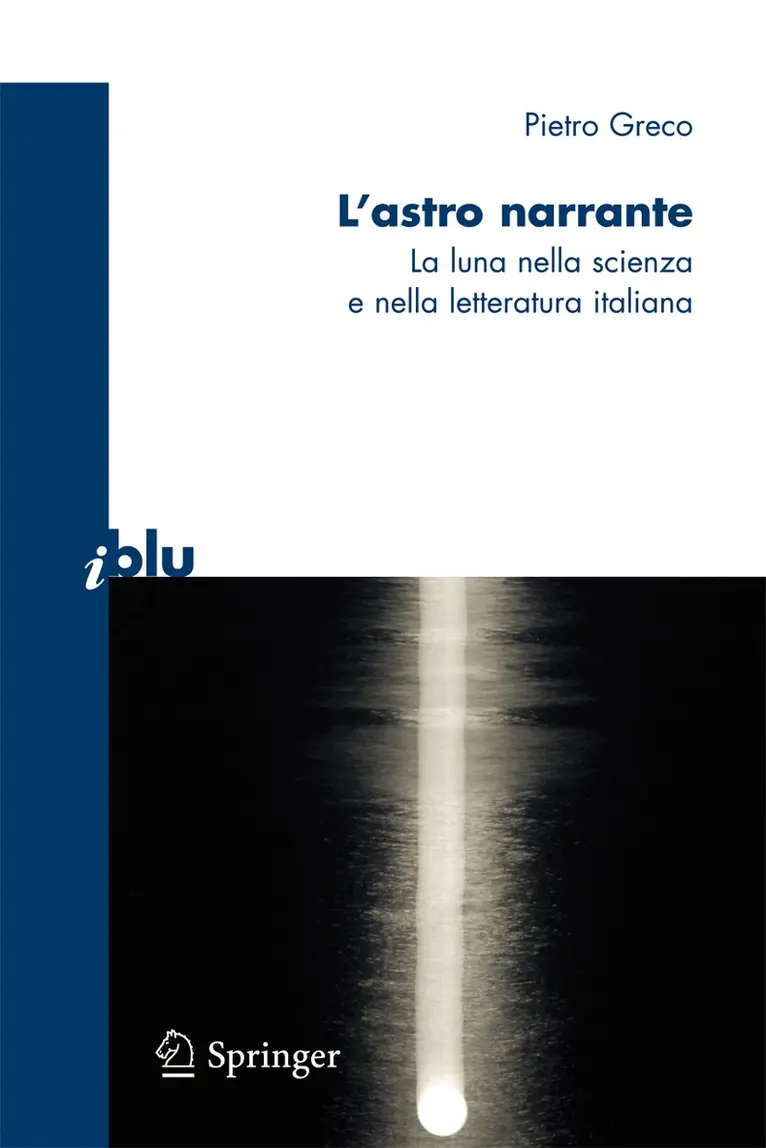
La Luna è l’astro che forse più di ogni altro ha ispirato la grande letteratura italiana e – da Dante a Galileo, da Ariosto a Bruno, da Leopardi a Calvino – le ha consentito di coltivare la sua "vocazione profonda": costruire, attraverso la filosofia naturale, "mappe del mondo" sempre più precise.
326 kr
Skickas inom 10-15 vardagar
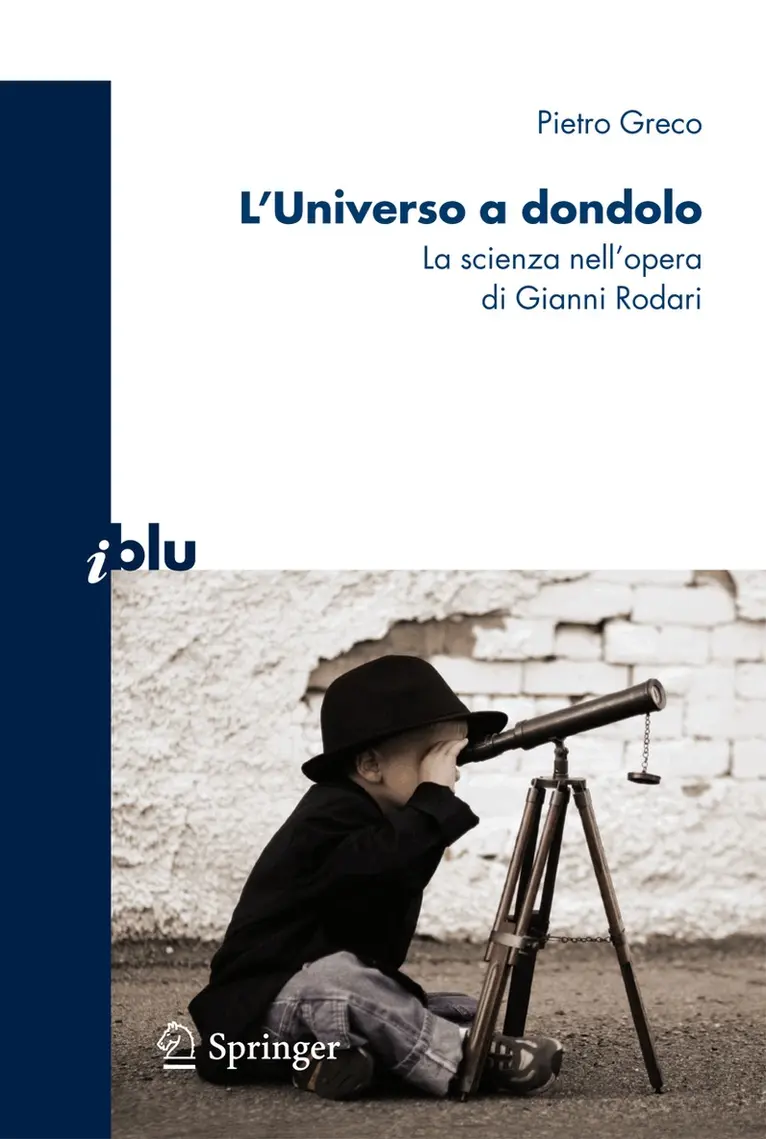
Il volume sarà diviso in due parti. La prima parte è un dizionario dei termini e dei concetti scientifici presenti nell’opera di Gianni Rodari. Un esempio di diffusione di cultura scientifica critica. La seconda parte è la ricostruzione della vita di Gianni Rodari nel tentativo di dimostrare la centralità nel suo lavoro del rapporto Letteratura/scienza.Gianni Rodari è il più grande scrittore italiano per l’infanzia del XX secolo. Le sua opera è stata studiata da molti critici. Mai, tuttavia, questa centralità del discorso scientifico non è stata sottolineata abbastanza.Grazie alla forte presenza della scienza e della tecnologia nella sua opera – è questa la tesi del libro – Gianni Rodari entra a far parte del novero dei grandi scrittori e poeti con una “vocazione profonda” per la scienza e filosofia naturale.Inoltre grazie anche a questa “vocazione profonda” Gianni Rodari eleva la letteratura per l’infanzia a “grande letteratura”.
375 kr
Skickas inom 10-15 vardagar
L'opera è una biografia di Galileo Galilei che mette a fuoco soprattutto i suoi rapporti con le arti (musica, disegno, pittura) e la letteratura (poesia e prosa) e cerca di dimostrare come ci sia stata una continua osmosi tra lo scienziato, l'artista e il critico d'arte.