Ping Zong – författare
Visar alla böcker från författaren Ping Zong. Handla med fri frakt och snabb leverans.
11 produkter
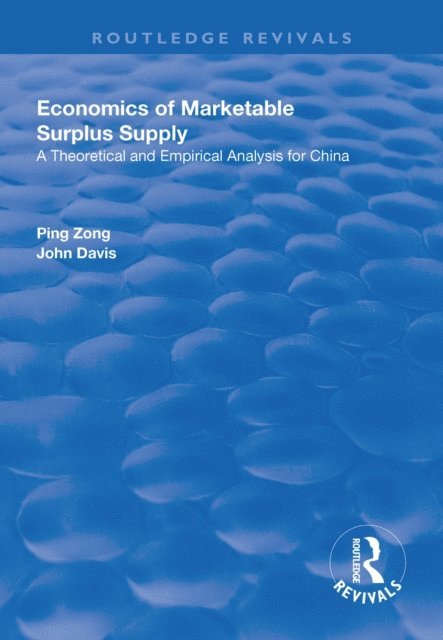
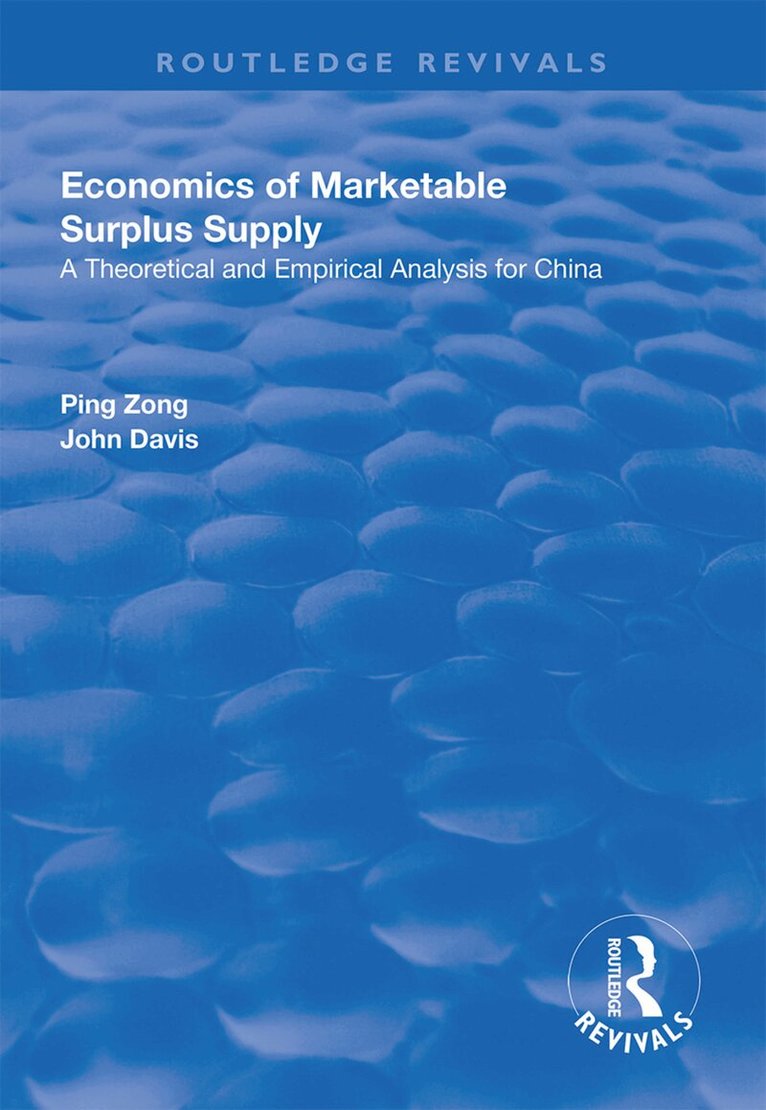
Economics of Marketable Surplus Supply
Theoretical and Empirical Analysis for China
Av John Davis, Ping Zong
E-bok, 2018
485 kr
Lägg i varukorg
Published in 1998. Chinese farm households have been at the centre of the rural reform process since the introduction of the Household Responsibility System in the late 1970’s. There can be little doubt that, for decades to come, they will continue to be a focus of interest both in academic and …
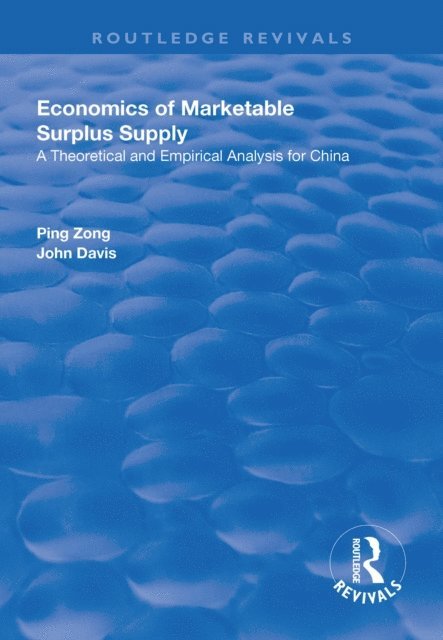
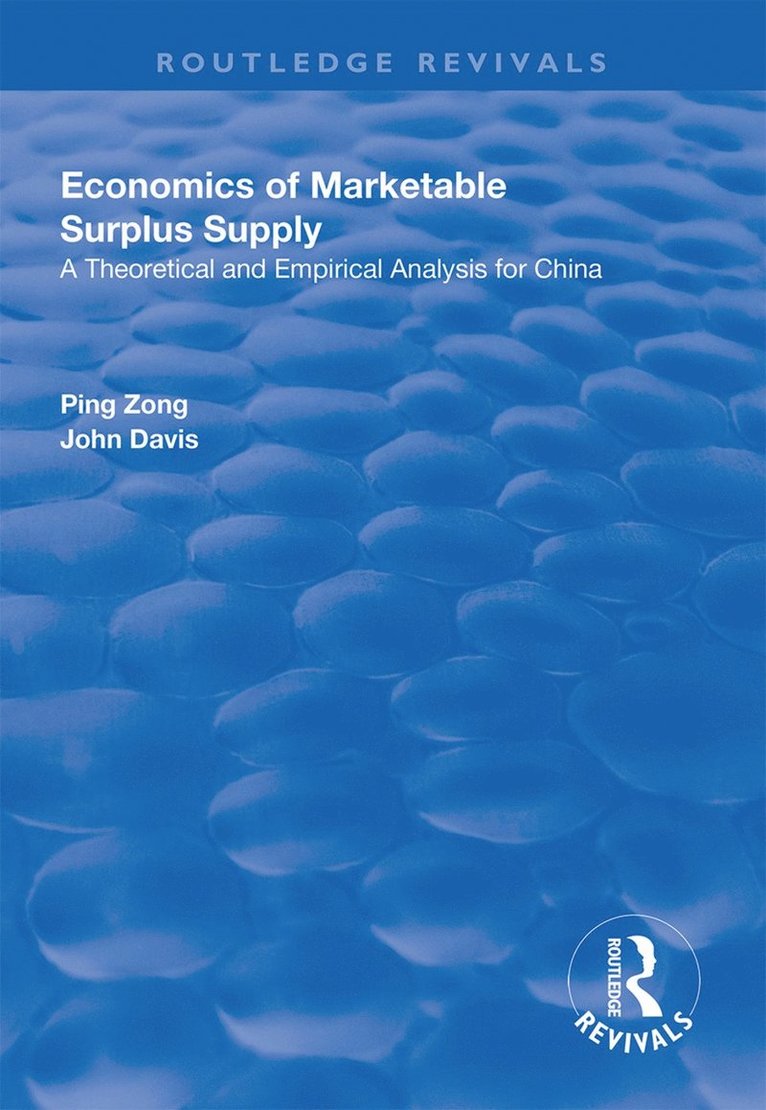
Economics of Marketable Surplus Supply
Theoretical and Empirical Analysis for China
Av John Davis, Ping Zong
E-bok, 2018
500 kr
Lägg i varukorg
Published in 1998. Chinese farm households have been at the centre of the rural reform process since the introduction of the Household Responsibility System in the late 1970’s. There can be little doubt that, for decades to come, they will continue to be a focus of interest both in academic and …
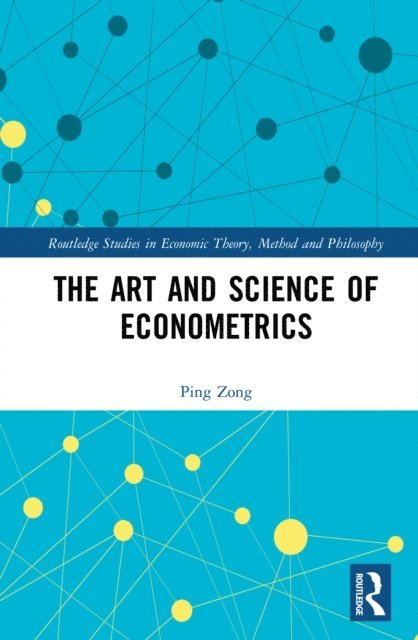
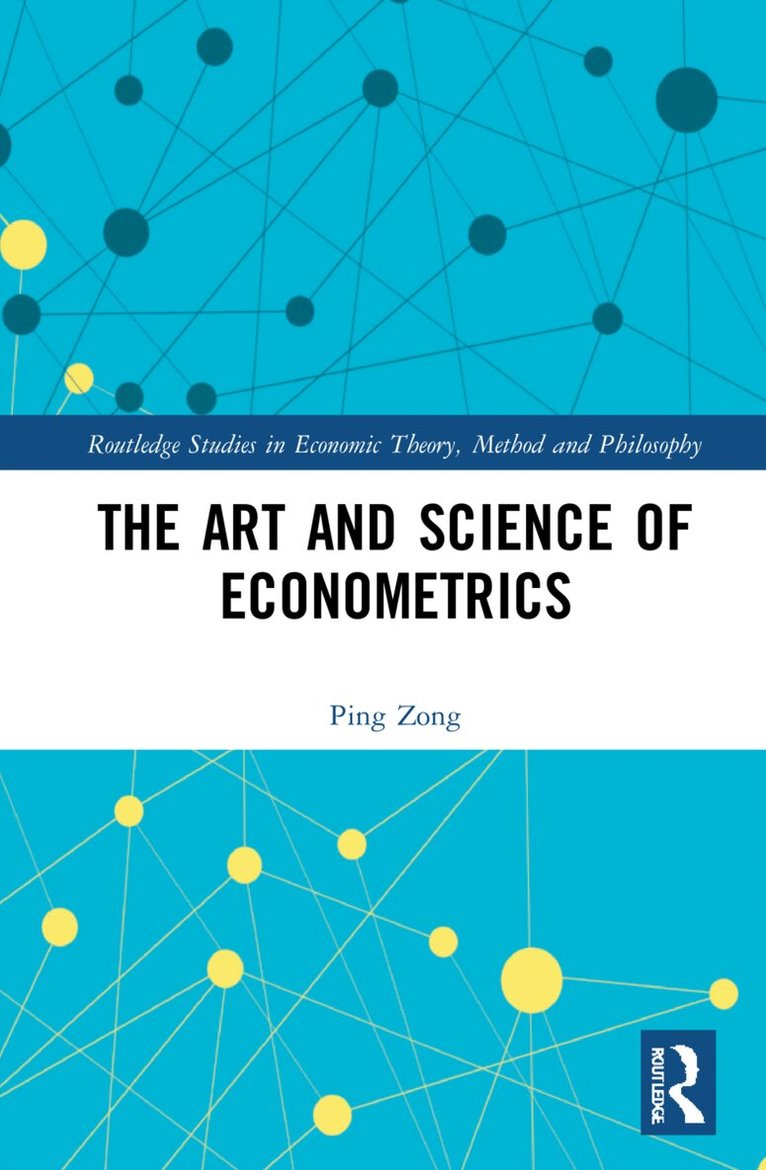
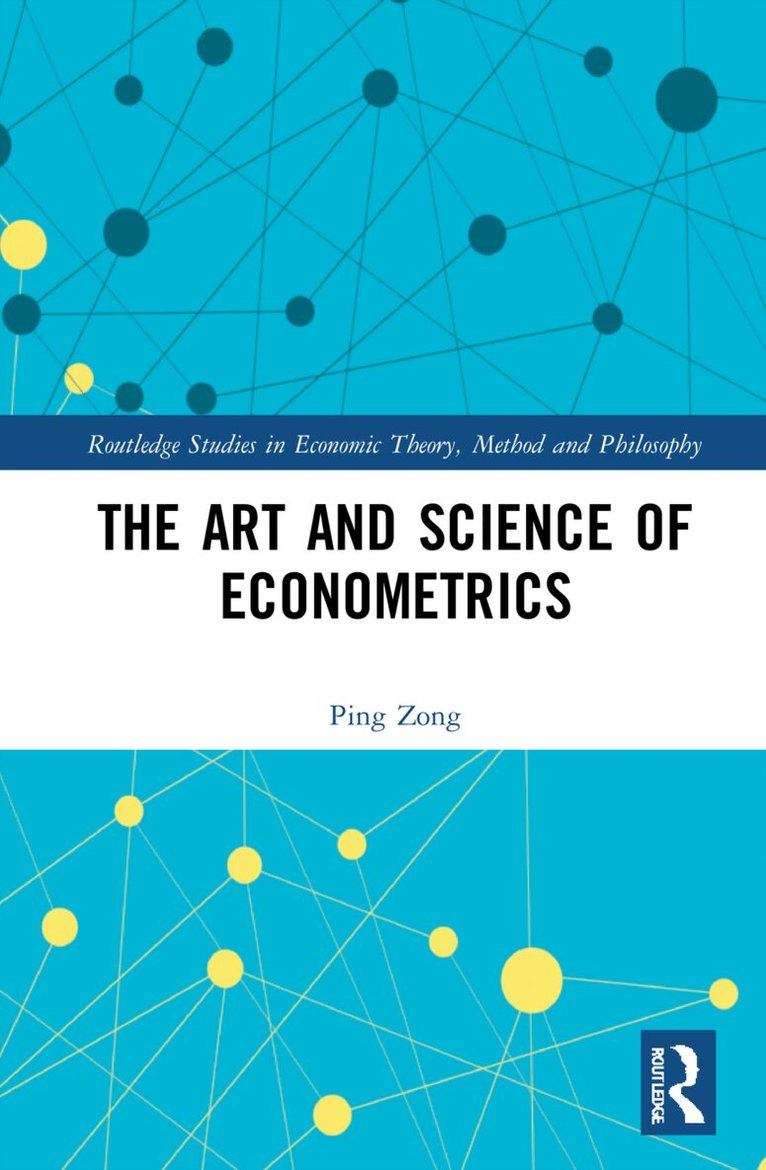
Art and Science of Econometrics
Av Ping Zong
E-bok, 2022
814 kr
Lägg i varukorg
Today econometrics has been widely applied in the empirical study of economics. As an empirical science, econometrics uses rigorous mathematical and statistical methods for economic problems. Understanding the methodologies of both econometrics and statistics is a crucial departure for …
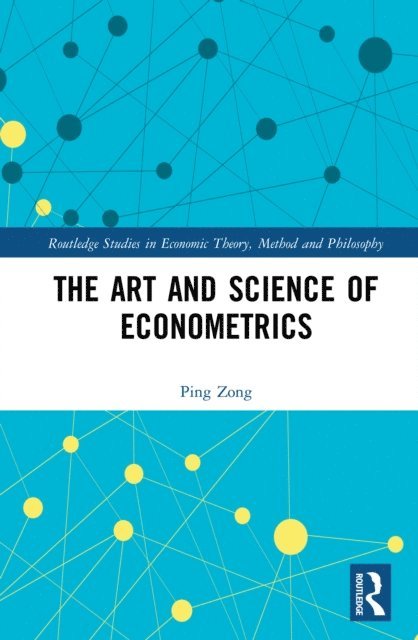
Art and Science of Econometrics
Av Ping Zong
E-bok, 2022
788 kr
Lägg i varukorg
Today econometrics has been widely applied in the empirical study of economics. As an empirical science, econometrics uses rigorous mathematical and statistical methods for economic problems. Understanding the methodologies of both econometrics and statistics is a crucial departure for …
Art and Science of Econometrics
Av Ping Zong
Inbunden, 2022
2504 kr
Lägg i varukorg
Today econometrics has been widely applied in the empirical study of economics. As an empirical science, econometrics uses rigorous mathematical and statistical methods for economic problems. Understanding the methodologies of both econometrics and statistics is a crucial departure for …
Art and Science of Econometrics
Av Ping Zong
Häftad, 2024
710 kr
Lägg i varukorg
Today econometrics has been widely applied in the empirical study of economics. As an empirical science, econometrics uses rigorous mathematical and statistical methods for economic problems. Understanding the methodologies of both econometrics and statistics is a crucial departure for …
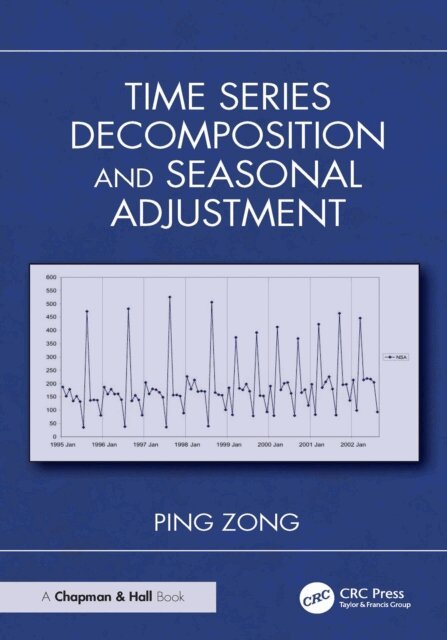
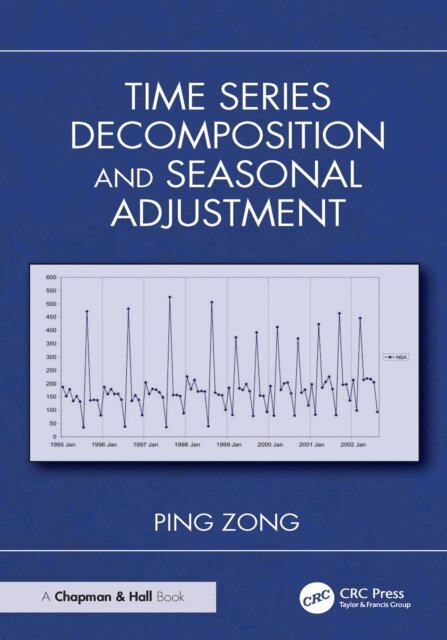
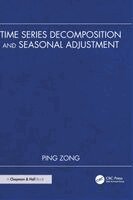
Time Series Decomposition and Seasonal Adjustment
Av Ping Zong
E-bok, 2026
1022 kr
Lägg i varukorg
This book provides an in-depth examination of time series decomposition and seasonal adjustment, focusing on the X-13ARIMA-SEATS and TRAMO-SEATS methods. Seasonal adjustment removes distortions such as seasonal fluctuations and holiday effects from economic indicators (eg, GDP, CPI), enabling …
Time Series Decomposition and Seasonal Adjustment
Av Ping Zong
E-bok, 2026
1022 kr
Lägg i varukorg
This book provides an in-depth examination of time series decomposition and seasonal adjustment, focusing on the X-13ARIMA-SEATS and TRAMO-SEATS methods. Seasonal adjustment removes distortions such as seasonal fluctuations and holiday effects from economic indicators (eg, GDP, CPI), enabling …
Time Series Decomposition and Seasonal Adjustment
Av Ping Zong
Inbunden, 2026
1821 kr
Lägg i varukorg
This book provides an in-depth examination of time series decomposition and seasonal adjustment, focusing on the X-13ARIMA-SEATS and TRAMO-SEATS methods. Seasonal adjustment removes distortions such as seasonal fluctuations and holiday effects from economic indicators (eg, GDP, CPI), enabling …
Economics of Marketable Surplus Supply
Theoretical and Empirical Analysis for China
Av Ping Zong, John Davis
Inbunden, 2018
1226 kr
Lägg i varukorg
Published in 1998. Chinese farm households have been at the centre of the rural reform process since the introduction of the Household Responsibility System in the late 1970’s. There can be little doubt that, for decades to come, they will continue to be a focus of interest both in academic and …
Economics of Marketable Surplus Supply
Theoretical and Empirical Analysis for China
Av Ping Zong, John Davis
Häftad, 2020
413 kr
Lägg i varukorg
Published in 1998. Chinese farm households have been at the centre of the rural reform process since the introduction of the Household Responsibility System in the late 1970’s. There can be little doubt that, for decades to come, they will continue to be a focus of interest both in academic and …