Piotr Juszkiewicz – författare
Visar alla böcker från författaren Piotr Juszkiewicz. Handla med fri frakt och snabb leverans.
6 produkter
Image, History and Memory
Central and Eastern Europe in a Comparative Perspective
Av Piotr Juszkiewicz, Michal Haake
E-bok, 2022
760 kr
Lägg i varukorg
This book discusses the active relationship among the mechanics of memory, visual practices, and historical narratives. Reflection on memory and its ties with historical narratives cannot be separated from reflection on the visual and the image as its points of reference which function in time. …
Image, History and Memory
Central and Eastern Europe in a Comparative Perspective
Av Piotr Juszkiewicz, Michal Haake
E-bok, 2022
785 kr
Lägg i varukorg
This book discusses the active relationship among the mechanics of memory, visual practices, and historical narratives. Reflection on memory and its ties with historical narratives cannot be separated from reflection on the visual and the image as its points of reference which function in time. …
Image, History and Memory
Central and Eastern Europe in a Comparative Perspective
Av Michał Haake, Piotr Juszkiewicz
Inbunden, 2022
2586 kr
Lägg i varukorg
This book discusses the active relationship among the mechanics of memory, visual practices, and historical narratives.Reflection on memory and its ties with historical narratives cannot be separated from reflection on the visual and the image as its points of reference which function in time. This …
Image, History and Memory
Central and Eastern Europe in a Comparative Perspective
Av Michał Haake, Piotr Juszkiewicz
Häftad, 2023
667 kr
Lägg i varukorg
This book discusses the active relationship among the mechanics of memory, visual practices, and historical narratives.Reflection on memory and its ties with historical narratives cannot be separated from reflection on the visual and the image as its points of reference which function in time. This …
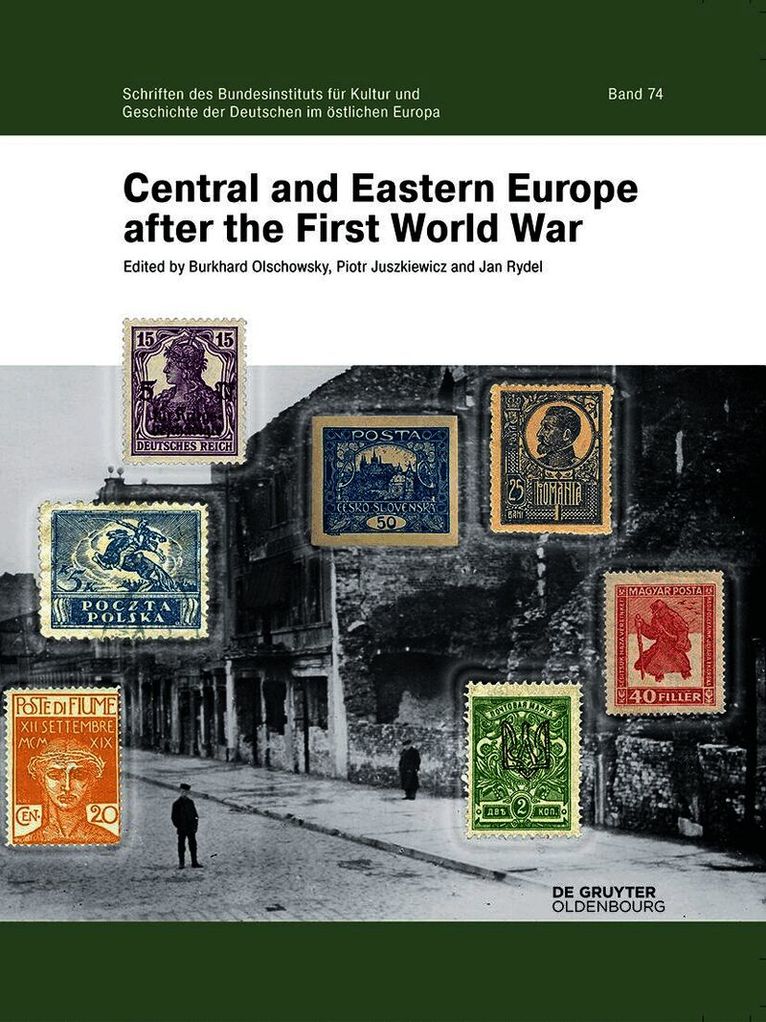
Central and Eastern Europe after the First World War
Av Burkhard Olschowsky, Piotr Juszkiewicz m. fl.
Inbunden, 2021
535 kr
Lägg i varukorg
The volume focuses on the years following the First World War (1918–1923), when political, military, cultural, social and economic developments consolidated to a high degree in Eastern Europe. This period was shaped, on the one hand, by the efforts to establish an international structure for peace …
Central and Eastern Europe after the First World War
Av Burkhard Olschowsky, Piotr Juszkiewicz m. fl.
Häftad, 2025
541 kr
Lägg i varukorg
2nd editionThe volume focuses on the years following the First World War (1918–1923), when political, military, cultural, social and economic developments consolidated to a high degree in Eastern Europe. This period was shaped, on the one hand, by the efforts to establish an international structure …