Polina Sinovets - Böcker
Visar alla böcker från författaren Polina Sinovets. Handla med fri frakt och snabb leverans.
6 produkter
6 produkter
836 kr
Skickas inom 5-8 vardagar
This book presents a comprehensive overview of Ukraine's nuclear history, beginning from its experiences within the Russian Empire in the early 20th century, through the Soviet period, to the emergence of Ukraine as an independent state that inherited the world’s third-largest nuclear arsenal.The book discusses the development of the nuclear infrastructure on Ukrainian soil and offers a rich and nuanced background of how Ukraine became an important and integrated part of the Soviet nuclear infrastructure. It further analyzes Ukraine's nuclear disarmament based on extensive primary source material and places the Ukrainian nuclear reversal process in a larger international political context where Russia´s, the United States, and other players´ actions are interpreted in the light of the impact on the current nuclear non-proliferation regime. Finally, the book presents the nuclear-related development after the nuclear disarmament. It describes the integration of Ukraine into the international community and the role of nuclear power in the energy mix of the nation today. Concluding, Ukraine´s adaptation to the new security situation after the Russian annexation of Crimea is described and discussed.This volume is a must-read for scholars, researchers, students, and policy-makers interested in a better understanding of Ukraine's nuclear history, the political background of the conflict in Eastern Ukraine, as well as of security studies and international relations in general. The work on this book has been supported by the Swedish Radiation Authority (SSM) in the Nuclear History of Ukraine Project (2015-2019).
836 kr
Skickas inom 5-8 vardagar
This book presents a comprehensive overview of Ukraine's nuclear history, beginning from its experiences within the Russian Empire in the early 20th century, through the Soviet period, to the emergence of Ukraine as an independent state that inherited the world’s third-largest nuclear arsenal.The book discusses the development of the nuclear infrastructure on Ukrainian soil and offers a rich and nuanced background of how Ukraine became an important and integrated part of the Soviet nuclear infrastructure. It further analyzes Ukraine's nuclear disarmament based on extensive primary source material and places the Ukrainian nuclear reversal process in a larger international political context where Russia´s, the United States, and other players´ actions are interpreted in the light of the impact on the current nuclear non-proliferation regime. Finally, the book presents the nuclear-related development after the nuclear disarmament. It describes the integration of Ukraine into the international community and the role of nuclear power in the energy mix of the nation today. Concluding, Ukraine´s adaptation to the new security situation after the Russian annexation of Crimea is described and discussed.This volume is a must-read for scholars, researchers, students, and policy-makers interested in a better understanding of Ukraine's nuclear history, the political background of the conflict in Eastern Ukraine, as well as of security studies and international relations in general. The work on this book has been supported by the Swedish Radiation Authority (SSM) in the Nuclear History of Ukraine Project (2015-2019).
1 381 kr
Skickas inom 10-15 vardagar
The book explains how the combination of these factors lead to a crucial change of strategic stability and the international security landscape, the first such change since the end of the Cold War. Divided into three parts, the book presents timely analyses on (1) US, Russia: New Challenges and Strategic Stability in Europe;
1 381 kr
Skickas inom 10-15 vardagar
This book examines the recent changes in strategic stability, caused by the collapse of the international security architecture. Against the background of Russia's invasion of Ukraine, international experts discuss topics and critical issues such as the revanchist strategy of Russia and the readiness of the United States (US) and Europe to give an adequate response; the influence of new technologies in the future of nuclear deterrence; and the crumbling of the arms control and nonproliferation system under the new challenges. The book explains how the combination of these factors lead to a crucial change of strategic stability and the international security landscape, the first such change since the end of the Cold War.Divided into three parts, the book presents timely analyses on (1) US, Russia: New Challenges and Strategic Stability in Europe; (2) Extended Deterrence and Arms Control in Europe; and (3) Regional Dimensions of Strategic Stability in Europe. It further offers perspectives from and case studies on different countries, such as Ukraine, France, Germany, the United Kingdom, the USA, Turkey, Poland, and Romania.This book is a must-read for scholars for international relations, as well as policy-makers interested in a better understanding of the changing international security architecture, Russia's strategy, arms control, nonproliferation, and the future of nuclear deterrence.
1 487 kr
Skickas inom 10-15 vardagar
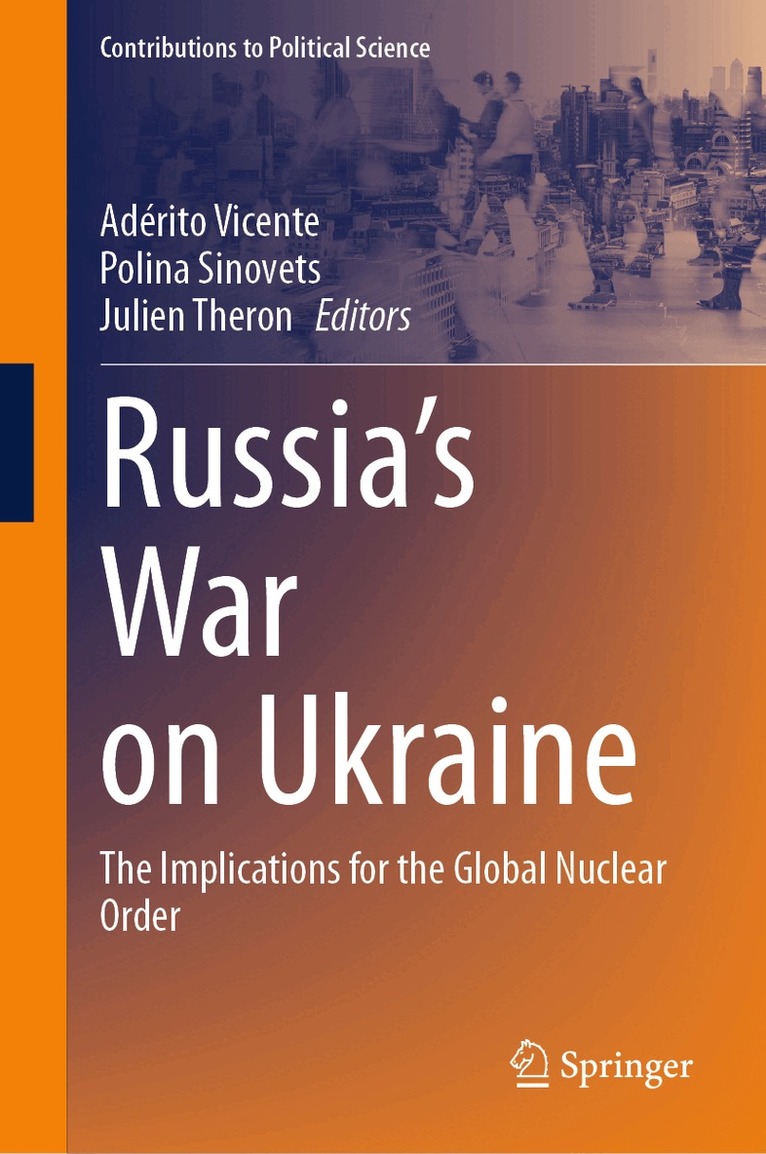
This book explores how Russia’s War on Ukraine has changed the global nuclear order. The Russian aggression against Ukraine questioned the values of the liberal regimes and systems upon which the global nuclear order is built. At the heart of this nuclear order lies the 1968 Treaty on the Non-Proliferation of Nuclear Weapons (NPT), which remains until today the cornerstone of the global nuclear disarmament and nonproliferation regime.In this context, the book examines new challenges and threats to the global nuclear order. It discusses the deterioration of nuclear norms, as well as the increasing number of the states further challenging the NPT regime by attempts to develop nuclear weapons. The book further sheds light on a growing number of states trying to resolve their territorial claims using the nuclear coercion and the umbrella function of their nuclear arsenals. The authors present the loopholes in the existing arms control system and the arms trade, which became obvious in the course of the war, and analyze the further split between the supporters of the NPT and the Treaty on the Prohibition of Nuclear Weapons (TPNW). Srutinizing the deepening polarization of the supporters and the opponents of nuclear weapons, the book includes a new debate about the competing narratives on nuclear deterrence and disarmament. Finally, the volume discusses the development and the increase of new missiles and disruptive technologies such as hypersonic missiles, drones, and artificial intelligence.This book will appeal to students and scholars of international relations and political science in general, and security studies, military and defense studies, peace and conflict studies, and foreign policy in particular, as well as policy-makers interested in a better understanding of nuclear deterrence, the global nuclear order, and the impact of Russia's war on Ukraine.
1 487 kr
Skickas inom 10-15 vardagar
At the heart of this nuclear order lies the 1968 Treaty on the Non-Proliferation of Nuclear Weapons (NPT), which remains until today the cornerstone of the global nuclear disarmament and nonproliferation regime.In this context, the book examines new challenges and threats to the global nuclear order.