Prajakta Dandekar – författare
Visar alla böcker från författaren Prajakta Dandekar. Handla med fri frakt och snabb leverans.
3 produkter
3 produkter
E-bok
Engelska, 20122 057 kr
Läs direkt efter köp
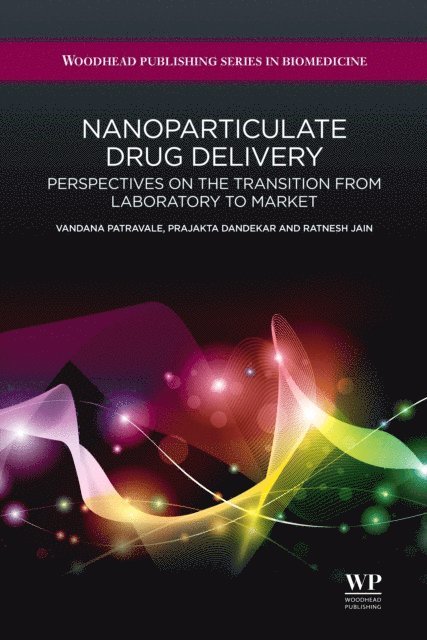
Nanotechnology-based therapeutics, operating at scales of billionths of a metre, have great potential for future expansion in altering the scale and methods of drug delivery. The availability of these novel formulations to once-inaccessible areas of the body has greatly expanded the therapeutic window of existing drug molecules. Nanoparticulate drug delivery highlights and examines the transition of nanoparticulate drug delivery systems from the laboratory into a commercially viable sector. The first chapters of the book provide an overview of the use and characterization of nanoparticulate systems as drug carriers, including the assessment of their morphology, sterility and potential toxicity. In the latter part of the book, chapters cover nanotoxicology, regulatory aspect and clinical trials, ending with an overview of several case studies and a look towards future developments.- Discusses the issues surrounding nanoparticulate products, based on personal experience of their formulation- Provides an overview of new application areas, including RNA interference- Outlines the pros and cons of nanoparticulate products, and discusses how these may influence their route into the commercial sector
Del 39 - AAPS Advances in the Pharmaceutical Sciences Series
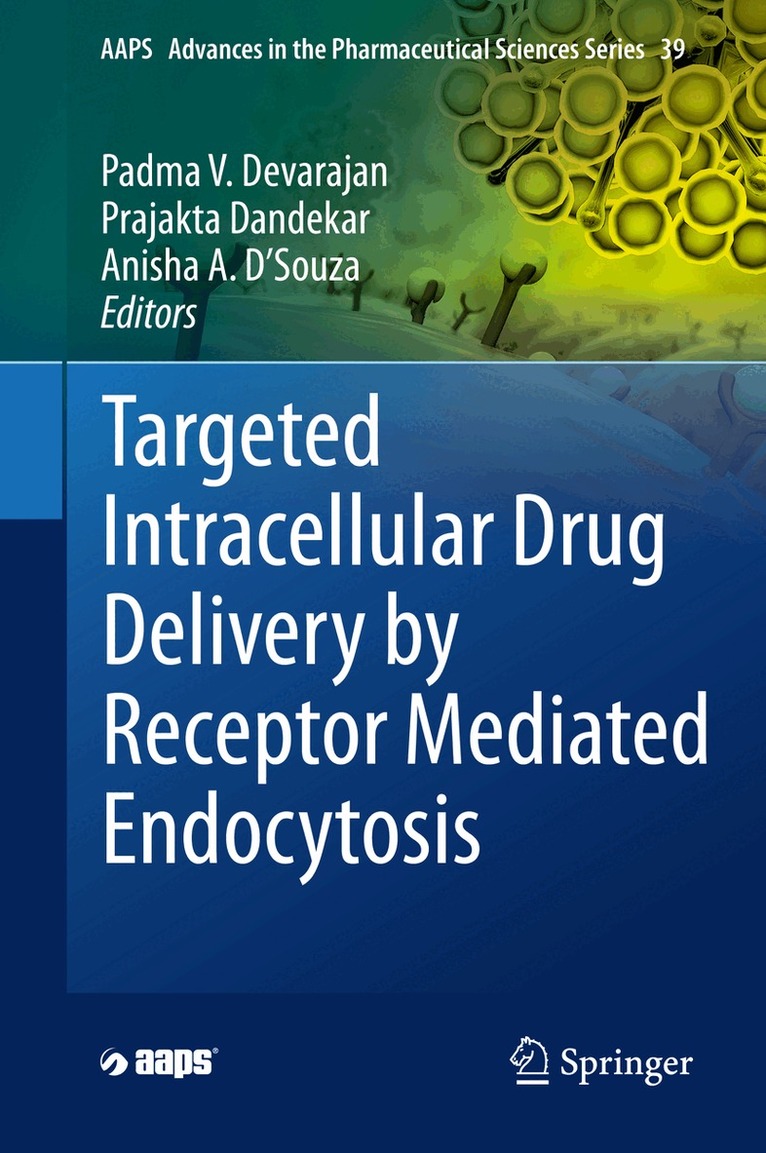
Targeted Intracellular Drug Delivery by Receptor Mediated Endocytosis
Inbunden, Engelska, 2019
1 116 kr
Skickas inom 10-15 vardagar
This book elaborates on drug delivery targeting via intracellular delivery, specifically through the Receptor Mediated Endocytosis (RME) approach, due to the involvement of cellular receptors in various grave diseases. Targeted delivery relies on two basic approaches, passive and active targeting. While passive targeting approaches have shown great promise, the improved selectivity achieved with active targeting approaches has resulted in significantly higher efficacy. Interestingly there are numerous strategies for active targeting, many of which are already highlighted in , Targeted Drug Delivery: Concepts and Applications. Nevertheless an exciting and practical strategy for active targeting, which could enable high intracellular delivery, is through exploitation of RME. Cells in the body express receptors to enable various physiological and biochemical processes. As a result, many of these receptors are overexpressed in pathological conditions, or newer receptors expressed due to defective cellular functioning. RME is based on exploitation of such receptors to achieve intracellular delivery. While targeted delivery can have manifold applications, in this book we focus on two major and challenging therapeutic areas; i) Cancer and ii) Infectious Diseases. Targeted Intracellular Drug Delivery by Receptor Medicated Endocytosis discusses the major receptors that are useful for targeted delivery for these afflictions. A major section of this book is dedicated to details regarding their occurrence and location, the recognition domain of the receptor, structure activity relationship of substrate /ligand for selective binding, ligands explored, antagonists for ligand binding and relevance of these aspects for therapy of cancer and infectious diseases. These facets are elucidated with the help of specific examples from academic research and also emphasize commercial products, wherever relevant. In vitro cellular models relied onfor assessing receptor mediated cellular targeting and in vivo models depicting clinical efficacy are focused on in a separate section. Finally, we briefly discuss the regulatory and toxicity issues that may be associated specifically with the RME approach of intracellular drug delivery.
E-bok
Engelska, 20191 459 kr
Läs direkt efter köp
This book elaborates on drug delivery targeting via intracellular delivery, specifically through the Receptor Mediated Endocytosis (RME) approach, due to the involvement of cellular receptors in various grave diseases. Targeted delivery relies on two basic approaches, passive and active targeting. While passive targeting approaches have shown great promise, the improved selectivity achieved with active targeting approaches has resulted in significantly higher efficacy. Interestingly there are numerous strategies for active targeting, many of which are already highlighted in , Targeted Drug Delivery: Concepts and Applications. Nevertheless an exciting and practical strategy for active targeting, which could enable high intracellular delivery, is through exploitation of RME. Cells in the body express receptors to enable various physiological and biochemical processes. As a result, many of these receptors are overexpressed in pathological conditions, or newer receptors expressed due to defective cellular functioning. RME is based on exploitation of such receptors to achieve intracellular delivery. While targeted delivery can have manifold applications, in this book we focus on two major and challenging therapeutic areas; i) Cancer and ii) Infectious Diseases. Targeted Intracellular Drug Delivery by Receptor Medicated Endocytosis discusses the major receptors that are useful for targeted delivery for these afflictions. A major section of this book is dedicated to details regarding their occurrence and location, the recognition domain of the receptor, structure activity relationship of substrate /ligand for selective binding, ligands explored, antagonists for ligand binding and relevance of these aspects for therapy of cancer and infectious diseases. These facets are elucidated with the help of specific examples from academic research and also emphasize commercial products, wherever relevant. In vitro cellular models relied onfor assessing receptor mediated cellular targeting and in vivo models depicting clinical efficacy are focused on in a separate section. Finally, we briefly discuss the regulatory and toxicity issues that may be associated specifically with the RME approach of intracellular drug delivery.