Priyambudi Sulistiyanto – författare
Visar alla böcker från författaren Priyambudi Sulistiyanto. Handla med fri frakt och snabb leverans.
5 produkter
Regionalism in Post-Suharto Indonesia
Av Maribeth Erb, Carol Faucher m. fl.
Inbunden, 2005
2510 kr
Lägg i varukorg
Since the fall of the Suharto regime, forces pressing for regional autonomy have strengthened in Indonesia, with some people arguing that the country is in danger of disintegrating. This book examines a range of issues connected with decentralization and regional autonomy in Indonesia, especially …
Regionalism in Post-Suharto Indonesia
Av Maribeth Erb, Carol Faucher m. fl.
Häftad, 2009
749 kr
Lägg i varukorg
Since the fall of the Suharto regime, forces pressing for regional autonomy have strengthened in Indonesia, with some people arguing that the country is in danger of disintegrating. This book examines a range of issues connected with decentralization and regional autonomy in Indonesia, especially …
Regionalism in Post-Suharto Indonesia
Av Priyambudi Sulistiyanto, Carol Faucher m. fl.
E-bok, 2013
864 kr
Lägg i varukorg
Since the fall of the Suharto regime, forces pressing for regional autonomy have strengthened in Indonesia, with some people arguing that the country is in danger of disintegrating. This book examines a range of issues connected with decentralization and regional autonomy in Indonesia, especially …
Regionalism in Post-Suharto Indonesia
Av Priyambudi Sulistiyanto, Carol Faucher m. fl.
E-bok, 2013
858 kr
Lägg i varukorg
Since the fall of the Suharto regime, forces pressing for regional autonomy have strengthened in Indonesia, with some people arguing that the country is in danger of disintegrating. This book examines a range of issues connected with decentralization and regional autonomy in Indonesia, especially …
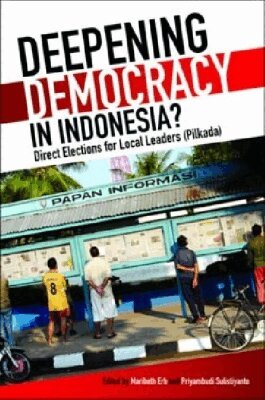
Deepening Democracy in Indonesia?
Direct Elections for Local Leaders (Pilkada)
Av Maribeth Erb, Priyambudi Sulistiyanto
Inbunden, 2009
685 kr
Lägg i varukorg
Since the fall of long-reigning President Soeharto, in 1998, Indonesia has been in an era of transition, away from an authoritarian regime, and on a quest for democracy. This quest started with decentralization laws implemented in 2001, which gave greater autonomy to the regions, and continued with …