Professor Michael Ball – författare
Visar alla böcker från författaren . Handla med fri frakt och snabb leverans.
6 produkter
6 produkter
Inbunden, Engelska, 2001
2 477 kr
Skickas inom 10-15 vardagar
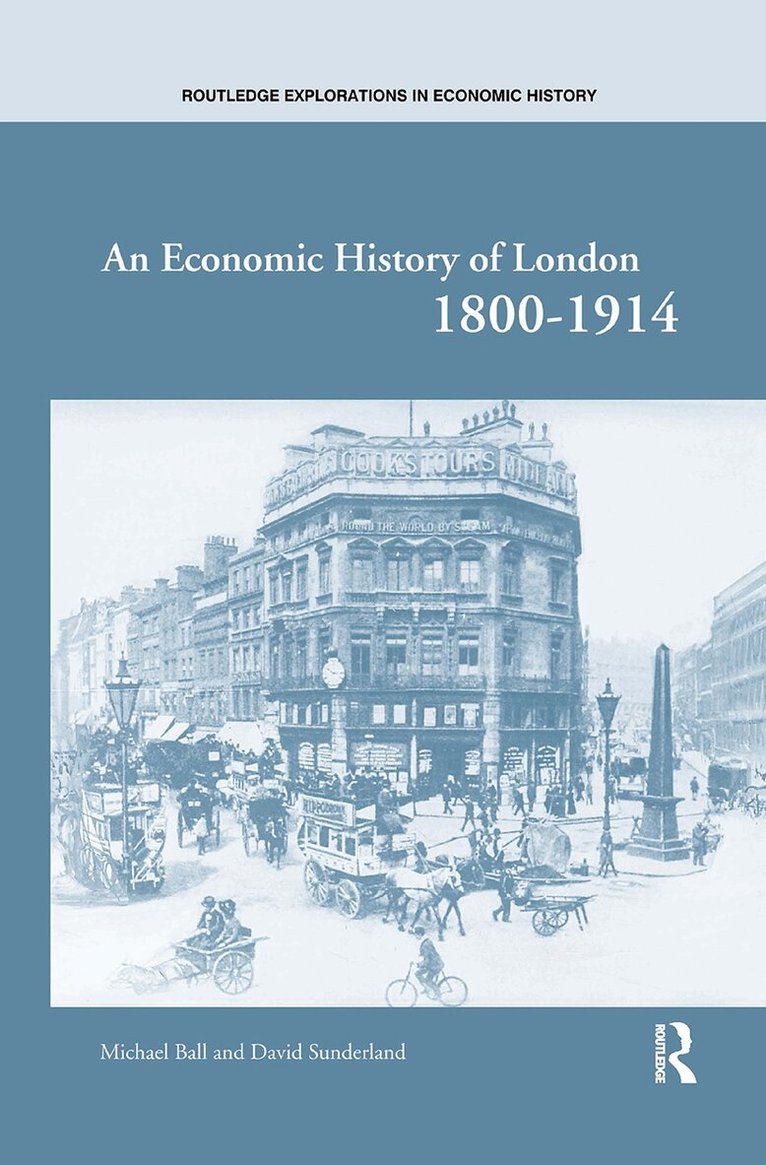
In 1800 London was already the largest city in the world, and over the course of the next century its population grew rapidly, reaching over seven million by 1914. Historians have often depicted London after the Industrial Revolution as an industrial backwater that declined into the mass exploitation of labour through 'sweating', dominated by City and merchant interests. This book instead argues that London was a centre of nineteenth-century British economic growth. Modern economic theories of cities are used to explain the causes of metropolitan economic development, and emphasis is placed on the changing role of the metropolis within Britain and the wider world economy. Individual chapters comprehensively survey a wide variety of topics including: population and migrationstandards of livingemployment and industrychanges in retailing and leisuresocial welfare and local governmentpost and telecommunications.The evolution of London did not occur on purely free market terms - the supply of urban services is an important component of metropolitan history, particularly in the changing relationship between government and private endeavour. This fascinating history of a remarkable city will appeal to a wide audience from amateur to specialist interests in economics, history, urban studies and geography.
Häftad, Engelska, 2006
740 kr
Skickas inom 10-15 vardagar
In 1800 London was already the largest city in the world, and over the course of the next century its population grew rapidly, reaching over seven million by 1914. Historians have often depicted London after the Industrial Revolution as an industrial backwater that declined into the mass exploitation of labour through 'sweating', dominated by City and merchant interests. This book instead argues that London was a centre of nineteenth-century British economic growth. Modern economic theories of cities are used to explain the causes of metropolitan economic development, and emphasis is placed on the changing role of the metropolis within Britain and the wider world economy. Individual chapters comprehensively survey a wide variety of topics including: population and migrationstandards of livingemployment and industrychanges in retailing and leisuresocial welfare and local governmentpost and telecommunications.The evolution of London did not occur on purely free market terms - the supply of urban services is an important component of metropolitan history, particularly in the changing relationship between government and private endeavour. This fascinating history of a remarkable city will appeal to a wide audience from amateur to specialist interests in economics, history, urban studies and geography.
Häftad, Engelska, 1983
912 kr
Skickas inom 10-15 vardagar
Published in 2002, Housing Policy and Economic Power is a valuable contribution to the field of Human Geography.
E-bok
Engelska, 2001883 kr
Läs direkt efter köp
In 1800 London was already the largest city in the world, and over the course of the next century its population grew rapidly, reaching over seven million by 1914. Historians have often depicted London after the Industrial Revolution as an industrial backwater that declined into the mass exploitation of labour through ''sweating'', dominated by City
E-bok
Engelska, 20171 059 kr
Läs direkt efter köp
Published in 2002, Housing Policy and Economic Power is a valuable contribution to the field of Human Geography.
Inbunden, Engelska, 2017
2 405 kr
Skickas inom 10-15 vardagar
Published in 2002, Housing Policy and Economic Power is a valuable contribution to the field of Human Geography.