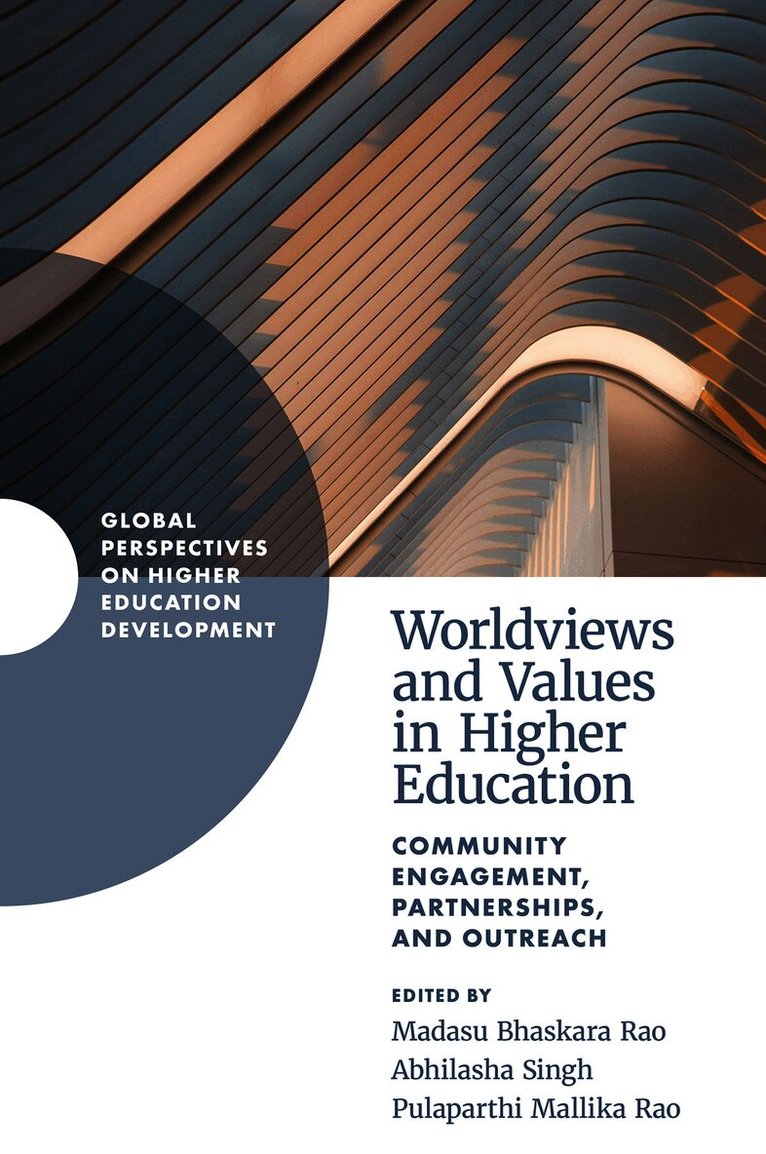
Pulaparthi Mallika Rao – författare
1 113 kr
Läs direkt efter köp
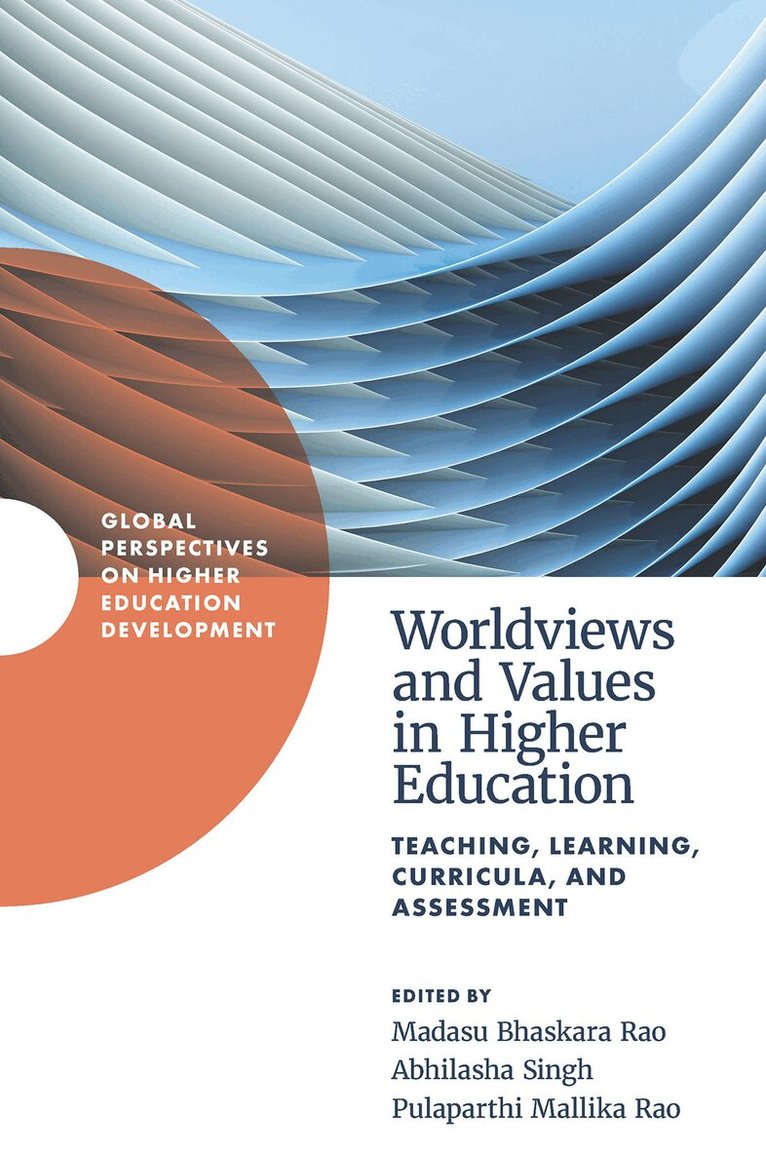
Launching the Global Perspectives on Higher Education Development series, editors Madasu Bhaskara Rao, Abhilasha Singh and Pulaparthi Mallika Rao introduce the concept of values and the role they play in the emerging university of the twenty-first century. How do universities'' missions, visions, policies, and strategies shape their responses to a world that is swiftly changing due to increased globalisation, demand, competition, and innovation?
Understanding that educational stakeholders must comprehend the nature of societal culture and communal values and the role they play in shaping, often implicitly, a university’s ethos and traditions, contributors explore how values operate at an institutional level. How do they impact micro-level practises, such as pedagogical strategies, academic achievement, curriculum development, and evaluation?
Providing a much-needed global perspective-based analysis of the issue of educational values, this first volume on Worldviews and Values in Higher Education examines how higher education cultures are embedded within and heavily influenced by national cultures, norms, and structures through the lenses of Teaching, Learning, Curricula, and Assessment.
1 050 kr
Skickas inom 5-8 vardagar
1 113 kr
Läs direkt efter köp
Launching the Global Perspectives on Higher Education Development series, editors Madasu Bhaskara Rao, Abhilasha Singh and Pulaparthi Mallika Rao introduce the concept of values and the role they play in the emerging university of the twenty-first century. How do universities'' missions, visions, policies, and strategies shape their responses to a world that is swiftly changing due to increased globalisation, demand, competition, and innovation?
Understanding that educational stakeholders must comprehend the nature of societal culture and communal values and the role they play in shaping, often implicitly, a university’s ethos and traditions, contributors explore how values operate at an institutional level. How do they impact micro-level practises, such as pedagogical strategies, academic achievement, curriculum development, and evaluation?
Providing a much-needed global perspective-based analysis of the issue of educational values, this first volume on Worldviews and Values in Higher Education examines how higher education cultures are embedded within and heavily influenced by national cultures, norms, and structures through the lenses of Teaching, Learning, Curricula, and Assessment.
Worldviews and Values in Higher Education
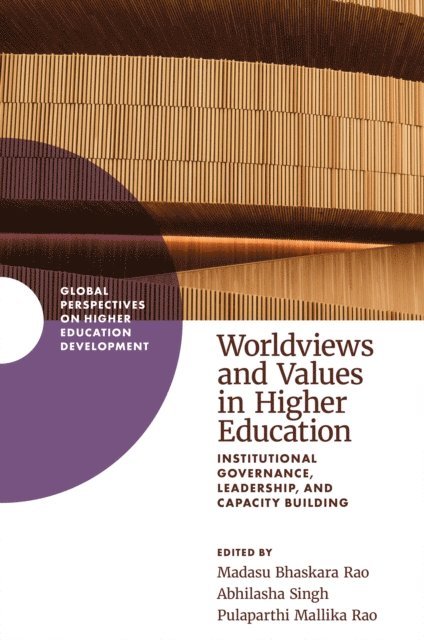
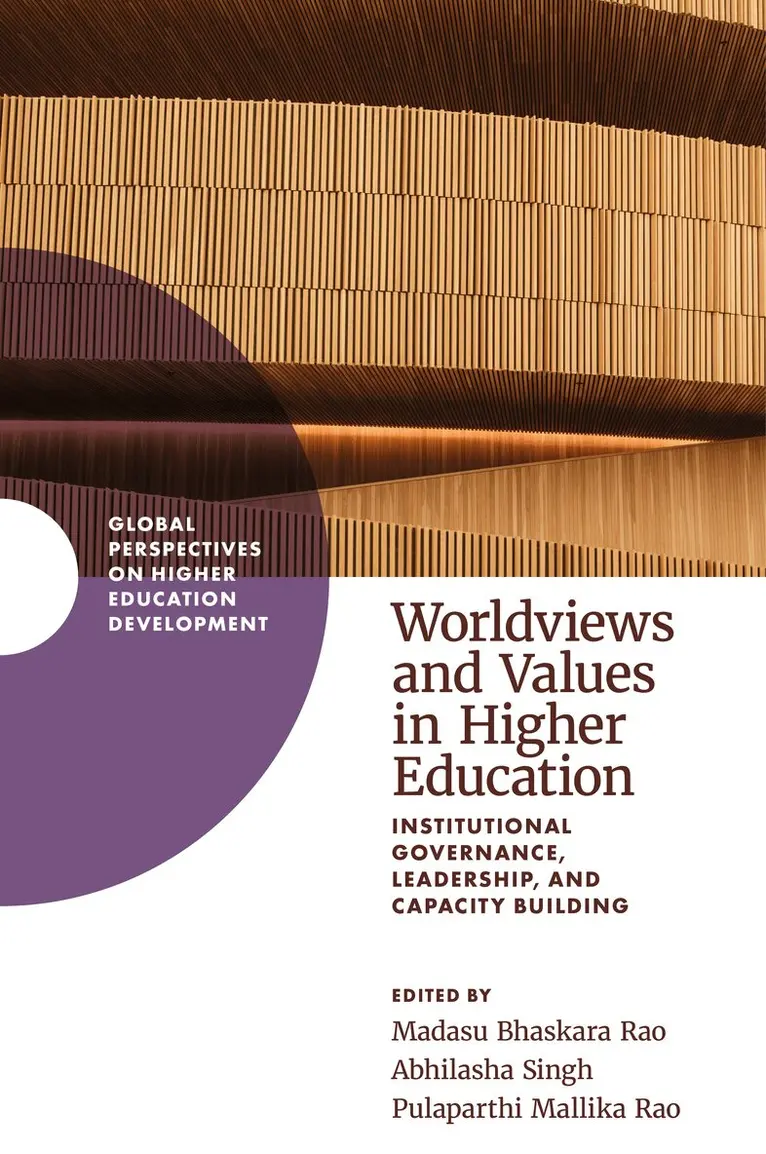
Institutional Governance, Leadership, and Capacity Building
1 044 kr
Läs direkt efter köp
Cultural perspectives impact governance, and certain cultures may prefer hierarchical and centralized forms of governance, while others may lean towards more democratic and participatory ones. Governance, guided by ethical worldviews, ensures transparency, accountability, and integrity in decision-making. Worldviews significantly impact leadership styles, and a leader who holds a collectivist perspective would prioritize team building and community outcomes. Leaders'' values influence the institution''s vision and mission and impact curriculum development, research, and innovation goals. Institutions'' approaches to professional development are shaped by their worldviews on continuous learning and improvement. Organizations prioritizing innovation are more likely to allocate greater resources toward advanced training initiatives. Values shape the distribution of resources for capacity building.
The chapters presented here link theory, policy, and practice using various research methods. This volume on Worldviews and Values in Higher Education examines the profound influence of worldviews and values in shaping institutional governance, leadership, and capacity building. Integrating worldviews and values into institutional policies ensures that governance, leadership, and capacity building initiatives are coordinated and mutually supportive. Organizations have the ability to evaluate the effectiveness of governance, leadership, and capacity building programs by examining how closely they adhere to the declared values and objectives. This includes the assessment of student achievement, research outcomes, community influence, and the institution''s long-term viability.
By acknowledging and carefully incorporating worldviews and values, higher education institutions may establish effective, streamlined, equitable, inclusive, and forward-looking settings.
Worldviews and Values in Higher Education
Institutional Governance, Leadership, and Capacity Building
985 kr
Skickas inom 5-8 vardagar
Worldviews and Values in Higher Education
Institutional Governance, Leadership, and Capacity Building
1 044 kr
Läs direkt efter köp
Cultural perspectives impact governance, and certain cultures may prefer hierarchical and centralized forms of governance, while others may lean towards more democratic and participatory ones. Governance, guided by ethical worldviews, ensures transparency, accountability, and integrity in decision-making. Worldviews significantly impact leadership styles, and a leader who holds a collectivist perspective would prioritize team building and community outcomes. Leaders'' values influence the institution''s vision and mission and impact curriculum development, research, and innovation goals. Institutions'' approaches to professional development are shaped by their worldviews on continuous learning and improvement. Organizations prioritizing innovation are more likely to allocate greater resources toward advanced training initiatives. Values shape the distribution of resources for capacity building.
The chapters presented here link theory, policy, and practice using various research methods. This volume on Worldviews and Values in Higher Education examines the profound influence of worldviews and values in shaping institutional governance, leadership, and capacity building. Integrating worldviews and values into institutional policies ensures that governance, leadership, and capacity building initiatives are coordinated and mutually supportive. Organizations have the ability to evaluate the effectiveness of governance, leadership, and capacity building programs by examining how closely they adhere to the declared values and objectives. This includes the assessment of student achievement, research outcomes, community influence, and the institution''s long-term viability.
By acknowledging and carefully incorporating worldviews and values, higher education institutions may establish effective, streamlined, equitable, inclusive, and forward-looking settings.
1 044 kr
Läs direkt efter köp
985 kr
Skickas inom 5-8 vardagar
1 044 kr
Läs direkt efter köp