Pushkin Kachroo – författare
865 kr
Skickas inom 10-15 vardagar
3 194 kr
Läs direkt efter köp
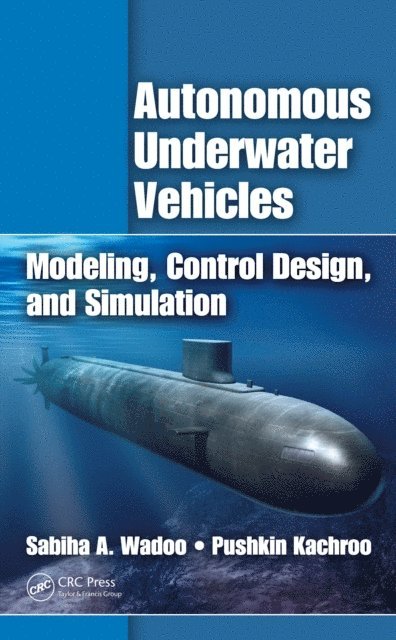
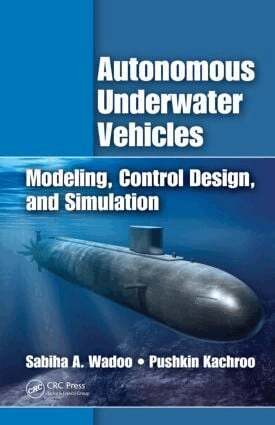
Underwater vehicles present some difficult and very particular control system design problems. These are often the result of nonlinear dynamics and uncertain models, as well as the presence of sometimes unforeseeable environmental disturbances that are difficult to measure or estimate.
Autonomous Underwater Vehicles: Modeling, Control Design, and Simulation outlines a novel approach to help readers develop models to simulate feedback controllers for motion planning and design. The book combines useful information on both kinematic and dynamic nonlinear feedback control models, providing simulation results and other essential information, giving readers a truly unique and all-encompassing new perspective on design.
Includes MATLAB® Simulations to Illustrate Concepts and Enhance Understanding
Starting with an introductory overview, the book offers examples of underwater vehicle construction, exploring kinematic fundamentals, problem formulation, and controllability, among other key topics. Particularly valuable to researchers is the book’s detailed coverage of mathematical analysis as it applies to controllability, motion planning, feedback, modeling, and other concepts involved in nonlinear control design. Throughout, the authors reinforce the implicit goal in underwater vehicle design—to stabilize and make the vehicle follow a trajectory precisely.
Fundamentally nonlinear in nature, the dynamics of AUVs present a difficult control system design problem which cannot be easily accommodated by traditional linear design methodologies. The results presented here can be extended to obtain advanced control strategies and design schemes not only for autonomous underwater vehicles but also for other similar problems in the area of nonlinear control.
909 kr
Läs direkt efter köp
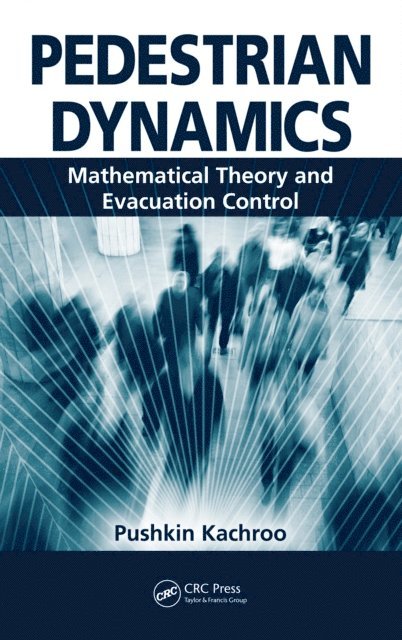
Homeland security, transportation, and city planning depend upon well-designed evacuation routes. You can’t wait until the day of to realize your plan won’t work. Designing successful evacuation plans requires an in-depth understanding of models and control designs for the problems of traffic flow, construction and road closures, and the intangible human factors. Pedestrian Dynamics: Mathematical Theory and Evacuation Control clearly delineates the derivation of mathematical models for pedestrian dynamics and how to use them to design feedback controls for evacuations.
The book includes:
Mathematical models derived from basic principles Mathematical analysis of the model Details of past work MATLAB® code 65 figures and 400 equations
Unlike most works on traffic flow, this book examines the development of optimal methods to effectively control and improve pedestrian traffic flow. The work of a leading expert, it examines the differential equations applied to conservation laws encountered in the study of pedestrian dynamics and evacuation control problem. The author presents new pedestrian traffic models for multi-directional flow in two dimensions. He considers a range of control models in various simulations, including relaxed models and those concerned with direction and magnitude velocity commands. He also addresses questions of time, cost, and scalability. The book clearly demonstrates what the future challenges are and provides the tools to meet them.
2 858 kr
Läs direkt efter köp
2 395 kr
Skickas inom 10-15 vardagar
2 758 kr
Läs direkt efter köp
2 676 kr
Skickas inom 10-15 vardagar
3 194 kr
Läs direkt efter köp
Underwater vehicles present some difficult and very particular control system design problems. These are often the result of nonlinear dynamics and uncertain models, as well as the presence of sometimes unforeseeable environmental disturbances that are difficult to measure or estimate.
Autonomous Underwater Vehicles: Modeling, Control Design, and Simulation outlines a novel approach to help readers develop models to simulate feedback controllers for motion planning and design. The book combines useful information on both kinematic and dynamic nonlinear feedback control models, providing simulation results and other essential information, giving readers a truly unique and all-encompassing new perspective on design.
Includes MATLAB® Simulations to Illustrate Concepts and Enhance Understanding
Starting with an introductory overview, the book offers examples of underwater vehicle construction, exploring kinematic fundamentals, problem formulation, and controllability, among other key topics. Particularly valuable to researchers is the book’s detailed coverage of mathematical analysis as it applies to controllability, motion planning, feedback, modeling, and other concepts involved in nonlinear control design. Throughout, the authors reinforce the implicit goal in underwater vehicle design—to stabilize and make the vehicle follow a trajectory precisely.
Fundamentally nonlinear in nature, the dynamics of AUVs present a difficult control system design problem which cannot be easily accommodated by traditional linear design methodologies. The results presented here can be extended to obtain advanced control strategies and design schemes not only for autonomous underwater vehicles but also for other similar problems in the area of nonlinear control.
712 kr
Läs direkt efter köp
687 kr
Läs direkt efter köp
727 kr
Skickas inom 5-8 vardagar
543 kr
Skickas inom 10-15 vardagar
1 616 kr
Skickas inom 10-15 vardagar
1 616 kr
Skickas inom 10-15 vardagar
2 049 kr
Läs direkt efter köp
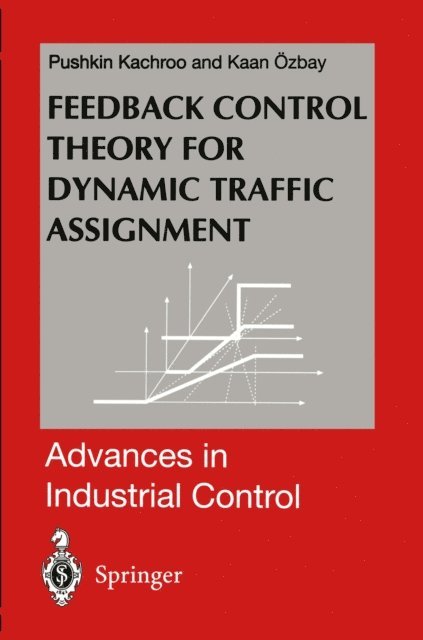
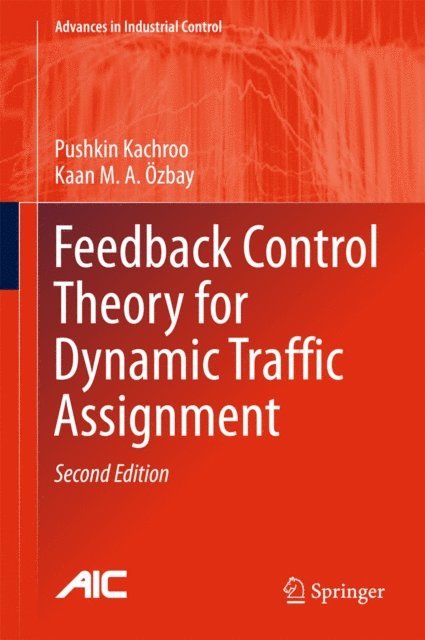
Techinques accounting for the importance of entropy are further new inclusions at various points in the text.
Researchers working in traffic control will find the theoretical material presented a sound basis for further research; the continual reference to applications will help professionals working in highway administration and engineering with the increasingly important task of maintaining and smoothing traffic flow; the extensive use of end-of-chapter exercises will help the graduate student and those new to the field to extend their knowledge.
1 080 kr
Skickas inom 10-15 vardagar
1 416 kr
Läs direkt efter köp
1 616 kr
Skickas inom 10-15 vardagar
2 049 kr
Läs direkt efter köp
Effective evacuation of people from closed spaces is an extremely important topic, since it can save real lives in emergency situations that can be brought about by natural and human made disasters. Usually there are static maps posted at various places at buildings that illustrate routes that should be taken during emergencies. However, when disasters happen, some of these routes might not be valid because of structural problems due to the disaster itself and more importantly because of the distribution of congestion of people spread over the area. The average flow of traffic depends on the traffic density. Therefore, if all the people follow the same route, or follow a route without knowing the congestion situation, they can end up being part of the congestion which results in very low flow rate or worse a traffic jam. Hence it becomes extremely important to design evacuations that inform people how fast and in which direction to move based on real-time information obtained about the people distribution using various sensors. The sensors used can include cameras, infra red sensors etc., and the technology used to inform people about the desired movement can be communicated using light matrix, small speakers, and in the future using wireless PDAs. This book provides mathematical models of pedestrian movements that can be used specifically for designing feedback control laws for effective evacuation. The book also provides various feedback control laws to accomplish the effective evacuation. The book uses the hydrodynamic hyperbolic PDE macroscopic pedestrian models since they are amenable to feedback control design. The control designs are obtained through different nonlinear techniques including Lyapunov functional techniques, feedback linearization in the distributed model, and some discretized techniques.
1 616 kr
Skickas inom 10-15 vardagar
1 327 kr
Tillfälligt slut
699 kr
Läs direkt efter köp
Homeland security, transportation, and city planning depend upon well-designed evacuation routes. You can’t wait until the day of to realize your plan won’t work. Designing successful evacuation plans requires an in-depth understanding of models and control designs for the problems of traffic flow, construction and road closures, and the intangible human factors. Pedestrian Dynamics: Mathematical Theory and Evacuation Control clearly delineates the derivation of mathematical models for pedestrian dynamics and how to use them to design feedback controls for evacuations.
The book includes:
Mathematical models derived from basic principles Mathematical analysis of the model Details of past work MATLAB® code 65 figures and 400 equations
Unlike most works on traffic flow, this book examines the development of optimal methods to effectively control and improve pedestrian traffic flow. The work of a leading expert, it examines the differential equations applied to conservation laws encountered in the study of pedestrian dynamics and evacuation control problem. The author presents new pedestrian traffic models for multi-directional flow in two dimensions. He considers a range of control models in various simulations, including relaxed models and those concerned with direction and magnitude velocity commands. He also addresses questions of time, cost, and scalability. The book clearly demonstrates what the future challenges are and provides the tools to meet them.