
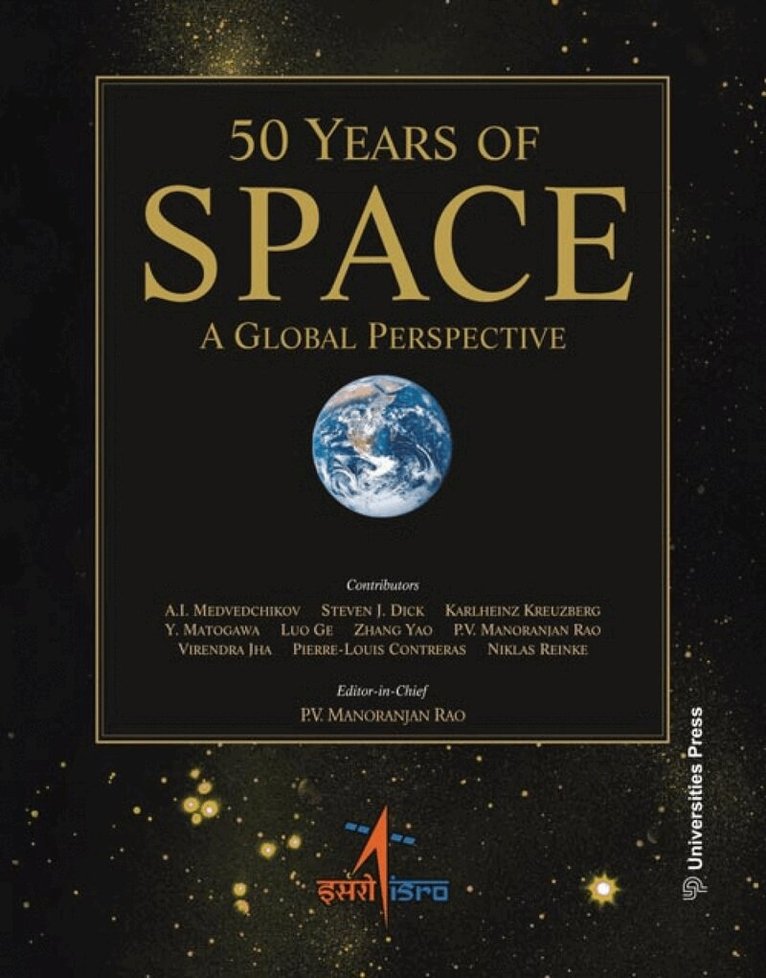
On October 4, 1957 the Soviet Union launched the world's first man-made satellite Sputnik-1, opening the doors to a new cosmic era. To commemorate the 50th anniversary of this momentous occasion 50 Years of Space: A Global Perspective gathers in a single volume, brief histories of all the major space agencies of the world written by people of impeccable credentials. In the past 50 years, many countries have found their own, unique paths to orbit. The objectives were multi-dimensional – an opportunity for investigating and understanding outer space; a means of showcasing technological superiority; a means to solve social problems. The essays assembled in this book illustrate the many different solutions that each country or organisation has developed.
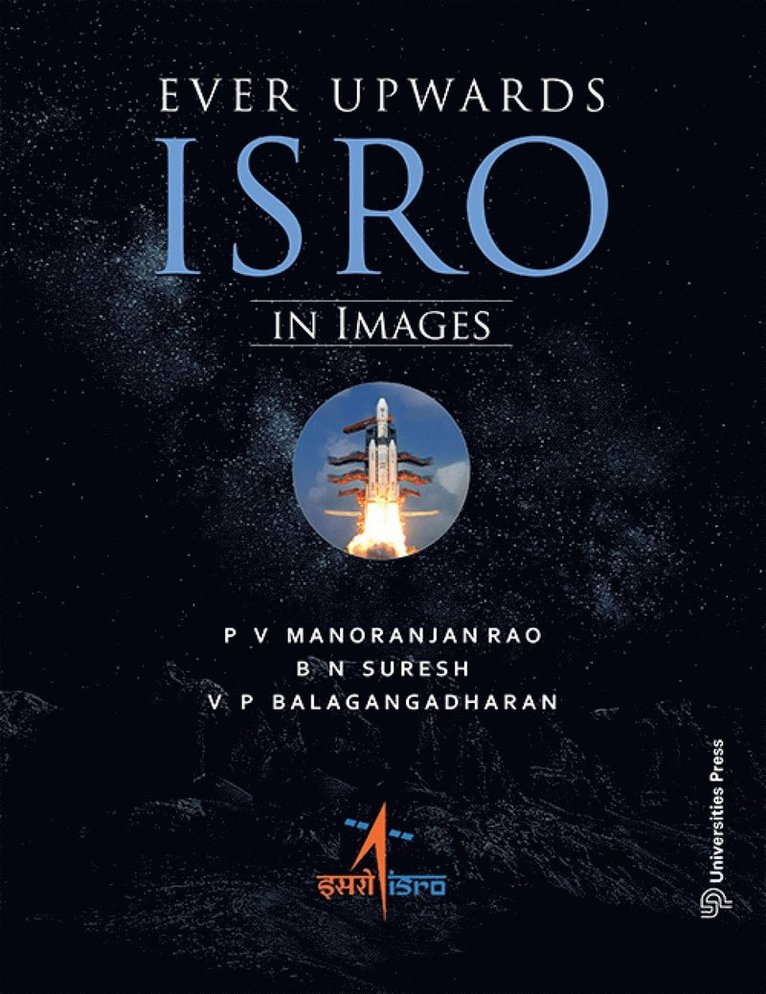
The Indian space programme has the unique distinction of being born in a place of worship: the St. Mary Magdalene Church in Thumba, a fishing hamlet near Thiruvananthapuram, the capital of Kerala. From those humble beginnings in 1963, the national space programme grew under the visionary guidance of Vikram Sarabhai and Satish Dhawan to become a technological giant, known today as the Indian Space Research Organisation (ISRO). Sarabhai created ISRO in 1969. This year, 2019, marks the birth centenary of Sarabhai and the 50th anniversary of ISRO. This book celebrates the double anniversary through over 370 photographs, lovingly curated by the authors from a collection of 2000. Some of them have never been seen before by the public, while others are eye-catchingly beautiful.
On October 4, 1957 the Soviet Union launched the world's first man-made satellite Sputnik-1, opening the doors to a new cosmic era. To commemorate the 50th anniversary of this momentous occasion 50 Years of Space: A Global Perspective gathers in a single volume, brief histories of all the major space agencies of the world written by people of impeccable credentials. In the past 50 years, many countries have found their own, unique paths to orbit. The objectives were multi-dimensional – an opportunity for investigating and understanding outer space; a means of showcasing technological superiority; a means to solve social problems. The essays assembled in this book illustrate the many different solutions that each country or organisation has developed.
The Indian space programme has the unique distinction of being born in a place of worship: the St. Mary Magdalene Church in Thumba, a fishing hamlet near Thiruvananthapuram, the capital of Kerala. From those humble beginnings in 1963, the national space programme grew under the visionary guidance of Vikram Sarabhai and Satish Dhawan to become a technological giant, known today as the Indian Space Research Organisation (ISRO). Sarabhai created ISRO in 1969. This year, 2019, marks the birth centenary of Sarabhai and the 50th anniversary of ISRO. This book celebrates the double anniversary through over 370 photographs, lovingly curated by the authors from a collection of 2000. Some of them have never been seen before by the public, while others are eye-catchingly beautiful.