P.W. Partridge – författare
Visar alla böcker från författaren P.W. Partridge. Handla med fri frakt och snabb leverans.
5 produkter
5 produkter
Inbunden, Engelska, 1991
921 kr
Skickas inom 10-15 vardagar
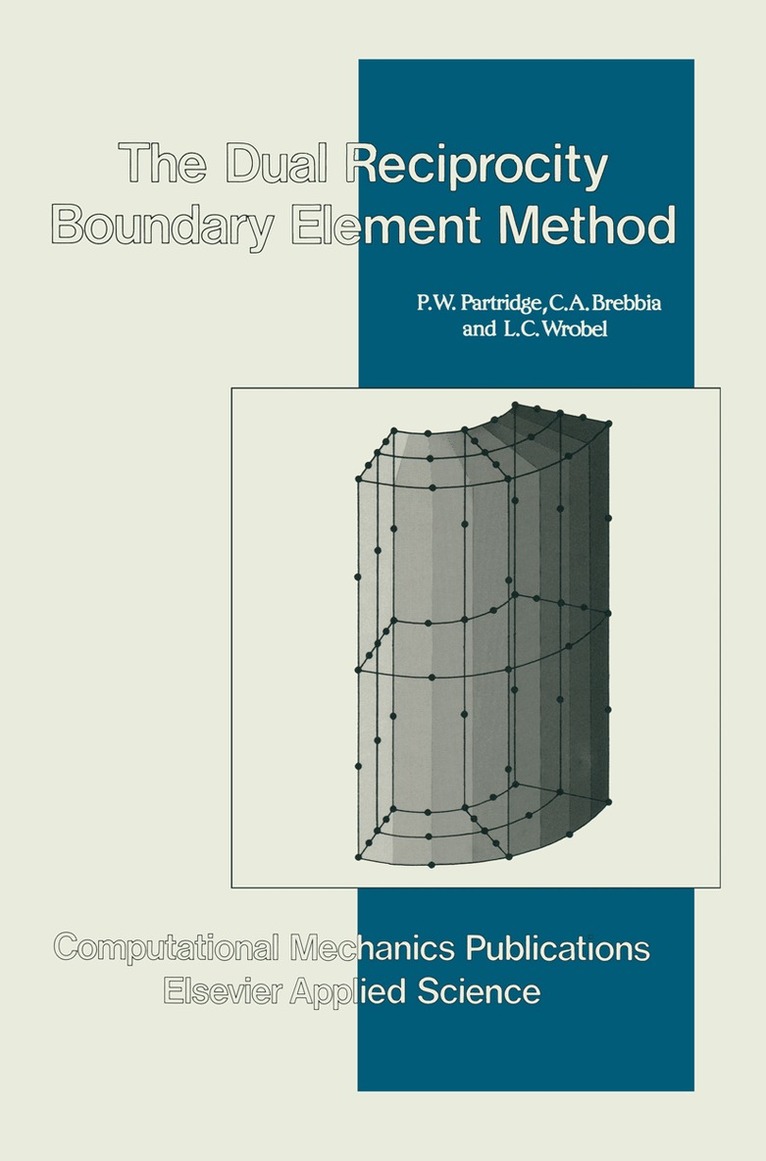
The boundary element method (BEM) is now a well-established numerical technique which provides an efficient alternative to the prevailing finite difference and finite element methods for the solution of a wide range of engineering problems. The main advantage of the BEM is its unique ability to provide a complete problem solution in terms of boundary values only, with substantial savings in computer time and data preparation effort. An initial restriction of the BEM was that the fundamental solution to the original partial differential equation was required in order to obtain an equivalent boundary in tegral equation. Another was that non-homogeneous terms accounting for effects such as distributed loads were included in the formulation by means of domain integrals, thus making the technique lose the attraction of its "boundary-only" character. Many different approaches have been developed to overcome these problems. It is our opinion that the most successful so far is the dual reciprocity method (DRM), which is the subject matter of this book. The basic idea behind this approach is to employ a fundamental solution corresponding to a simpler equation and to treat the remaining terms, as well as other non-homogeneous terms in the original equation, through a procedure which involves a series expansion using global approximating functions and the application of reciprocity principles.
Inbunden, Engelska, 1992
545 kr
Skickas inom 10-15 vardagar
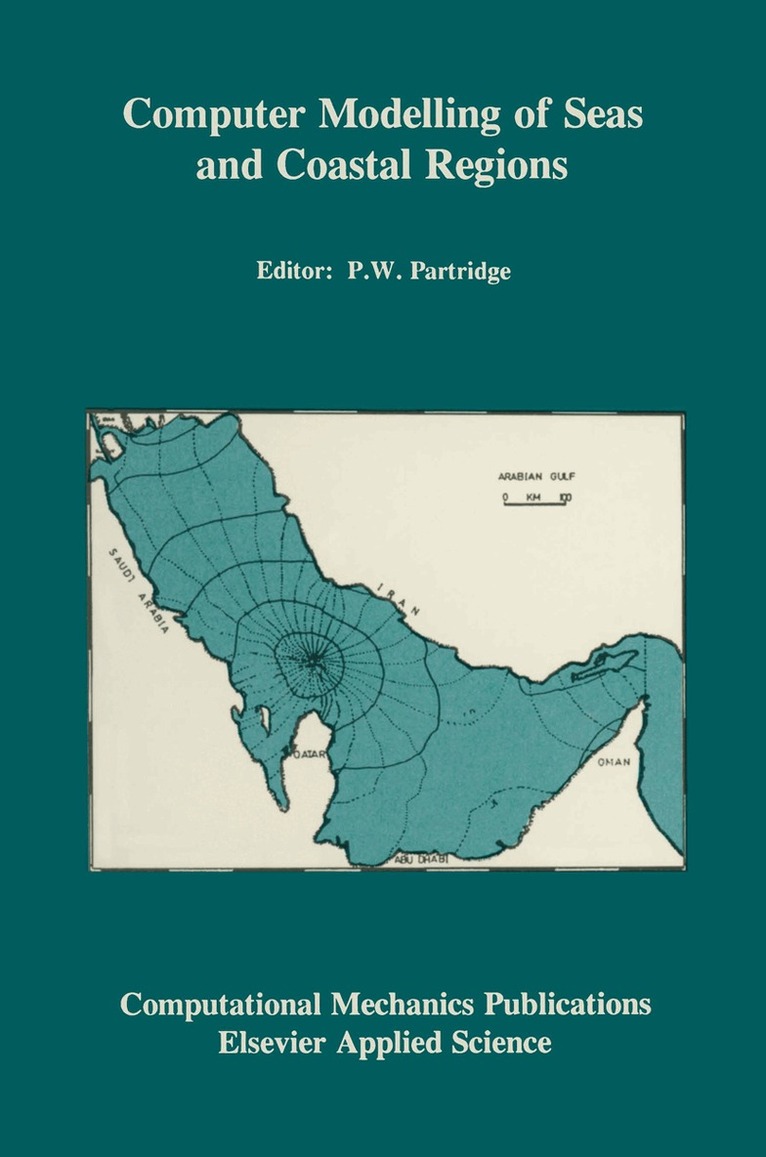
This book Computer Modelling of Seas and Coastal Regions is the first volume of the two volume proceedings of the International Conference on Computer Modelling of Seas and Coastal Regions and Boundary Elements and Fluid Dynamics, held in Southampton, U.K., in April 1992. The importance of accurate modelling of seas and coastal regions is empha sized by the need for predicting their behaviour under extreme conditions. Problems, such as pollution of these areas, have become a major interna tional concern and the related environmental problems need further study using techniques which can be used to determine the ways in which the water systems respond to different effects and try to minimize the damage. They can also lead to the development of early warning systems in combina tion with remote sensing equipment and experimental sampling techniques. Furthermore, once a disaster occurs, the model can be used to optimize the use of the available resources. The conference addresses coastal region modelling both under normal and extreme conditions, with special reference to practical problems, currently being experienced around the world. Many of the delegates are actively involved in the modelling of seas and coastal regions. This volume includes sections on waves, tides, shallow water circulation and channel flow, siltation and sedimentation, pollution problems, and computu tational techniques. The organizer would like to thank the International Scientific Advisory Committee, the conference delegates and all those who have actively sup ported the meeting.
E-bok
PDF, Engelska, 20121 140 kr
Läs direkt efter köp
This book Boundary Elements in Fluid Dynamics is the second volume of the two volume proceedings of the International Conference on Computer Modelling of Seas and Coastal Regions and Boundary Elements and Fluid Dynamics, held in Southampton, U.K., in April 1992. The Boundary Element Method (BEM) is now fully established as an ac curate and successful technique for solving engineering problems in a wide range of fields. The success of the method is due to its advantages in data reduction, as only the boundary of the region is modelled. Thus moving boundaries may be more easily handled, which is not the case if domain methods are used. In addition, the method is easily able to model regions to extending to infinity. Fluid mechanics is traditionally one of the most challenging areas of engi neering, the simulation of fluid motion, particularly in three dimensions, is always a serious test for any numerical method, and is an area in which BEM analysis may be used taking full advantage of its special characteris tics. The conference includes sections on turbomachinery, aerodynamics, viscous flow and turbulence models, and special flow situations. The organisers would like to thank the International Scientific Advisory Committee, the conference delegates and all of those who have actively supported the meet ing.
E-bok
PDF, Engelska, 2012712 kr
Läs direkt efter köp
This book Computer Modelling of Seas and Coastal Regions is the first volume of the two volume proceedings of the International Conference on Computer Modelling of Seas and Coastal Regions and Boundary Elements and Fluid Dynamics, held in Southampton, U.K., in April 1992. The importance of accurate modelling of seas and coastal regions is empha sized by the need for predicting their behaviour under extreme conditions. Problems, such as pollution of these areas, have become a major interna tional concern and the related environmental problems need further study using techniques which can be used to determine the ways in which the water systems respond to different effects and try to minimize the damage. They can also lead to the development of early warning systems in combina tion with remote sensing equipment and experimental sampling techniques. Furthermore, once a disaster occurs, the model can be used to optimize the use of the available resources. The conference addresses coastal region modelling both under normal and extreme conditions, with special reference to practical problems, currently being experienced around the world. Many of the delegates are actively involved in the modelling of seas and coastal regions. This volume includes sections on waves, tides, shallow water circulation and channel flow, siltation and sedimentation, pollution problems, and computu tational techniques. The organizer would like to thank the International Scientific Advisory Committee, the conference delegates and all those who have actively sup ported the meeting.
E-bok
PDF, Engelska, 20121 138 kr
Läs direkt efter köp
The boundary element method (BEM) is now a well-established numerical technique which provides an efficient alternative to the prevailing finite difference and finite element methods for the solution of a wide range of engineering problems. The main advantage of the BEM is its unique ability to provide a complete problem solution in terms of boundary values only, with substantial savings in computer time and data preparation effort. An initial restriction of the BEM was that the fundamental solution to the original partial differential equation was required in order to obtain an equivalent boundary in tegral equation. Another was that non-homogeneous terms accounting for effects such as distributed loads were included in the formulation by means of domain integrals, thus making the technique lose the attraction of its "boundary-only" character. Many different approaches have been developed to overcome these problems. It is our opinion that the most successful so far is the dual reciprocity method (DRM), which is the subject matter of this book. The basic idea behind this approach is to employ a fundamental solution corresponding to a simpler equation and to treat the remaining terms, as well as other non-homogeneous terms in the original equation, through a procedure which involves a series expansion using global approximating functions and the application of reciprocity principles.