
Pwyll ap SiA'n – författare
Visar alla böcker från författaren Pwyll ap SiA'n. Handla med fri frakt och snabb leverans.
4 produkter
4 produkter
E-bok
PDF, Engelska, 2019473 kr
Läs direkt efter köp
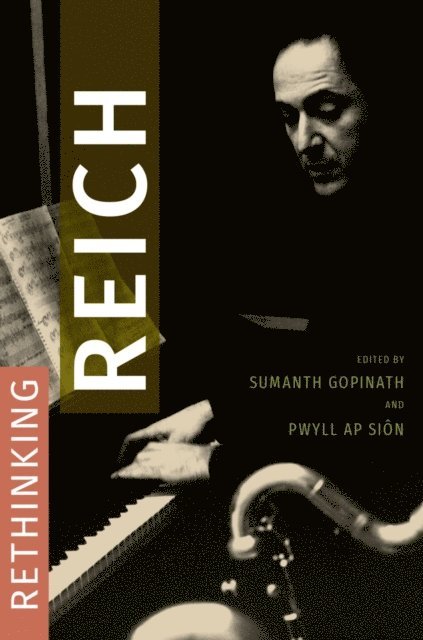
Described by music critic Alex Ross as "the most original musical thinker of our time" and having received innumerable accolades in a career spanning over fifty years, composer Steve Reich is considered by many to be America''s greatest contemporary composer. His music, however, remains largely underresearched. Rethinking Reich redresses this imbalance, providing a space for prominent and emerging scholars to reassess the composer''s contribution to music in the twentieth century. Featuring fourteen tightly focused and multifarious essays on various aspects of Reich''s work--ranging from analytical, aesthetic, and archival studies to sociocultural, philosophical, and ethnomusicological reflections--this edited volume reveals new insights, including those enabled by access to the growing Steve Reich Collection at the Paul Sacher Foundation archive, the premier institution for primary research on twentieth-century and contemporary classical music. This volume takes on the timely task of challenging the hegemony of Reich''s own articulate and convincing discourses on his music, as found in his Writings on Music (OUP, 2002), and breaks new ground in the broader field of minimalism studies.
E-bok
Engelska, 2019473 kr
Läs direkt efter köp
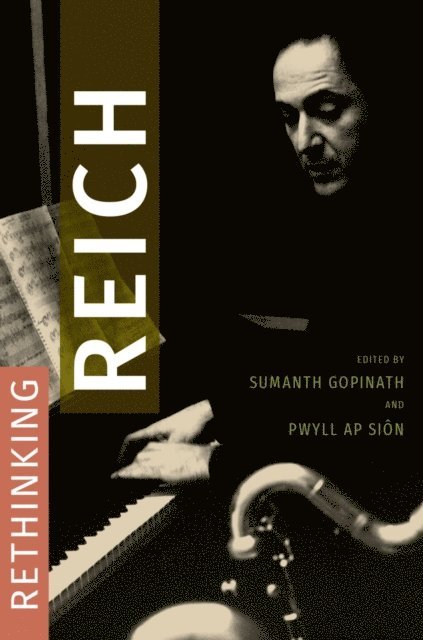
Described by music critic Alex Ross as "the most original musical thinker of our time" and having received innumerable accolades in a career spanning over fifty years, composer Steve Reich is considered by many to be America''s greatest contemporary composer. His music, however, remains largely underresearched. Rethinking Reich redresses this imbalance, providing a space for prominent and emerging scholars to reassess the composer''s contribution to music in the twentieth century. Featuring fourteen tightly focused and multifarious essays on various aspects of Reich''s work--ranging from analytical, aesthetic, and archival studies to sociocultural, philosophical, and ethnomusicological reflections--this edited volume reveals new insights, including those enabled by access to the growing Steve Reich Collection at the Paul Sacher Foundation archive, the premier institution for primary research on twentieth-century and contemporary classical music. This volume takes on the timely task of challenging the hegemony of Reich''s own articulate and convincing discourses on his music, as found in his Writings on Music (OUP, 2002), and breaks new ground in the broader field of minimalism studies.
E-bok
Engelska, 20161 039 kr
Läs direkt efter köp
For over three decades Michael Nyman''s music has succeeded in reaching beyond the small community of contemporary music aficionados to a much wider range of listeners. An important element in unlocking the key to Nyman''s success lies in his writings about music, which preoccupied him for over a decade from the late 1960s to the early 1980s. During this time Nyman produced over 100 articles, covering almost every conceivable musical style and genre - from the Early Music revival and the West''s interest in ''world'' music, or from John Cage and minimalism to rock and pop. Nyman initiated a number of landmark moments in the course of late twentieth-century music along the way: he was one of the first to critique the distinction between the European avant-garde and the American experimental movement; he was the first to coin the term ''minimalism'' in relation to the music of (then largely unknown) Steve Reich and Terry Riley, and later Philip Glass; the first to seriously engage with the music of the English experimental tradition and the importance of Cornelius Cardew, and to identify the importance of Art Colleges in nurturing and developing a radical alternative to modernism; and one of the first writers to grasp the significance of post-minimalists such as Brian Eno and Harold Budd, and to realize how these elements could be brought together into a new aesthetic vision for his own creative endeavours, which was formulated during the late 1970s and early 80s. Much of what transformed and defined Nyman''s musical character may be found within the pages of this volume of his writings, comprehensively edited and annotated for the first time, and including previously unpublished material from Nyman''s second interview with Steve Reich in 1976. There is also much here to engage the minds of those who are interested in pre-twentieth century music, from Early and Baroque music (Handel and Purcell in particular) to innovative features in Haydn, spatial elements in Berlioz, or Bruckner and Mahler''s symphonic works.
E-bok
PDF, Engelska, 20161 039 kr
Läs direkt efter köp
For over three decades Michael Nyman''s music has succeeded in reaching beyond the small community of contemporary music aficionados to a much wider range of listeners. An important element in unlocking the key to Nyman''s success lies in his writings about music, which preoccupied him for over a decade from the late 1960s to the early 1980s. During this time Nyman produced over 100 articles, covering almost every conceivable musical style and genre - from the Early Music revival and the West''s interest in ''world'' music, or from John Cage and minimalism to rock and pop. Nyman initiated a number of landmark moments in the course of late twentieth-century music along the way: he was one of the first to critique the distinction between the European avant-garde and the American experimental movement; he was the first to coin the term ''minimalism'' in relation to the music of (then largely unknown) Steve Reich and Terry Riley, and later Philip Glass; the first to seriously engage with the music of the English experimental tradition and the importance of Cornelius Cardew, and to identify the importance of Art Colleges in nurturing and developing a radical alternative to modernism; and one of the first writers to grasp the significance of post-minimalists such as Brian Eno and Harold Budd, and to realize how these elements could be brought together into a new aesthetic vision for his own creative endeavours, which was formulated during the late 1970s and early 80s. Much of what transformed and defined Nyman''s musical character may be found within the pages of this volume of his writings, comprehensively edited and annotated for the first time, and including previously unpublished material from Nyman''s second interview with Steve Reich in 1976. There is also much here to engage the minds of those who are interested in pre-twentieth century music, from Early and Baroque music (Handel and Purcell in particular) to innovative features in Haydn, spatial elements in Berlioz, or Bruckner and Mahler''s symphonic works.