Qinghua Guo – författare
Visar alla böcker från författaren Qinghua Guo. Handla med fri frakt och snabb leverans.
6 produkter
6 produkter
Häftad, Engelska, 2023
1 938 kr
Skickas inom 10-15 vardagar
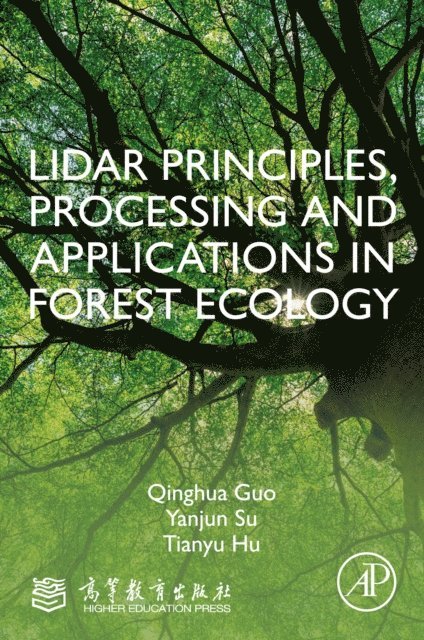
LiDAR Principles, Processing and Applications in Forest Ecology introduces the principles of LiDAR technology and explains how to collect and process LiDAR data from different platforms based on real-world experience. The book provides state-of the-art algorithms on how to extract forest parameters from LiDAR and explains how to use them in forest ecology. It gives an interdisciplinary view, from the perspective of remote sensing and forest ecology. Because LiDAR is still rapidly developing, researchers must use programming languages to understand and process LiDAR data instead of established software. In response, this book provides Python code examples and sample data. Sections give a brief history and introduce the principles of LiDAR, as well as three commonly seen LiDAR platforms. The book lays out step-by-step coverage of LiDAR data processing and forest structure parameter extraction, complete with Python examples. Given the increasing usefulness of LiDAR in forest ecology, this volume represents an important resource for researchers, students and forest managers to better understand LiDAR technology and its use in forest ecology across the world. The title contains over 15 years of research, as well as contributions from scientists across the world. Presents LiDAR applications for forest ecology based in real-world experience Lays out the principles of LiDAR technology in forest ecology in a systematic and clear way Provides readers with state-of the-art algorithms on how to extract forest parameters from LiDAR Offers Python code examples and sample data to assist researchers in understanding and processing LiDAR data Contains over 15 years of research on LiDAR in forest ecology and contributions from scientists working in this field across the world
E-bok
Engelska, 20232 759 kr
Läs direkt efter köp
LiDAR Principles, Processing and Applications in Forest Ecology introduces the principles of LiDAR technology and explains how to collect and process LiDAR data from different platforms based on real-world experience. The book provides state-of the-art algorithms on how to extract forest parameters from LiDAR and explains how to use them in forest ecology. It gives an interdisciplinary view, from the perspective of remote sensing and forest ecology. Because LiDAR is still rapidly developing, researchers must use programming languages to understand and process LiDAR data instead of established software. In response, this book provides Python code examples and sample data. Sections give a brief history and introduce the principles of LiDAR, as well as three commonly seen LiDAR platforms. The book lays out step-by-step coverage of LiDAR data processing and forest structure parameter extraction, complete with Python examples. Given the increasing usefulness of LiDAR in forest ecology, this volume represents an important resource for researchers, students and forest managers to better understand LiDAR technology and its use in forest ecology across the world. The title contains over 15 years of research, as well as contributions from scientists across the world.- Presents LiDAR applications for forest ecology based in real-world experience- Lays out the principles of LiDAR technology in forest ecology in a systematic and clear way- Provides readers with state-of the-art algorithms on how to extract forest parameters from LiDAR- Offers Python code examples and sample data to assist researchers in understanding and processing LiDAR data- Contains over 15 years of research on LiDAR in forest ecology and contributions from scientists working in this field across the world
Häftad, Engelska, 2016
1 006 kr
Skickas inom 3-6 vardagar
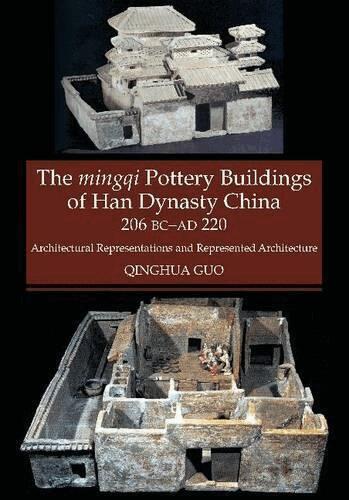
An enormous number of burial objects have been unearthed from ancient tombs in archaeological excavations in China. These mingqi were made in all kinds of materials and in a broad range of forms, techniques and craftsmanship. In this book Quinghua Guo examines a particular type of mingqi -- pottery building. The striking realism of the pottery buildings suggests that they were modelled after actual buildings. They bring to life courtyard houses, manors, towers, granaries and pigsty-privies, as well as cooking ranges and well pavilions. These pottery buildings, previously little known, preserve knowledge of antiquity and demonstrate the architectural quality and structural variety of the period. The author identifies the typology of the pottery buildings they signify in terms of ontology and semiology, in order to provide a conceptual map for classification, and identifies building systems reflected by the mingqi to detect architectonic systems of the Han dynasty. Key features of this volume include: Cross-disciplinary research -- architectural study interlocking with archaeological study; architectural study interlocking with graphic study. The Han pottery buildings are important architectural models from the ancient world, and are contrasted with wooden houses of Middle-Kingdom Egypt and brick buildings of the Minor civilisation, Crete, allowing cross-cultural comparisons.
Inbunden, Engelska, 2026
545 kr
Skickas inom 10-15 vardagar
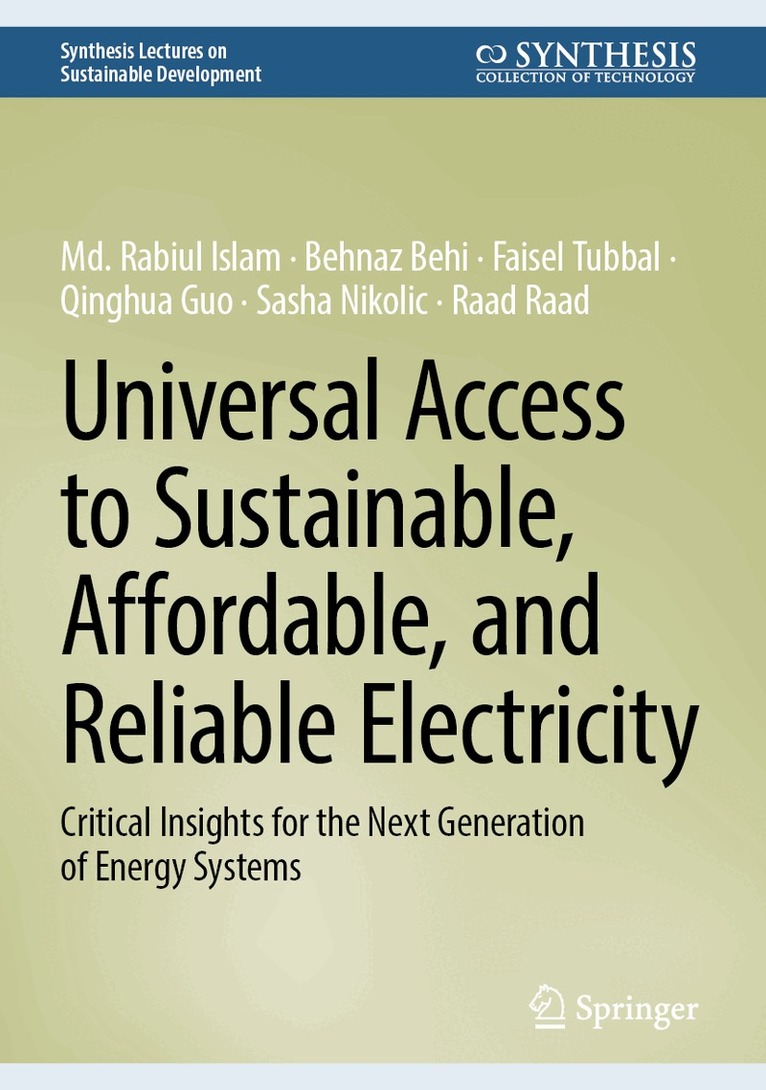
This book presents a framework for sustainable, affordable, and reliable electricity systems. It begins by examining the global energy situation, emphasizing the pressures of population growth, rapid urbanization, and environmental degradation. The critical aspects of reliability and resiliency are discussed next. Modern grids must balance the intermittency of renewable energy sources with the demand for a continuous supply. Energy storage, smart grids, and innovative market mechanisms all play a role, but they also raise questions about cost and feasibility.Another central theme is the rise of electric vehicles and large-scale energy storage. These technologies promise to reduce dependency on fossil fuels, but they also affect electricity demand and intensify the need for critical minerals. Their rapid adoption requires infrastructure planning, recycling strategies, and grid integration.A distinctive contribution of this work is the identification of twelve key research gaps in energy transition knowledge, policy, and technology, and proposing strategies to move toward an energy future that is fair, resilient, and sustainable for generations to come.
E-bok
Engelska, 2026712 kr
Läs direkt efter köp
This book presents a framework for sustainable, affordable, and reliable electricity systems. It begins by examining the global energy situation, emphasizing the pressures of population growth, rapid urbanization, and environmental degradation. The critical aspects of reliability and resiliency are discussed next. Modern grids must balance the intermittency of renewable energy sources with the demand for a continuous supply. Energy storage, smart grids, and innovative market mechanisms all play a role, but they also raise questions about cost and feasibility.Another central theme is the rise of electric vehicles and large-scale energy storage. These technologies promise to reduce dependency on fossil fuels, but they also affect electricity demand and intensify the need for critical minerals. Their rapid adoption requires infrastructure planning, recycling strategies, and grid integration.A distinctive contribution of this work is the identification of twelve key research gaps in energy transition knowledge, policy, and technology, and proposing strategies to move toward an energy future that is fair, resilient, and sustainable for generations to come.
Inbunden, Engelska, 2016
532 kr
Skickas inom 11-20 vardagar
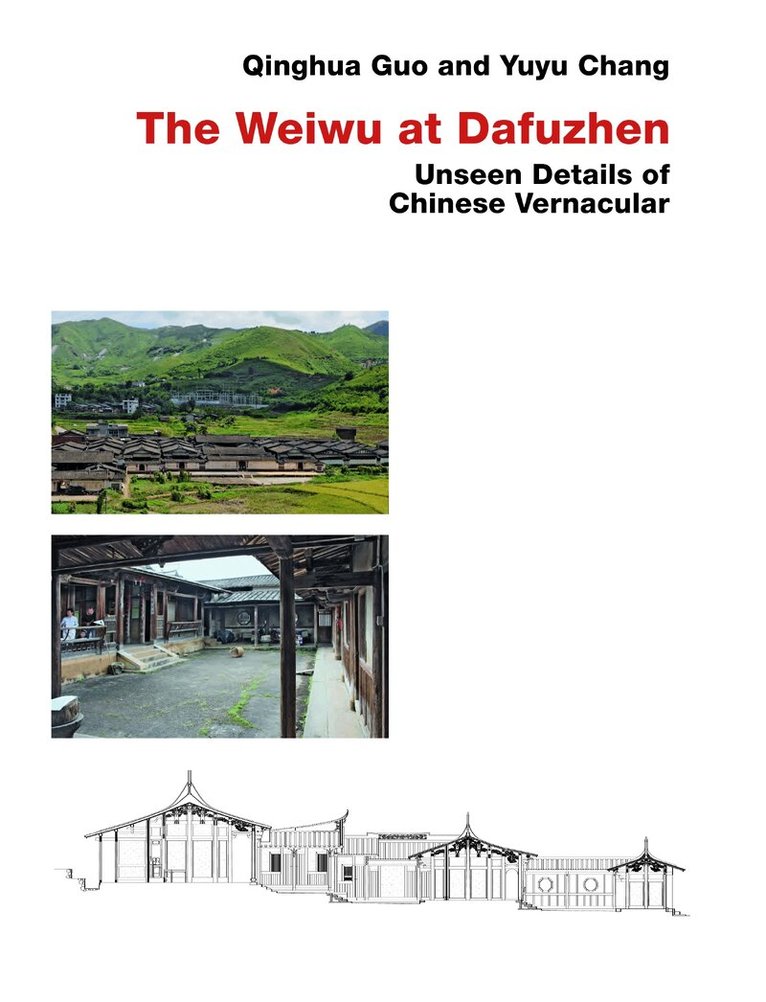
Two main types of residential architecture have dominated the architecture in the Fujian region in China. Known as tulou and weiwu, they have been developed in parallel. Both are designed for communal living, but are distinct from each other in terms of setting, layout, form and size. A good deal is known about tulou which has been inscribed as UNESCO World Heritage in 2008, but existing scholarship on weiwu is lacking. The weiwu at Dafuzhen in central Fujian is of particular interest because of its architectural and planning sophistication and its commoners status. It is the Family Xiaos estate built during 1870 to 1885. Our tasks were: first, to survey in situ each building part of the complex in the current situation with attention to details; second, to portray what was hidden from view using masterly "x-ray" eyes; third, to convey the information in measured drawings at technological and design levels. Our work is graphic and analytical in nature, ranged within a series of research questions: What was the planning made to suit the hillside setting? What was the architectural arrangement made to accommodate the community living? To what extent do water supply and drainage design serve as a planning strategy? This study suggests that water management was a key issue which was not a topic of great interest in traditional scholarship. The book offers students and professionals an expert introduction to Chinese vernacular that has been termed the essence of architecture, with the Dafuzhen weiwu as a case study. It describes characters and structures, discusses functions and rationales, and investigates methods and techniques at design and construction levels.