Quan-Sheng Shu - Böcker
Visar alla böcker från författaren Quan-Sheng Shu. Handla med fri frakt och snabb leverans.
3 produkter
3 produkter
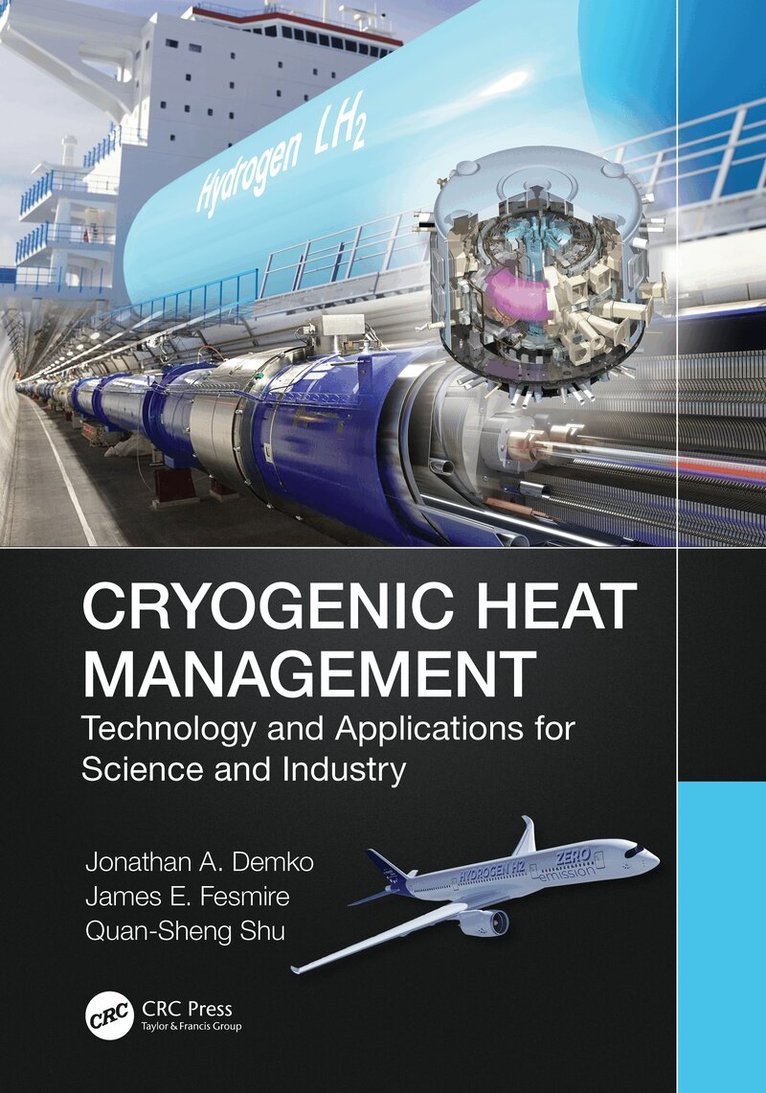
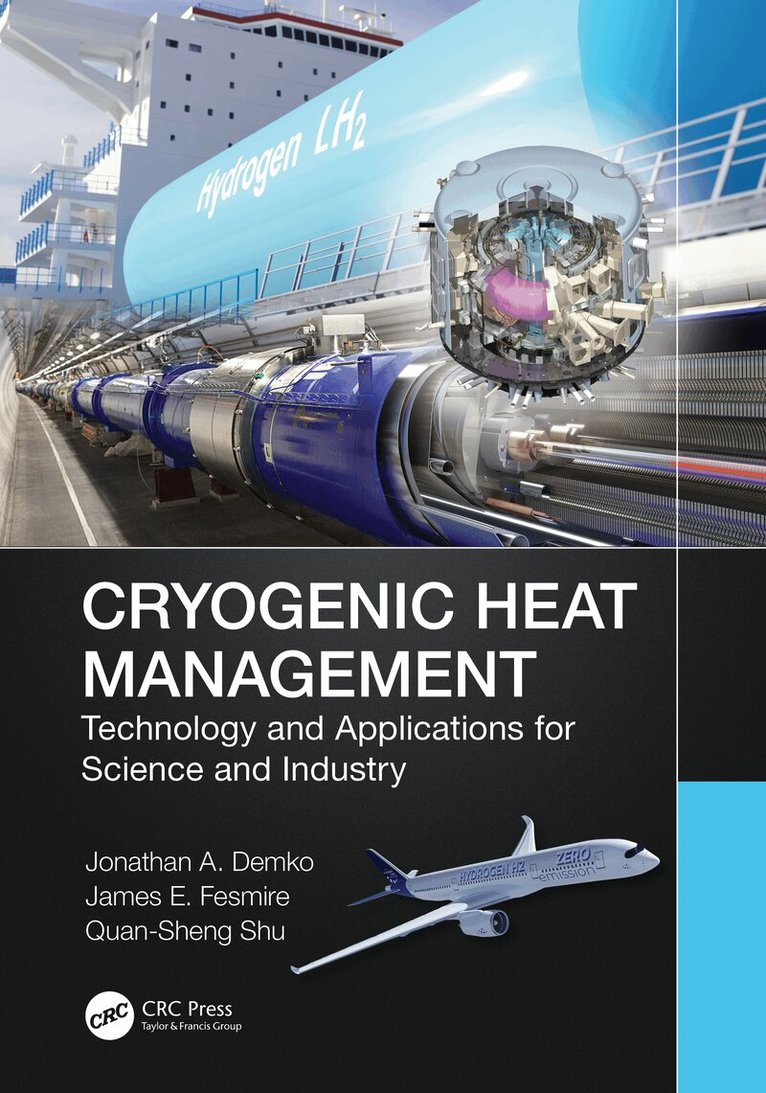
Cryogenic Heat Management
Technology and Applications for Science and Industry
Inbunden, Engelska, 2022
2 289 kr
Skickas inom 10-15 vardagar
Cryogenic engineering (cryogenics) is the production, preservation, and use or application of cold. This book presents a comprehensive introduction to designing systems to deal with heat – effective management of cold, exploring the directing (or redirecting), promoting, or inhibiting this flow of heat in a practical way. It provides a description of the necessary theory, design methodology, and advanced demonstrations (thermodynamics, heat transfer, thermal insulation, fluid mechanics) for many frequently occurring situations in low-temperature apparatus. This includes systems that are widely used such as superconducting magnets for magnetic resonance imaging (MRI), high-energy physics, fusion, tokamak and free electron laser systems, space launch and exploration, and energy and transportation use of liquid hydrogen, as well as potential future applications of cryo-life sciences and chemical industries. The book is written with the assumption that the reader has an undergraduate understanding of thermodynamics, heat transfer, and fluid mechanics, in addition to the mechanics of materials, material science, and physical chemistry. Cryogenic Heat Management: Technology and Applications for Science and Industry will be a valuable guide for those researching, teaching, or working with low-temperature or cryogenic systems, in addition to postgraduates studying the topic.Key features: Presents simplified but useful and practical equations that can be applied in estimating performance and design of energy-efficient systems in low-temperature systems or cryogenics Contains practical approaches and advanced design materials for insulation, shields/anchors, cryogen vessels/pipes, calorimeters, cryogenic heat switches, cryostats, current leads, and RF couplers Provides a comprehensive introduction to the necessary theory and models needed for solutions to common difficulties and illustrates the engineering examples with more than 300 figures
671 kr
Skickas inom 10-15 vardagar
Cryogenic engineering (cryogenics) is the production, preservation, and use or application of cold. This book presents a comprehensive introduction to designing systems to deal with heat – effective management of cold, exploring the directing (or redirecting), promoting, or inhibiting this flow of heat in a practical way. It provides a description of the necessary theory, design methodology, and advanced demonstrations (thermodynamics, heat transfer, thermal insulation, fluid mechanics) for many frequently occurring situations in low-temperature apparatus. This includes systems that are widely used such as superconducting magnets for magnetic resonance imaging (MRI), high-energy physics, fusion, tokamak and free electron laser systems, space launch and exploration, and energy and transportation use of liquid hydrogen, as well as potential future applications of cryo-life sciences and chemical industries. The book is written with the assumption that the reader has an undergraduate understanding of thermodynamics, heat transfer, and fluid mechanics, in addition to the mechanics of materials, material science, and physical chemistry. Cryogenic Heat Management: Technology and Applications for Science and Industry will be a valuable guide for those researching, teaching, or working with low-temperature or cryogenic systems, in addition to postgraduates studying the topic.Key features: Presents simplified but useful and practical equations that can be applied in estimating performance and design of energy-efficient systems in low-temperature systems or cryogenics Contains practical approaches and advanced design materials for insulation, shields/anchors, cryogen vessels/pipes, calorimeters, cryogenic heat switches, cryostats, current leads, and RF couplers Provides a comprehensive introduction to the necessary theory and models needed for solutions to common difficulties and illustrates the engineering examples with more than 300 figures
3 149 kr
Skickas inom 10-15 vardagar
In recent years, the technology of cryogenic comminution has been widely applied in the field of chemical engineering, food making, medicine production, and particularly in recycling of waste materials. Because of the increasing pollution of waste tires and the shortage of raw rubber resource, the recycling process for waste rubber products has become important and commercially viable. This technology has shown a great number of advantages such as causing no environmental pollution, requiring low energy consumption and producing high quality products. Hence, the normal crusher which was used to reclaim materials, such as waste tires, nylon, plastic and many polymer materials at atmospheric 12 temperature is being replaced by a cryogenic crusher. • In the cryogenic crusher, the property of the milled material is usually very sensitive to temperature change. When a crusher is in operation, it will generate a great deal of heat that causes the material temperature increased. Once the temperature increases over the vitrification temperature, the material property will change and lose the brittle behavior causing the energy consumption to rise sharply. Consequently, the comminution process cannot be continued. Therefore, it is believed that the cryogenic crusher is the most critical component in the cryogenic comminution system. The research on the temperature increase and energy consumption in the cryogenic crusher is not only to reduce the energy consumption of the crasher, but also to reduce the energy consumption of the cryogenic system.