R. A. Stradling - Böcker
Visar alla böcker från författaren R. A. Stradling. Handla med fri frakt och snabb leverans.
3 produkter
3 produkter
1 377 kr
Skickas inom 7-10 vardagar
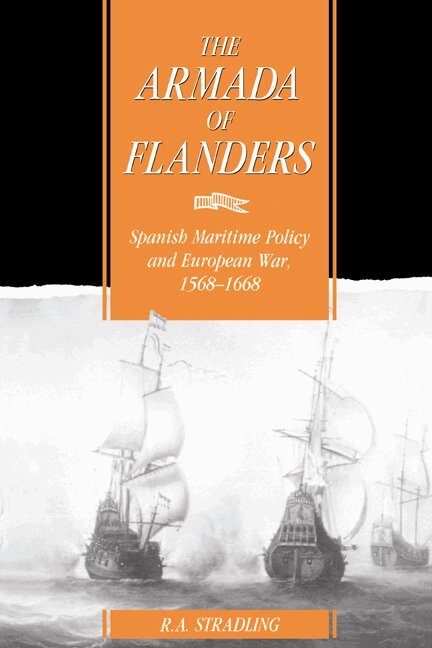
The Flanders armada, took shape in response to the use of seapower by the Dutch rebels, and evolved into the most effective unit in Spain's defence establishment. In combination with its privateering auxiliaries, this elite striking force dominated the North Sea for some twenty years (1625-45), and campaigned also in the Mediterranean and Atlantic theatres of war. Yet its contribution to the tenacious survival of Spanish hegemony has never before been assessed. A narrative of the armada's fighting record over the century of its meaningful existence is presented with constant reference to the strategic-logistical context and analysis of policymaking in Madrid. Attention is paid to the political significance of maritime policy, and particularly the relationship between Madrid and its subordinate headquarters in Brussels; the infrastructure of the armada; the ships themselves, above all the revolutionary but elusive 'frigate'; the social hierarchy of crews and commanders; and details of administration and financing.
563 kr
Skickas inom 7-10 vardagar
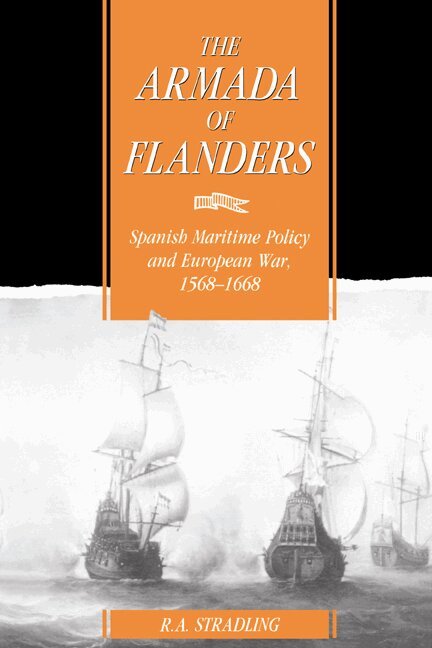
The Flanders armada, took shape in response to the use of seapower by the Dutch rebels, and evolved into the most effective unit in Spain's defence establishment. In combination with its privateering auxiliaries, this elite striking force dominated the North Sea for some twenty years (1625-45), and campaigned also in the Mediterranean and Atlantic theatres of war. Yet its contribution to the tenacious survival of Spanish hegemony has never before been assessed. A narrative of the armada's fighting record over the century of its meaningful existence is presented with constant reference to the strategic-logistical context and analysis of policymaking in Madrid. Attention is paid to the political significance of maritime policy, and particularly the relationship between Madrid and its subordinate headquarters in Brussels; the infrastructure of the armada; the ships themselves, above all the revolutionary but elusive 'frigate'; the social hierarchy of crews and commanders; and details of administration and financing.
645 kr
Skickas inom 7-10 vardagar
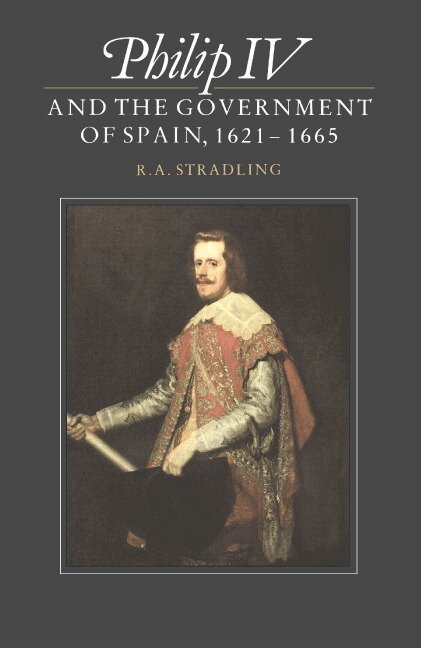
This book concentrates on the political history of the reign of Philip IV, and the role of the king within it. Philip is kept near the forefront, and issues and events are often seen - if sometimes critically - from his viewpoint. It is, therefore, a work of revision and rehabilitation, representing an attempt (against all other extant accounts) to establish Philip IV as a positive figure, with an autonomous character and political identity. A secondary, supportive, intention is to demonstrate that after the fall of Olivares, the king ruled and governed without a favourite (valido). This is the central theme in the most detailed treatment of the second half of the reign available in any language. Reference is made throughout to Philip's own words and actions. At the same time, the Olivares period itself is approached from a new perspective, some issues being examined with the use of new material. Although not intended as a conventional biography, the book retains several characteristics of the form, in that it is a 'career-study', part thematic, part chronological. Philip IV is examined also in relation to the political writing of the age, and to his court and capital in Madrid.