R. Brian Howe – författare
Visar alla böcker från författaren R. Brian Howe. Handla med fri frakt och snabb leverans.
8 produkter
8 produkter
Häftad, Engelska, 2007
367 kr
Skickas inom 5-8 vardagar
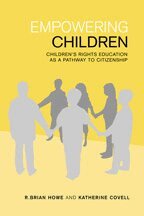
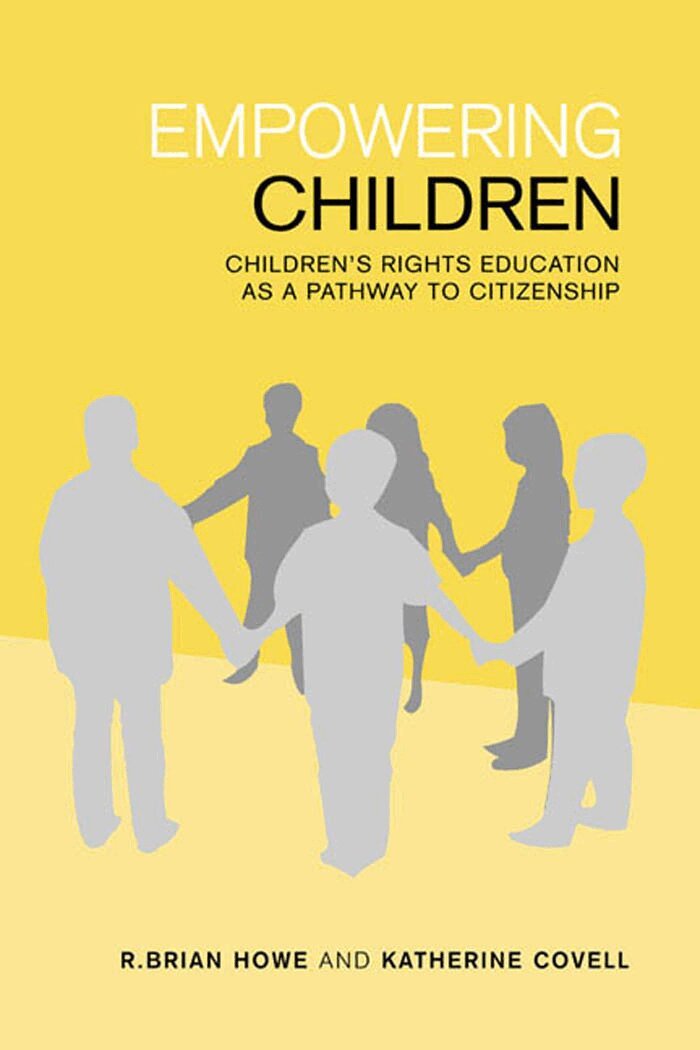
Approved by the General Assembly of the United Nations in 1989, the United Nations Convention on the Rights of the Child affirms that children in all countries have fundamental rights, including rights to education. To date, 192 states are signatories to or have in some form ratified the accord. Children are still imperilled in many countries, however, and are often not made aware of their guaranteed rights.In Empowering Children, R. Brian Howe and Katherine Covell assert that educating children about their basic rights is a necessary means not only of fulfilling a country's legal obligations, but also of advancing education about democratic principles and the practice of citizenship. The authors contend that children's rights education empowers children as persons and as rights-respecting citizens in democratic societies. Such education has a 'contagion effect' that brings about a general social knowledge on human rights and social responsibility.Although there remain obstacles to the implementation of children's rights in many countries, Howe and Covell argue that reforming schools and enhancing teacher education are absolutely essential to the creation of a new culture of respect toward children as citizens. Their thorough and passionate work marks a significant advance in the field.
Häftad, Engelska, 2013
359 kr
Skickas inom 5-8 vardagar
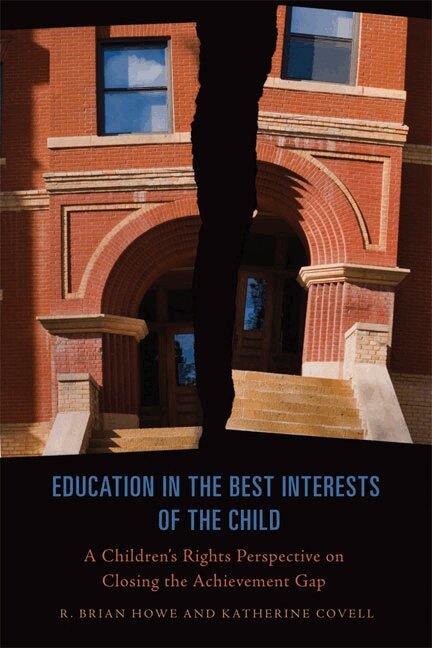
A large body of research in disciplines from sociology and policy studies to neuroscience and educational psychology has confirmed that socioeconomic status remains the most powerful influence on children’s educational outcomes. Socially disadvantaged children around the world disproportionately suffer from lower levels of educational achievement, which in turn leads to unfavourable long-term outcomes in employment and health. Education in the Best Interests of the Child addresses this persistent problem, which violates not only the principle of equal educational opportunity, but also the broader principle of the best interests of the child as called for in the UN Convention on the Rights of the Child.Building on the children’s rights work accomplished in their previous book, Empowering Children, Brian Howe and Katherine Covell identify three types of reform that can significantly close the educational achievement gap. Their findings make an important argument for stronger and more comprehensive action to equalize educational opportunities for disadvantaged children.
E-bok
PDF, Engelska, 2013445 kr
Läs direkt efter köp
A large body of research in disciplines from sociology and policy studies to neuroscience and educational psychology has confirmed that socioeconomic status remains the most powerful influence on children’s educational outcomes. Socially disadvantaged children around the world disproportionately suffer from lower levels of educational achievement, which in turn leads to unfavourable long-term outcomes in employment and health. Education in the Best Interests of the Child addresses this persistent problem, which violates not only the principle of equal educational opportunity, but also the broader principle of the best interests of the child as called for in the UN Convention on the Rights of the Child.Building on the children’s rights work accomplished in their previous book, Empowering Children, Brian Howe and Katherine Covell identify three types of reform that can significantly close the educational achievement gap. Their findings make an important argument for stronger and more comprehensive action to equalize educational opportunities for disadvantaged children.
E-bok
Engelska, 2013445 kr
Läs direkt efter köp
A large body of research in disciplines from sociology and policy studies to neuroscience and educational psychology has confirmed that socioeconomic status remains the most powerful influence on children’s educational outcomes. Socially disadvantaged children around the world disproportionately suffer from lower levels of educational achievement, which in turn leads to unfavourable long-term outcomes in employment and health. Education in the Best Interests of the Child addresses this persistent problem, which violates not only the principle of equal educational opportunity, but also the broader principle of the best interests of the child as called for in the UN Convention on the Rights of the Child.Building on the children’s rights work accomplished in their previous book, Empowering Children, Brian Howe and Katherine Covell identify three types of reform that can significantly close the educational achievement gap. Their findings make an important argument for stronger and more comprehensive action to equalize educational opportunities for disadvantaged children.
E-bok
PDF, Engelska, 2005413 kr
Läs direkt efter köp
Approved by the General Assembly of the United Nations in 1989, the United Nations Convention on the Rights of the Child affirms that children in all countries have fundamental rights, including rights to education. To date, 192 states are signatories to or have in some form ratified the accord. Children are still imperilled in many countries, however, and are often not made aware of their guaranteed rights.In Empowering Children, R. Brian Howe and Katherine Covell assert that educating children about their basic rights is a necessary means not only of fulfilling a country's legal obligations, but also of advancing education about democratic principles and the practice of citizenship. The authors contend that children's rights education empowers children as persons and as rights-respecting citizens in democratic societies. Such education has a 'contagion effect' that brings about a general social knowledge on human rights and social responsibility.Although there remain obstacles to the implementation of children's rights in many countries, Howe and Covell argue that reforming schools and enhancing teacher education are absolutely essential to the creation of a new culture of respect toward children as citizens. Their thorough and passionate work marks a significant advance in the field.
E-bok
PDF, Engelska, 1999855 kr
Läs direkt efter köp
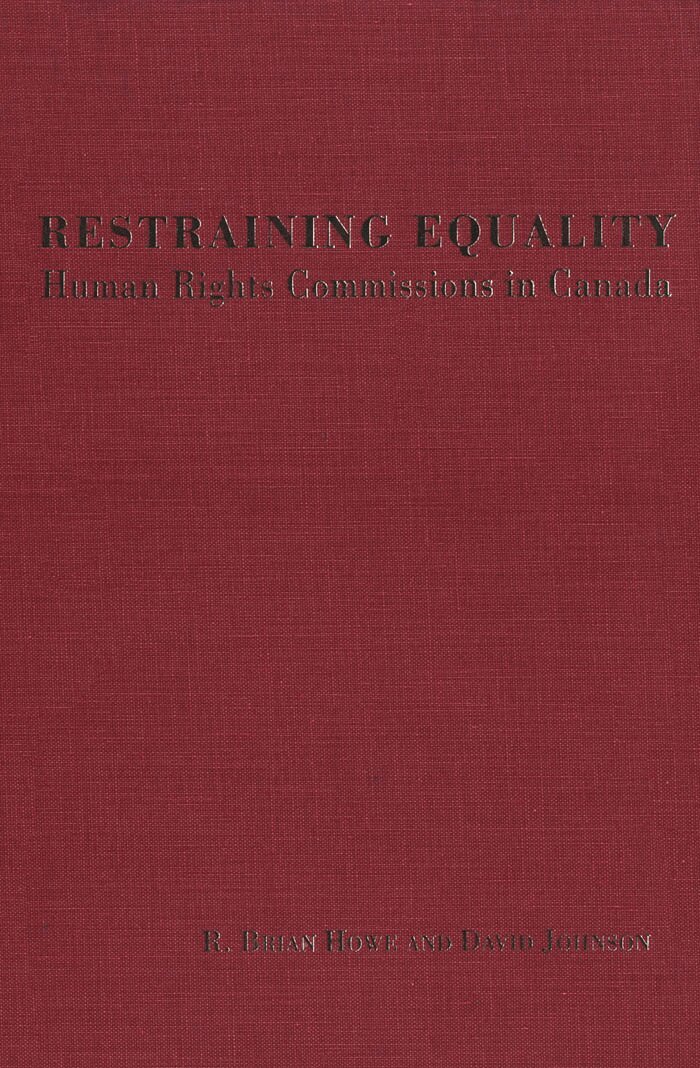
"Restraining Equality" addresses the contemporary financial, social, legal, and policy pressures currently experienced by human rights commissions across Canada. Through a combination of public policy analysis, historical research, and legal analysis, R.Brian Howe and David Johnson trace the evolution of human rights policy within this country and explore the stresses placed on human rights commissions resulting from greater fiscal restraints and society's rising expectations for equality rights over the past two decades.The authors analyse sources of these tensions in relation to the delivery of equality rights in both federal and provincial jurisdictions since the Second World War. Through a series of interviews with human rights commission officials and a survey of advocacy groups, business organizations, and human rights staff the authors explore the performance and the internal workings of these. Howe and Johnson also analyse human rights commissions in light of the theoretical literature and empirical data, and discuss the political and legal contexts in which the commissions operate, and the reform measures that have been implemented.
E-bok
Engelska, 2007458 kr
Läs direkt efter köp
Approved by the General Assembly of the United Nations in 1989, the United Nations Convention on the Rights of the Child affirms that children in all countries have fundamental rights, including rights to education. To date, 192 states are signatories to or have in some form ratified the accord. Children are still imperilled in many countries, however, and are often not made aware of their guaranteed rights.In Empowering Children, R. Brian Howe and Katherine Covell assert that educating children about their basic rights is a necessary means not only of fulfilling a country's legal obligations, but also of advancing education about democratic principles and the practice of citizenship. The authors contend that children's rights education empowers children as persons and as rights-respecting citizens in democratic societies. Such education has a 'contagion effect' that brings about a general social knowledge on human rights and social responsibility.Although there remain obstacles to the implementation of children's rights in many countries, Howe and Covell argue that reforming schools and enhancing teacher education are absolutely essential to the creation of a new culture of respect toward children as citizens. Their thorough and passionate work marks a significant advance in the field.
Häftad, Engelska, 2025
205 kr
Skickas inom 5-8 vardagar