R Duncan – författare
Visar alla böcker från författaren R Duncan. Handla med fri frakt och snabb leverans.
4 produkter
4 produkter
E-bok
PDF, Engelska, 2012672 kr
Läs direkt efter köp
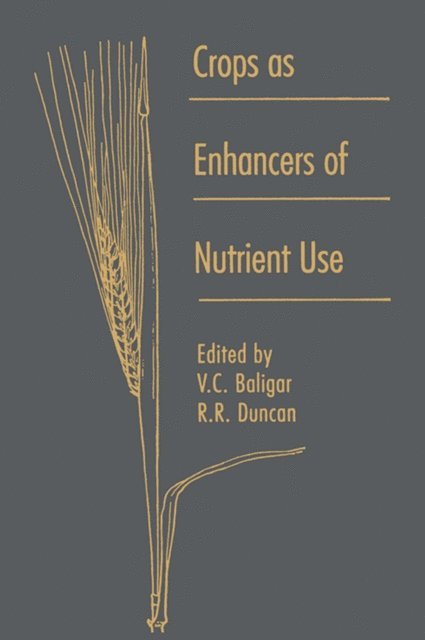
Crops as Enhancers of Nutrient Use examines the various plant and soil factors that contribute to nutrient use efficiency of plants. It attempts to address policies regarding Low Input Sustainable Agriculture (LISA), conservation-oriented cropping systems, and reductions in environmental contaminants. It also presents longer-term remedies to some of the inherent problems of high volume applications of expensive fertilizer nutrients. This book emphasizes plant-soil interaction, particularly, nutritional interactions involving rhizosphere, microbes, and stress on the root system. Stress factors include moisture and low and high pH. The book also covers the genetic and physiological response of plant to nutrients at the cellular level, on a whole-plant basis, and when subjected to stress. This book will contribute to the development of a more cost-effective and judicious nutrient usage of major crops.
Inbunden, Engelska, 1997
1 667 kr
Skickas inom 10-15 vardagar
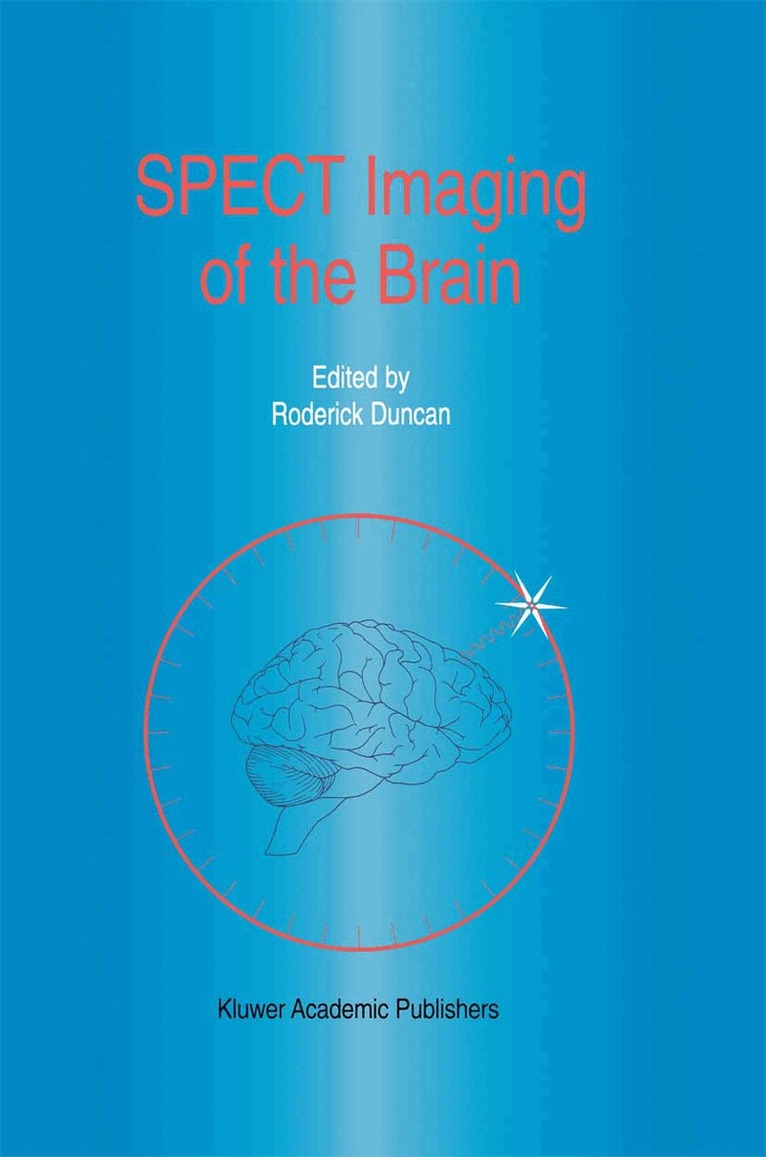
This text gives an account of the SPECT technique, including basic aspects of radiation, radiation dosimetry and radiation protection, and the use of SPECT in major domains such as epilepsy, psychiatric disorders, head injury, cerebrovascular disorders, and cerebral neoplasm. It is written mainly by neuroclinicians with a wide experience of using SPECT in their own clinical domain. The book can therefore, serve as a practical guide for neuroclinicians who are less familiar with the advantages and disadvantages of SPECT. It is also of interest to nuclear medicine specialists who would like to know more about the clinical applications of the technique. This text is a concise guide, concentrating largely on the major applications of the technique.
Häftad, Engelska, 2012
1 653 kr
Skickas inom 10-15 vardagar
In the developed world, images of brain structure are available as an everyday diagnostic aid, and the characteristic appearances of most pathological conditions can be looked up in a textbook. Functional brain imaging is to this day less widely used, partly because most pressing diagnostic questions can be answered by refer ence to the patient's cerebral anatomy, partly for reasons of technical limitations of functional techniques. PET as a technique is sufficiently resource-demanding and complex to inhibit its use as an everyday diagnostic technique. SPECT lacked suitable tracers for many years, and early systems had poor spatial resolution. However, rotating gamma camera technology has advanced to the point where images of the brain of reasonable quality can be obtained at most large hospitals, and practical tracers, particularly of regional cerebral blood flow, are easily avail able. As research advances, clinical applications are emerging. A recent report of the Therapeutics and Technology Assessment Subcommittee of the American Academy of Neurology! details a number of currently recognised clinical appli cations, some of which are dealt with in this book. Given this recognition, it is increasingly important that clinicians (particularly neuroclinicians, psychiatrists and specialists in cerebrovascular disease), nuclear medicine specialists and physicists acquire an idea of the major applications of the technique, and the research background on which these applications are based.
E-bok
PDF, Engelska, 20122 054 kr
Läs direkt efter köp
In the developed world, images of brain structure are available as an everyday diagnostic aid, and the characteristic appearances of most pathological conditions can be looked up in a textbook. Functional brain imaging is to this day less widely used, partly because most pressing diagnostic questions can be answered by refer ence to the patient''s cerebral anatomy, partly for reasons of technical limitations of functional techniques. PET as a technique is sufficiently resource-demanding and complex to inhibit its use as an everyday diagnostic technique. SPECT lacked suitable tracers for many years, and early systems had poor spatial resolution. However, rotating gamma camera technology has advanced to the point where images of the brain of reasonable quality can be obtained at most large hospitals, and practical tracers, particularly of regional cerebral blood flow, are easily avail able. As research advances, clinical applications are emerging. A recent report of the Therapeutics and Technology Assessment Subcommittee of the American Academy of Neurology! details a number of currently recognised clinical appli cations, some of which are dealt with in this book. Given this recognition, it is increasingly important that clinicians (particularly neuroclinicians, psychiatrists and specialists in cerebrovascular disease), nuclear medicine specialists and physicists acquire an idea of the major applications of the technique, and the research background on which these applications are based.