R. Herrmann – författare
Visar alla böcker från författaren R. Herrmann. Handla med fri frakt och snabb leverans.
8 produkter
8 produkter
Inbunden, Engelska, 2004
1 083 kr
Skickas inom 10-15 vardagar
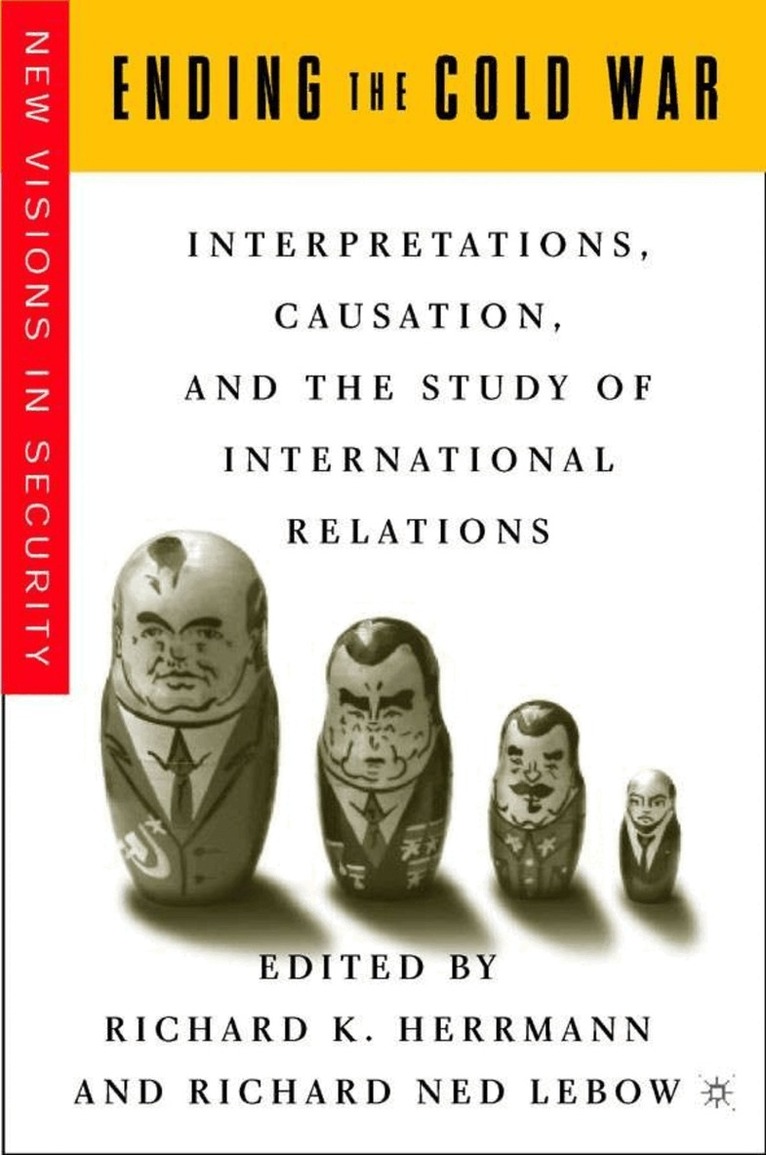
Although in hindsight the end of the Cold War seems almost inevitable, almost no one saw it coming and there is little consensus over why it ended. A popular interpretation is that the Soviet Union was unable to compete in terms of power, especially in the area of high technology. Another interpretation gives primacy to the new ideas Gorbachev brought to the Kremlin and to the importance of leaders and domestic considerations. In this volume, prominent experts on Soviet affairs and the Cold War interrogate these competing interpretations in the context of five 'turning points' in the end of the Cold War process. Relying on new information gathered in oral history interviews and archival research, the authors draw into doubt triumphal interpretations that rely on a single variable like the superior power of the United States and call attention to the importance of how multiple factors combined and were sequenced historically. The volume closes with chapters drawing lessons from the end of the Cold War for both policy making and theory building.
Häftad, Engelska, 2004
1 083 kr
Skickas inom 10-15 vardagar
Although in hindsight the end of the Cold War seems almost inevitable, almost no one saw it coming and there is little consensus over why it ended. A popular interpretation is that the Soviet Union was unable to compete in terms of power, especially in the area of high technology. Another interpretation gives primacy to the new ideas Gorbachev brought to the Kremlin and to the importance of leaders and domestic considerations. In this volume, prominent experts on Soviet affairs and the Cold War interrogate these competing interpretations in the context of five 'turning points' in the end of the Cold War process. Relying on new information gathered in oral history interviews and archival research, the authors draw into doubt triumphal interpretations that rely on a single variable like the superior power of the United States and call attention to the importance of how multiple factors combined and were sequenced historically. The volume closes with chapters drawing lessons from the end of the Cold War for both policy making and theory building.
E-bok
PDF, Engelska, 20041 379 kr
Läs direkt efter köp
Although in hindsight the end of the Cold War seems almost inevitable, almost no one saw it coming and there is little consensus over why it ended. A popular interpretation is that the Soviet Union was unable to compete in terms of power, especially in the area of high technology. Another interpretation gives primacy to the new ideas Gorbachev brought to the Kremlin and to the importance of leaders and domestic considerations. In this volume, prominent experts on Soviet affairs and the Cold War interrogate these competing interpretations in the context of five ''turning points'' in the end of the Cold War process. Relying on new information gathered in oral history interviews and archival research, the authors draw into doubt triumphal interpretations that rely on a single variable like the superior power of the United States and call attention to the importance of how multiple factors combined and were sequenced historically. The volume closes with chapters drawing lessons from the end of the Cold War for both policy making and theory building.
Inbunden, Tyska, 1976
1 679 kr
Skickas inom 5-8 vardagar
Häftad, Tyska, 1959
576 kr
Skickas inom 10-15 vardagar
Häftad, Tyska, 1984
515 kr
Skickas inom 10-15 vardagar
E-bok
PDF, Tyska, 2013433 kr
Läs direkt efter köp
E-bok
PDF, Tyska, 2013566 kr
Läs direkt efter köp