R. M. Thomson - Böcker
Visar alla böcker från författaren R. M. Thomson. Handla med fri frakt och snabb leverans.
4 produkter
4 produkter
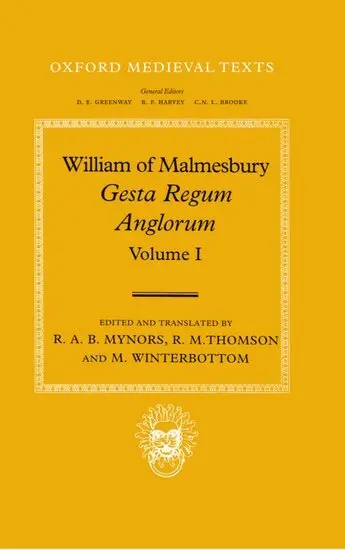
William of Malmesbury: Gesta Regum Anglorum, The History of the English Kings: Volume I
Inbunden, Engelska, 1998
6 242 kr
Skickas inom 7-10 vardagar
William of Malmesbury's Regesta Regum Anglorum (Deeds of the English Kings) is one of the great histories of England, and one of the most important historical works of the European Middle Ages. Although its focus is national, its scope encompasses most of Western Europe and beyond, providing a full-scale account of the First Crusade. Apart from its formidable learning, it is characterized by narrative skill and entertainment value - with topics including unpowered flight and Henry I's zoo. This edition in the Oxford Medieval Texts series is the first modern translation and edition. A full historical introduction is supplied in Volume II.
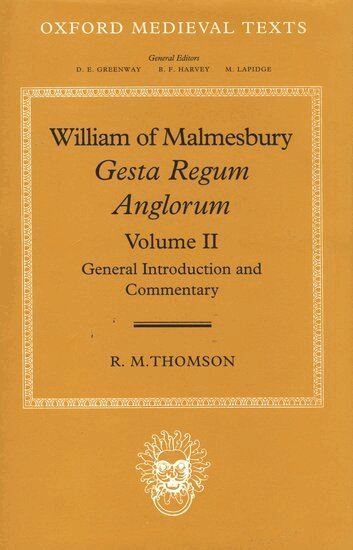
William of Malmesbury: Gesta Regum Anglorum: Volume II: General Introduction and Commentary
Inbunden, Engelska, 1999
4 354 kr
Skickas inom 7-10 vardagar
William of Malmesbury's Regesta Regum Anglorum (Deeds of the English Kings) is one of the great histories of England, and one of the most important historical works of the European Middle Ages. Volume II of the Oxford Medieval Texts edition provides a full historical introduction, a detailed textual commentary, and an extensive bibliography. It forms the essential complement to the text and translation which appeared in Volume I.
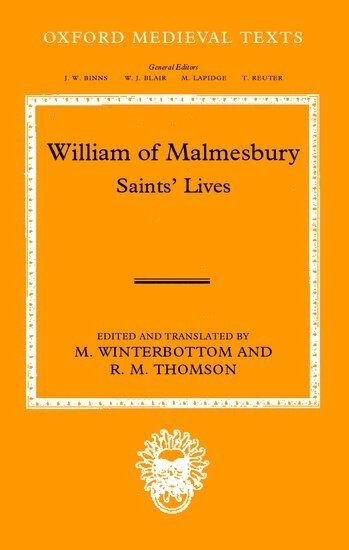
William of Malmesbury: Saints' Lives
Lives of ss. Wulfstan, Dunstan, Patrick, Benignus and Indract
Inbunden, Engelska, 2002
3 456 kr
Skickas inom 5-8 vardagar
This volume presents the hagiographical writings of the Benedictine monk, historian, and scholar, William of Malmesbury (c.1095-c.1143): his Lives of Wulfstan and Dunstan, which survive complete, and those of Patrick, Benignus, and Indract, which exist now only as fragments. Only the Life of Wulfstan has been translated before; the fragments are edited here for the first time, and for the first time an assessment is offered of William as hagiographer, and of the relationship between his historical and hagiographical output. For Wulfstan II, bishop of Worcester 1062-95, William's Life is the main primary source. The other Lives, written for the monks of Glastonbury, shed important light on William's use of his sources, and on the local cult of these saints.
Del 2 - Boydell Medieval Texts
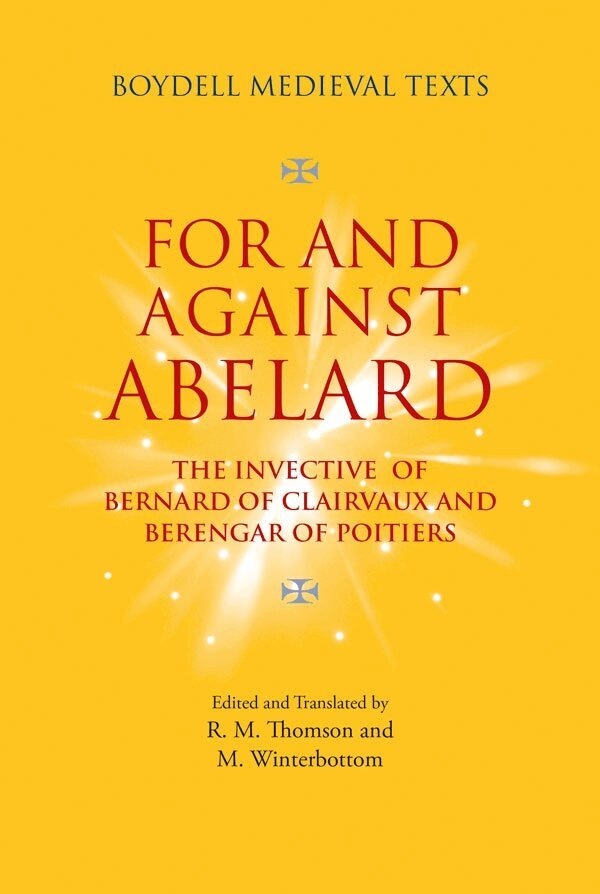
For and Against Abelard
The invective of Bernard of Clairvaux and Berengar of Poitiers
Inbunden, Engelska, 2020
821 kr
Skickas inom 7-10 vardagar
The famous letters of Bernard of Clairvaux attacking the philosopher Peter Abelard and a vituperative response to them are presented together for the first time.The late eleventh and twelfth centuries were Europe's first age of pamphlet warfare, of invective and satire. The perceived failure, or at least hypocrisy, of its new institutions-the new monastic orders and the reformed papacy-gave rise to the phenomenon, and it was shaped by the study of grammar and rhetoric in the new Schools. The central figures in the texts in the present book are Bernard of Clairvaux, the powerful ostensible founder of the Cistercianorder, and the popular and influential teacher Peter Abelard, leader of the radical faction in the Schools of Paris. The event which sparked this controversy was the Church council at Sens in 1141 which had led to the condemnation of Abelard's doctrines. Abelard proposed to use reason to explain the mysteries of faith, and this had led him into all kinds of difficulties with established church doctrine. The leading light in the atttack on his ideas was Bernard, the famous abbot of Clairvaux, a group of whose letters, written to gather support for it before and after the Council, are presented here. A little while later Abelard was defended by the vituperative but otherwise unknown Berengar, who wrote an outrageous Apology attacking Bernard; we also edit his remaining polemical works: his Letter to the Carthusians, and his Letter to the Bishop of Mende. None of Berengar's works has been translated before.An extensive introductory essay describes the course of the debate and the personnel, and analyses the invective employed by both Bernard and Berengar. There is full annotation identifying the writers' sources and clarifying the issues.