R. Reed – författare
Visar alla böcker från författaren R. Reed. Handla med fri frakt och snabb leverans.
3 produkter
3 produkter
E-bok
PDF, Engelska, 2012696 kr
Läs direkt efter köp
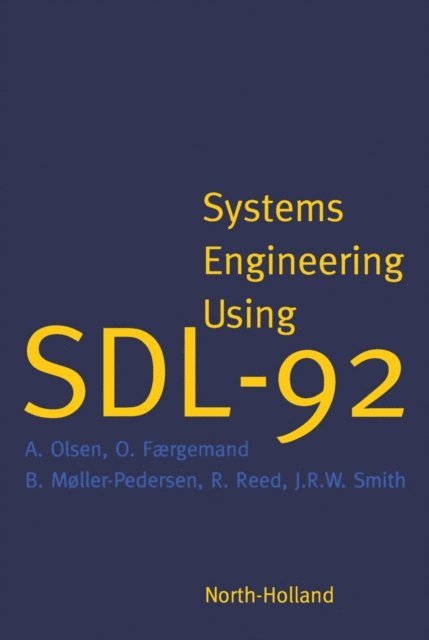
CCITT (now ITU-T) Specification and Description Language (SDL) and systems engineering (formal and informal) in SDL are considered in this publication. The latest version of the language, SDL-92 [ITU Z.100 SDL-92] is introduced. The book has been written for existing and potential users of SDL - technologists involved in the specification and engineering of systems. It offers easier learning, through examples and application, than the Z.100 Recommendation of March 1993, which gives precise technical definitions and concepts. The book has sufficient coverage of the language so that for normal use it should not be necessary to consult Z.100. For this reason, the grammars, both textual and graphical, are included, and the index makes it possible to find text on most of the language mechanisms.Chapter 1 provides an overview of specification and design of telecommunication systems. It considers the usage and scope of SDL. Chapter 2 gives an overview of the language, with an introduction of the major language elements. Chapter 3 focuses on the specification of behaviour and the information interchange between processes. Chapter 4 covers the structuring of systems in terms of instances, how these may be defined by types and how types may be organised in type/subtype hierarchies by inheritance. Parameterised types and packages of type definitions are also covered. Chapter 5 presents the part of the language that provides data types, with emphasis placed on how to use predefined data types. Chapter 6 presents the use of SDL for system engineering, with a discussion of general systems engineering principles followed by an introduction to methodologies which use SDL. The use of other languages in combination with SDL, documentation issues, naming and other lexical rules, errors and language support are considered, since they are more relevant to the use of language in engineering than when initially learning the language.
E-bok
PDF, Engelska, 2016783 kr
Läs direkt efter köp
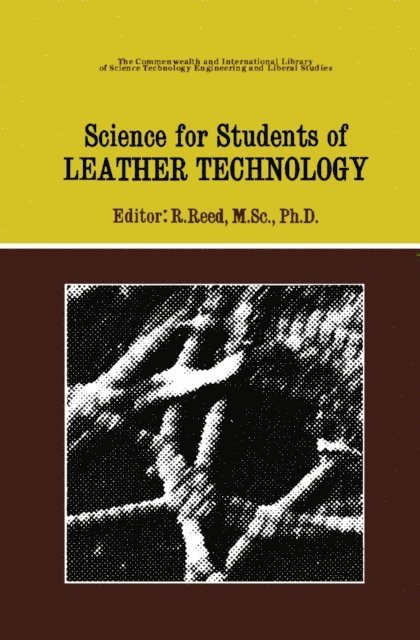
Science for Students of Leather Technology is the first of a series of textbooks of leather science and technology designed to assist students at technical colleges and institutes as well as at universities. The book begins with an introduction to leather manufacturing. This is followed by separate chapters on the physical chemistry of solutions needed by students of leather manufacture; types of macromolecules; lipids and their use at various stages of leather manufacture; and the principles of their use as surface agents. Subsequent chapters deal with the general features of skin as an organ; how the skins from different animals may develop their special characteristics; common problems arising from insects and from micro-organisms in leather manufacture; and the structure and reactions of chromium complexes, which are the most widely used tanning agents; and modern views on the structure of the vegetable tannins and of the dyestuffs and pigments. This book is intended for students with a variety of backgrounds. Those whose chemical studies have not proceeded much beyond the elementary level will find considerable difficulty with some sections, especially where the organic chemistry of complex molecules (proteins, carbohydrates, dyes and vegetable tannins) is described. It is, however, possible to supplement the explanations given by reference to standard chemical textbooks, using the subject matter of the present volume as a guide to those sections which would repay further study.
Häftad, Engelska, 1992
430 kr
Skickas inom 5-8 vardagar