R. T. Allen – författare
Visar alla böcker från författaren . Handla med fri frakt och snabb leverans.
16 produkter
16 produkter
Häftad, Engelska, 2018
731 kr
Skickas inom 10-15 vardagar
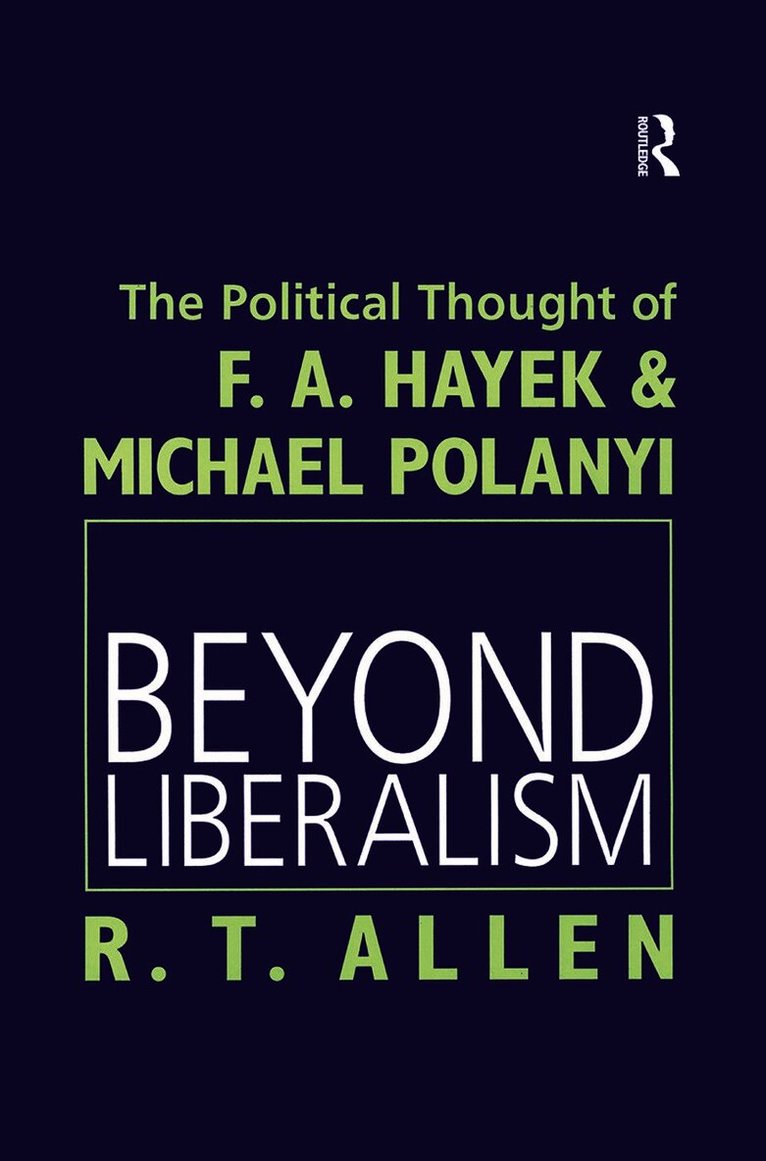
In Beyond Nihilism, Michael Polanyi argued that a merely "negative" liberty of doing as one pleases so long as one does not impinge upon the equal liberty of others - must and has led to destructive nihilism and a fierce reaction to collectivism. R.T. Allen takes up this argument in Beyond Liberalism, and shows how Polanyi's political philosophy evolved into a more "positive" and distinctly conservative concept of liberty, converging upon the archetypal conservatism of Edmund Burke. Allen examines Polanyi's and F.A. Hayek's thinking with respect to the nature, value, and foundations of liberty.Negative and positive liberties are two sides of one liberty, and Allen believes negative conceptions of liberty are as dangerous as positive ones. He distinguishes among general and abstract definitions of liberty and shows how all, including that of Hayek, ultimately dissolve. According to Allen, only tacit conceptions of liberty, such as those of Burke and Polanyi, prove viable. This is because they rest on concrete tradition. Allen examines how the skeptical, rationalist, and utilitarian philosophies of Ludwig von Mises and Sir Karl Popper fail to support the value of liberty and even proved to be destructive of it. Allen argues that society cannot rely upon the classically liberal notion of contract but rather upon prescriptive and inherited obligations. In turn, this means that citizens have positive, as well as negative, duties to each other and the body politic of which they are part and upon whose support liberty depends.A free society is held together by emotional bonds and the traditions and rituals that sustain them. A free society also presupposes that the individual has inherent value in and for himself. For R.T. Allen, only Christianity, and certainly no modern philosophy, has a conception of the unique individual and his irreplaceable value and of a political order that transcends itself into the moral order. Even Polanyi's liberty is ultimately insufficient, for it gives no inherent value to the person himself but instead to the ideals which he serves. Beyond Liberalism challenges deeply ingrained notions of liberty and its meaning in modern society. It is a call for traditions of self-restraint and justice for their own sakes. This noteworthy volume is an essential addition to the libraries of political scientists, philosophers, and theologians alike.
Häftad, Engelska, 2017
731 kr
Skickas inom 10-15 vardagar
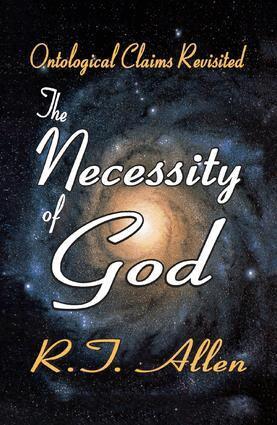
Every person acquires a worldview, a picture of reality. Within that picture, the existence of some things will be taken wholly for granted as the background to, and support of, everything else. Their existence will rarely be questioned. The cosmos or universe, the gods, God, Brahman, Heaven, the Absolute--R. T. Allen claims that all these and other world- views have been held to be that which necessarily exists and upon which all other beings depend in one way or another.European philosophers, since antiquity, have offered arguments to show that their chosen candidates for the role of the necessary being or beings that support the rest of reality do actually exist. The Necessity of God sets the valid core of previous ontological arguments. It does not and cannot prove that God exists, but only that something necessarily exists. In an a priori manner and without inferring anything from what in fact exists, Allen proceeds to show that which necessarily exists is one, transfinite, eternal, and the archetype of personal existence: in short, that it is God as classically conceived. As for everything else that may exist, it must be finite and dependent for its existence upon God as its creator and sustainer.Few things are more erroneous in philosophy and disastrous in practice than artificial constructions produced without constant reference to concrete reality. That which necessarily exists may be the one exception. Before this constructive argument, Allen examines previous examples of ontological arguments in order to show exactly where they go wrong and to extract the valid core obscured within them. This will make clear the difference between them and his new version. The reader who is eager to engage the philosophical sources of belief will find a distinct treasure in The Necessity of God.
Inbunden, Engelska, 2026
1 436 kr
Kommande
Can everything that we know be made explicit, by language or other means derived from language? Or does all explicit knowledge really depend upon tacit knowledge and understanding that can’t be put into words? The Tacit Dimensions of Language and Logic restores the speaker to what is being spoken, answering these questions by drawing on the ideas of often overlooked thinkers like Michael Polanyi and R. G. Collingwood.Opening with an exploration of the limits of language itself and its many tacit dimensions, this book sets its sights on the perils of ‘logicism’, when formal logic is applied to reality in defiance of experience. With the field of epistemology often dominated by analytic thinkers, these formal logic tendencies can cause us to overlook important aspects of how language functions. By drawing on a range of insights from beyond the analytic tradition, R.T. Allen uncovers the importance of tacit elements of language, truth, and even formal logic itself. While dismantling some of the assumptions that have hampered the philosophy of language, Allen sets out new avenues for epistemological enquiry and welcomes new voices to old debates around how language and understanding function both philosophically and in everyday life.
E-bok
Engelska, 2017874 kr
Läs direkt efter köp
In Beyond Nihilism, Michael Polanyi argued that a merely "negative" liberty of doing as one pleases so long as one does not impinge upon the equal liberty of others - must and has led to destructive nihilism and a fierce reaction to collectivism. R.T. Allen takes up this argument in Beyond Liberalism, and shows how Polanyi''s political philosophy evolved into a more "positive" and distinctly conservative concept of liberty, converging upon the archetypal conservatism of Edmund Burke. Allen examines Polanyi''s and F.A. Hayek''s thinking with respect to the nature, value, and foundations of liberty.Negative and positive liberties are two sides of one liberty, and Allen believes negative conceptions of liberty are as dangerous as positive ones. He distinguishes among general and abstract definitions of liberty and shows how all, including that of Hayek, ultimately dissolve. According to Allen, only tacit conceptions of liberty, such as those of Burke and Polanyi, prove viable. This is because they rest on concrete tradition. Allen examines how the skeptical, rationalist, and utilitarian philosophies of Ludwig von Mises and Sir Karl Popper fail to support the value of liberty and even proved to be destructive of it. Allen argues that society cannot rely upon the classically liberal notion of contract but rather upon prescriptive and inherited obligations. In turn, this means that citizens have positive, as well as negative, duties to each other and the body politic of which they are part and upon whose support liberty depends.A free society is held together by emotional bonds and the traditions and rituals that sustain them. A free society also presupposes that the individual has inherent value in and for himself. For R.T. Allen, only Christianity, and certainly no modern philosophy, has a conception of the unique individual and his irreplaceable value and of a political order that transcends itself into the moral order. Even Polanyi''s liberty is ultimately insufficient, for it gives no inherent value to the person himself but instead to the ideals which he serves. Beyond Liberalism challenges deeply ingrained notions of liberty and its meaning in modern society. It is a call for traditions of self-restraint and justice for their own sakes. This noteworthy volume is an essential addition to the libraries of political scientists, philosophers, and theologians alike.
E-bok
PDF, Engelska, 2017874 kr
Läs direkt efter köp
In Beyond Nihilism, Michael Polanyi argued that a merely "negative" liberty of doing as one pleases so long as one does not impinge upon the equal liberty of others - must and has led to destructive nihilism and a fierce reaction to collectivism. R.T. Allen takes up this argument in Beyond Liberalism, and shows how Polanyi''s political philosophy evolved into a more "positive" and distinctly conservative concept of liberty, converging upon the archetypal conservatism of Edmund Burke. Allen examines Polanyi''s and F.A. Hayek''s thinking with respect to the nature, value, and foundations of liberty.Negative and positive liberties are two sides of one liberty, and Allen believes negative conceptions of liberty are as dangerous as positive ones. He distinguishes among general and abstract definitions of liberty and shows how all, including that of Hayek, ultimately dissolve. According to Allen, only tacit conceptions of liberty, such as those of Burke and Polanyi, prove viable. This is because they rest on concrete tradition. Allen examines how the skeptical, rationalist, and utilitarian philosophies of Ludwig von Mises and Sir Karl Popper fail to support the value of liberty and even proved to be destructive of it. Allen argues that society cannot rely upon the classically liberal notion of contract but rather upon prescriptive and inherited obligations. In turn, this means that citizens have positive, as well as negative, duties to each other and the body politic of which they are part and upon whose support liberty depends.A free society is held together by emotional bonds and the traditions and rituals that sustain them. A free society also presupposes that the individual has inherent value in and for himself. For R.T. Allen, only Christianity, and certainly no modern philosophy, has a conception of the unique individual and his irreplaceable value and of a political order that transcends itself into the moral order. Even Polanyi''s liberty is ultimately insufficient, for it gives no inherent value to the person himself but instead to the ideals which he serves. Beyond Liberalism challenges deeply ingrained notions of liberty and its meaning in modern society. It is a call for traditions of self-restraint and justice for their own sakes. This noteworthy volume is an essential addition to the libraries of political scientists, philosophers, and theologians alike.
E-bok
Engelska, 2017790 kr
Läs direkt efter köp
Every person acquires a worldview, a picture of reality. Within that picture, the existence of some things will be taken wholly for granted as the background to, and support of, everything else. Their existence will rarely be questioned. The cosmos or universe, the gods, God, Brahman, Heaven, the Absolute--R. T. Allen claims that all these and other world- views have been held to be that which necessarily exists and upon which all other beings depend in one way or another.European philosophers, since antiquity, have offered arguments to show that their chosen candidates for the role of the necessary being or beings that support the rest of reality do actually exist. The Necessity of God sets the valid core of previous ontological arguments. It does not and cannot prove that God exists, but only that something necessarily exists. In an a priori manner and without inferring anything from what in fact exists, Allen proceeds to show that which necessarily exists is one, transfinite, eternal, and the archetype of personal existence: in short, that it is God as classically conceived. As for everything else that may exist, it must be finite and dependent for its existence upon God as its creator and sustainer.Few things are more erroneous in philosophy and disastrous in practice than artificial constructions produced without constant reference to concrete reality. That which necessarily exists may be the one exception. Before this constructive argument, Allen examines previous examples of ontological arguments in order to show exactly where they go wrong and to extract the valid core obscured within them. This will make clear the difference between them and his new version. The reader who is eager to engage the philosophical sources of belief will find a distinct treasure in The Necessity of God.
E-bok
PDF, Engelska, 2017763 kr
Läs direkt efter köp
Every person acquires a worldview, a picture of reality. Within that picture, the existence of some things will be taken wholly for granted as the background to, and support of, everything else. Their existence will rarely be questioned. The cosmos or universe, the gods, God, Brahman, Heaven, the Absolute--R. T. Allen claims that all these and other world- views have been held to be that which necessarily exists and upon which all other beings depend in one way or another.European philosophers, since antiquity, have offered arguments to show that their chosen candidates for the role of the necessary being or beings that support the rest of reality do actually exist. The Necessity of God sets the valid core of previous ontological arguments. It does not and cannot prove that God exists, but only that something necessarily exists. In an a priori manner and without inferring anything from what in fact exists, Allen proceeds to show that which necessarily exists is one, transfinite, eternal, and the archetype of personal existence: in short, that it is God as classically conceived. As for everything else that may exist, it must be finite and dependent for its existence upon God as its creator and sustainer.Few things are more erroneous in philosophy and disastrous in practice than artificial constructions produced without constant reference to concrete reality. That which necessarily exists may be the one exception. Before this constructive argument, Allen examines previous examples of ontological arguments in order to show exactly where they go wrong and to extract the valid core obscured within them. This will make clear the difference between them and his new version. The reader who is eager to engage the philosophical sources of belief will find a distinct treasure in The Necessity of God.
Inbunden, Engelska, 2008
2 402 kr
Skickas inom 10-15 vardagar
Every person acquires a worldview, a picture of reality. Within that picture, the existence of some things will be taken wholly for granted as the background to, and support of, everything else. Their existence will rarely be questioned. The cosmos or universe, the gods, God, Brahman, Heaven, the Absolute--R. T. Allen claims that all these and other world- views have been held to be that which necessarily exists and upon which all other beings depend in one way or another.European philosophers, since antiquity, have offered arguments to show that their chosen candidates for the role of the necessary being or beings that support the rest of reality do actually exist. The Necessity of God sets the valid core of previous ontological arguments. It does not and cannot prove that God exists, but only that something necessarily exists. In an a priori manner and without inferring anything from what in fact exists, Allen proceeds to show that which necessarily exists is one, transfinite, eternal, and the archetype of personal existence: in short, that it is God as classically conceived. As for everything else that may exist, it must be finite and dependent for its existence upon God as its creator and sustainer.Few things are more erroneous in philosophy and disastrous in practice than artificial constructions produced without constant reference to concrete reality. That which necessarily exists may be the one exception. Before this constructive argument, Allen examines previous examples of ontological arguments in order to show exactly where they go wrong and to extract the valid core obscured within them. This will make clear the difference between them and his new version. The reader who is eager to engage the philosophical sources of belief will find a distinct treasure in The Necessity of God.
Inbunden, Engelska, 1998
2 402 kr
Skickas inom 10-15 vardagar
In Beyond Nihilism, Michael Polanyi argued that a merely "negative" liberty of doing as one pleases so long as one does not impinge upon the equal liberty of others - must and has led to destructive nihilism and a fierce reaction to collectivism. R.T. Allen takes up this argument in Beyond Liberalism, and shows how Polanyi's political philosophy evolved into a more "positive" and distinctly conservative concept of liberty, converging upon the archetypal conservatism of Edmund Burke. Allen examines Polanyi's and F.A. Hayek's thinking with respect to the nature, value, and foundations of liberty.Negative and positive liberties are two sides of one liberty, and Allen believes negative conceptions of liberty are as dangerous as positive ones. He distinguishes among general and abstract definitions of liberty and shows how all, including that of Hayek, ultimately dissolve. According to Allen, only tacit conceptions of liberty, such as those of Burke and Polanyi, prove viable. This is because they rest on concrete tradition. Allen examines how the skeptical, rationalist, and utilitarian philosophies of Ludwig von Mises and Sir Karl Popper fail to support the value of liberty and even proved to be destructive of it. Allen argues that society cannot rely upon the classically liberal notion of contract but rather upon prescriptive and inherited obligations. In turn, this means that citizens have positive, as well as negative, duties to each other and the body politic of which they are part and upon whose support liberty depends.A free society is held together by emotional bonds and the traditions and rituals that sustain them. A free society also presupposes that the individual has inherent value in and for himself. For R.T. Allen, only Christianity, and certainly no modern philosophy, has a conception of the unique individual and his irreplaceable value and of a political order that transcends itself into the moral order. Even Polanyi's liberty is ultimately insufficient, for it gives no inherent value to the person himself but instead to the ideals which he serves. Beyond Liberalism challenges deeply ingrained notions of liberty and its meaning in modern society. It is a call for traditions of self-restraint and justice for their own sakes. This noteworthy volume is an essential addition to the libraries of political scientists, philosophers, and theologians alike.
Inbunden, Engelska, 2016
922 kr
Skickas inom 5-8 vardagar
Häftad, Engelska, 2017
746 kr
Skickas inom 5-8 vardagar
Inbunden, Engelska, 2018
829 kr
Skickas inom 5-8 vardagar
Häftad, Engelska, 2018
678 kr
Skickas inom 5-8 vardagar
Inbunden, Engelska, 2019
912 kr
Skickas inom 5-8 vardagar
Häftad, Engelska, 2019
746 kr
Skickas inom 5-8 vardagar
Häftad, Engelska, 2021
784 kr
Skickas inom 5-8 vardagar