R.A. Broglia – författare
Visar alla böcker från författaren R.A. Broglia. Handla med fri frakt och snabb leverans.
7 produkter
7 produkter
Häftad, Engelska, 2012
546 kr
Skickas inom 10-15 vardagar
In recent years, a new field of nuclear research has been opened through the possibility of studying nuclei wi\h very large values of angular momentum, temperature, pressure and number of particles. This development has been closely associated with heavy ion reactions, since collisions between two heavy nuclei are especially effective in producing metastable compound systems with large angular momentum, and in transferring energy which is distributed over the whole nuclear volume. Under the strain of temperature and of the Coriolis and centrifugal forces, the nucleus displays structural changes which can be interpreted in terms of pairing and shape phase transit ions. This was the subject of the lectures of J. D. Garrett, P. J. Twin and S. Levit. While the rotational motion is, at zero temperature un damped, the width of giant resonances indicate that the nucleus only oscillates through few periods before the motion is damp ed by particle decay, and through coupling to the compound nucleus. Temperature and angular momentum influence in an im portant way the properties of both giant resonances and rotatio nal motion. These subjects were developed by K. Snover, and by P. F. Bortignon and R. A. Broglia, as well as by A. Bracco, A. Dellafiore and F. Matera.
E-bok
PDF, Engelska, 2012712 kr
Läs direkt efter köp
In recent years, a new field of nuclear research has been opened through the possibility of studying nuclei wi\h very large values of angular momentum, temperature, pressure and number of particles. This development has been closely associated with heavy ion reactions, since collisions between two heavy nuclei are especially effective in producing metastable compound systems with large angular momentum, and in transferring energy which is distributed over the whole nuclear volume. Under the strain of temperature and of the Coriolis and centrifugal forces, the nucleus displays structural changes which can be interpreted in terms of pairing and shape phase transit ions. This was the subject of the lectures of J. D. Garrett, P. J. Twin and S. Levit. While the rotational motion is, at zero temperature un damped, the width of giant resonances indicate that the nucleus only oscillates through few periods before the motion is damp ed by particle decay, and through coupling to the compound nucleus. Temperature and angular momentum influence in an im portant way the properties of both giant resonances and rotatio nal motion. These subjects were developed by K. Snover, and by P. F. Bortignon and R. A. Broglia, as well as by A. Bracco, A. Dellafiore and F. Matera.
Häftad, Engelska, 2013
546 kr
Skickas inom 10-15 vardagar
Inbunden, Engelska, 2004
1 084 kr
Skickas inom 10-15 vardagar
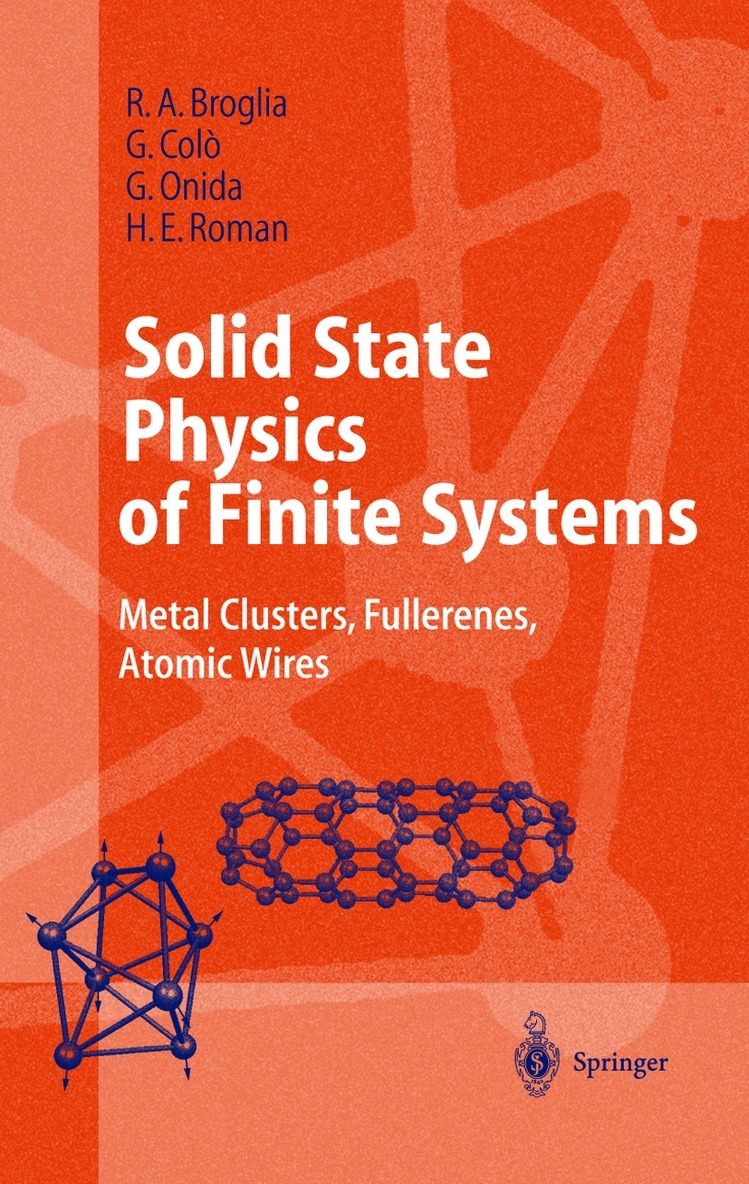
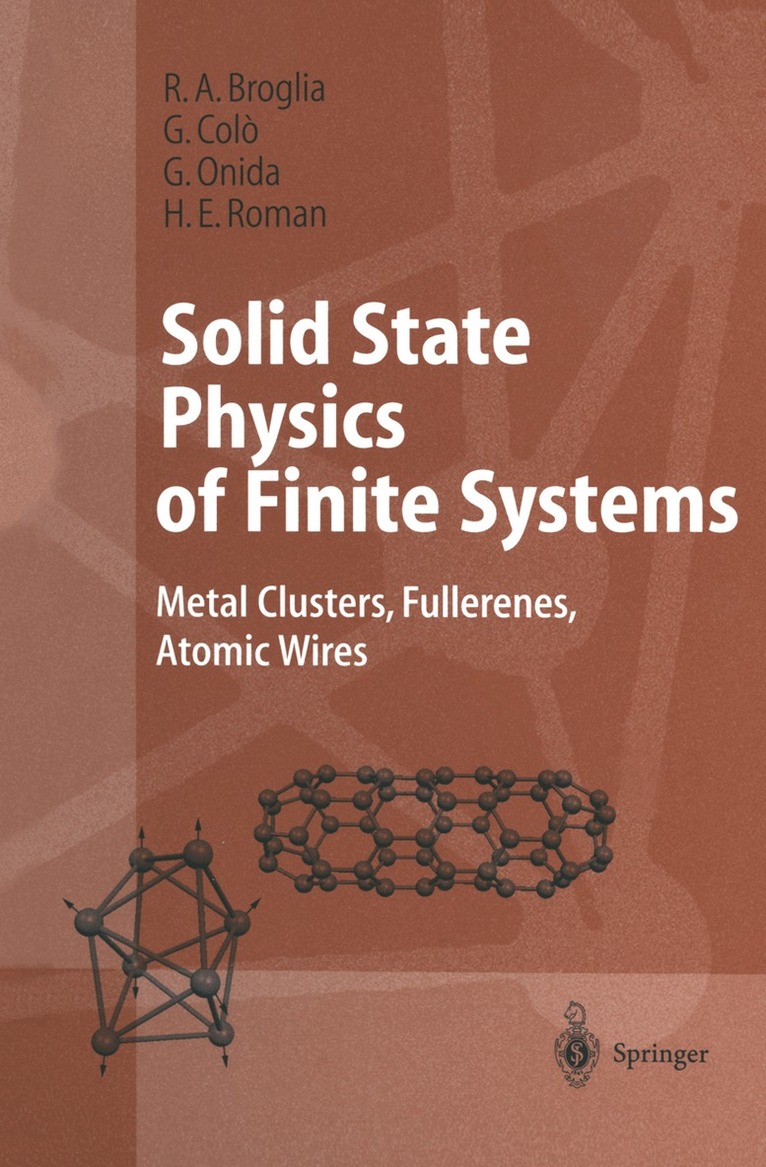
Quantum mechanics is the set of laws of physics which, to the best of our knowledge, provides a complete account of the microworld. One of its chap ters, quantum electrodynamics (QED), is able to account for the quantal phenomena of relevance to daily life (electricity, light, liquids and solids, etc.) with great accuracy. The language of QED, field theory, has proved to be uni versal providing the theoretical basis to describe the behaviour of many-body systems. In particular finite many-body systems (FMBS) like atomic nuclei, metal clusters, fullerenes, atomic wires, etc. That is, systems made out of a small number of components. The properties of FMBS are expected to be quite different from those of bulk matter, being strongly conditioned by quantal size effects and by the dynamical properties of the surface of these systems. The study of the elec tronic and of the collective behaviour (plasmons and phonons) of FMBS and of their interweaving, making use of well established first principle quantum (field theoretical) techniques, is the main subject of the present monograph. The interest for the study of FMBS was clearly stated by Feynman in his address to the American Physical Society with the title "There is plenty of room at the bottom". On this occasion he said among other things: "When we get to the very, very small world - say circuits of seven atoms - we have a lot of new things that would happen that represent completely new opportunities for design" [1].
Häftad, Engelska, 2010
1 084 kr
Skickas inom 10-15 vardagar
Quantum mechanics is the set of laws of physics which, to the best of our knowledge, provides a complete account of the microworld. One of its chap ters, quantum electrodynamics (QED), is able to account for the quantal phenomena of relevance to daily life (electricity, light, liquids and solids, etc.) with great accuracy. The language of QED, field theory, has proved to be uni versal providing the theoretical basis to describe the behaviour of many-body systems. In particular finite many-body systems (FMBS) like atomic nuclei, metal clusters, fullerenes, atomic wires, etc. That is, systems made out of a small number of components. The properties of FMBS are expected to be quite different from those of bulk matter, being strongly conditioned by quantal size effects and by the dynamical properties of the surface of these systems. The study of the elec tronic and of the collective behaviour (plasmons and phonons) of FMBS and of their interweaving, making use of well established first principle quantum (field theoretical) techniques, is the main subject of the present monograph. The interest for the study of FMBS was clearly stated by Feynman in his address to the American Physical Society with the title "There is plenty of room at the bottom". On this occasion he said among other things: "When we get to the very, very small world - say circuits of seven atoms - we have a lot of new things that would happen that represent completely new opportunities for design" [1].
E-bok
PDF, Engelska, 20131 367 kr
Läs direkt efter köp
Quantum mechanics is the set of laws of physics which, to the best of our knowledge, provides a complete account of the microworld. One of its chap ters, quantum electrodynamics (QED), is able to account for the quantal phenomena of relevance to daily life (electricity, light, liquids and solids, etc.) with great accuracy. The language of QED, field theory, has proved to be uni versal providing the theoretical basis to describe the behaviour of many-body systems. In particular finite many-body systems (FMBS) like atomic nuclei, metal clusters, fullerenes, atomic wires, etc. That is, systems made out of a small number of components. The properties of FMBS are expected to be quite different from those of bulk matter, being strongly conditioned by quantal size effects and by the dynamical properties of the surface of these systems. The study of the elec tronic and of the collective behaviour (plasmons and phonons) of FMBS and of their interweaving, making use of well established first principle quantum (field theoretical) techniques, is the main subject of the present monograph. The interest for the study of FMBS was clearly stated by Feynman in his address to the American Physical Society with the title "There is plenty of room at the bottom". On this occasion he said among other things: "When we get to the very, very small world - say circuits of seven atoms - we have a lot of new things that would happen that represent completely new opportunities for design" [1].