
Rabinovich Mikhail I Rabinovich – författare
Visar alla böcker från författaren Rabinovich Mikhail I Rabinovich. Handla med fri frakt och snabb leverans.
2 produkter
2 produkter
E-bok
PDF, Engelska, 2000687 kr
Läs direkt efter köp
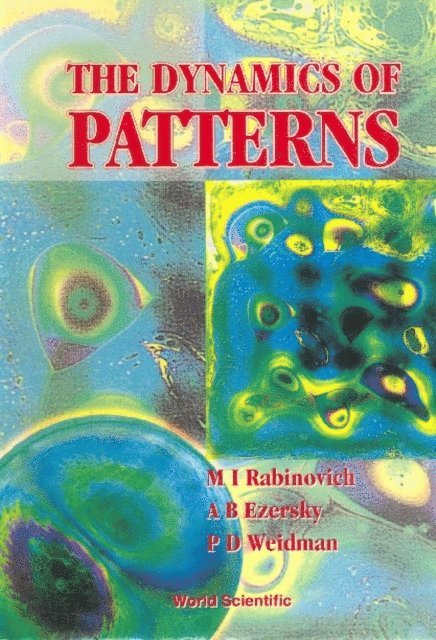
Spirals, vortices, crystalline lattices, and other attractive patterns are prevalent in Nature. How do such beautiful patterns appear from the initial chaos? What universal dynamical rules are responsible for their formation? What is the dynamical origin of spatial disorder in nonequilibrium media? Based on the many visual experiments in physics, hydrodynamics, chemistry, and biology, this invaluable book answers those and related intriguing questions. The mathematical models presented for the dynamical theory of pattern formation are nonlinear partial differential equations. The corresponding theory is not so accessible to a wide audience. Consequently, the authors have made every attempt to synthesize long and complex mathematical calculations to exhibit the underlying physics. The book will be useful for final year undergraduates, but is primarily aimed at graduate students, postdoctoral fellows, and others interested in the puzzling phenomena of pattern formation.
E-bok
PDF, Engelska, 1993337 kr
Läs direkt efter köp
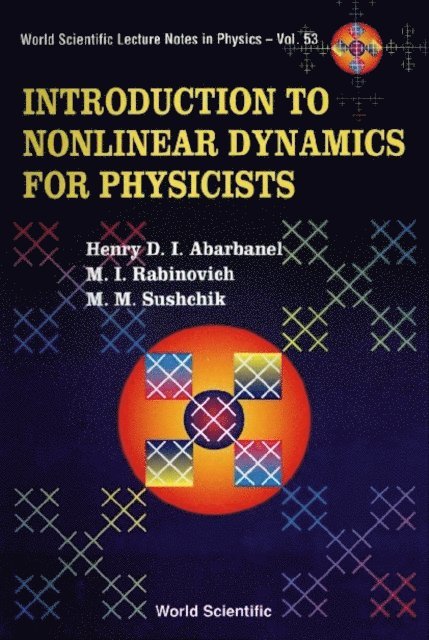
This series of lectures aims to address three main questions that anyone interested in the study of nonlinear dynamics should ask and ponder over. What is nonlinear dynamics and how does it differ from linear dynamics which permeates all familiar textbooks? Why should the physicist study nonlinear systems and leave the comfortable territory of linearity? How can one progress in the study of nonlinear systems both in the analysis of these systems and in learning about new systems from observing their experimental behavior? While it is impossible to answer these questions in the finest detail, this series of lectures nonetheless successfully points the way for the interested reader. Other useful problems have also been incorporated as a study guide. By presenting both substantial qualitative information about phenomena in nonlinear systems and at the same time sufficient quantitative material, the author hopes that readers would learn how to progress on their own in the study of such similar material hereon.