Rachel Corr - Böcker
Visar alla böcker från författaren Rachel Corr. Handla med fri frakt och snabb leverans.
3 produkter
3 produkter
271 kr
Skickas inom 7-10 vardagar
319 kr
Skickas inom 7-10 vardagar
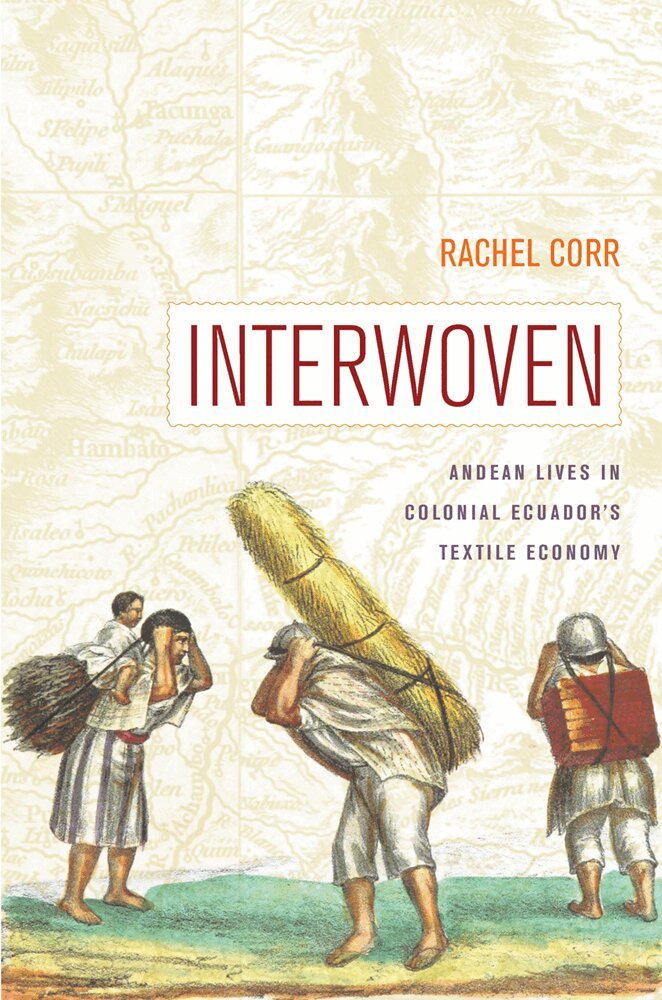
In the s, Marcos Cunamasi, an indigenous man in Pelileo, Ecuador, hid his child to protect him from officials who would put the boy to work in the textile mill. Cunamasi was forced to turn him over. Because his young son couldn't keep up with spinning his quota of wool per day, Cunamasi helped so the child wouldn't be whipped. After working a year, Cunamasi was paid a shirt and a hat.Interwoven is the untold story of indigenous people’ s historical experience in colonial Ecuador's textile economy. It focuses on the lives of Native Andean families in Pelileo, a town dominated by one of Quito's largest and longest-lasting textile mills. Quito's textile industry developed as a secondary market to supply cloth to mining centers in the Andes thus, the experience of indigenous people in Pelileo is linked to the history of mining in Bolivia and Peru.Although much has been written about colonial Quito's textile economy, Rachel Corr provides a unique perspective by putting indigenous voices at the center of that history. Telling the stories of Andean families of Pelileo, she traces their varied responses to historical pressures over three hundred years the responses range from everyday acts to the historical transformation of culture through ethnogenesis. These stories of ordinary Andean men and women provide insight into the lived experience of the people who formed the backbone of Quito's textile industry.
502 kr
Skickas inom 10-15 vardagar
Private Lives, Public Histories brings together diverse methods from archaeology and cultural anthropology, enabling us to glean rare information on private lives from the historical record. The chapters span geographic areas to present recent ethnohistorical research that advances our knowledge of the connections between the public and private domains and the significance of these connections for understanding the past as a lived experience, both historically and in a contemporary sense. We discuss how the use of different sources—e.g., public records, personal journals, material culture, the built environment, letters, public performances, etc.—can reveal different types of information about past cultural contexts, as well as private sentiments about official culture and society. Through an exploration of sites as varied as homes, factories, plantations, markets, and tourism attractions we address the public significance of private sentiments, the resilience of bodies, and gendered interactions in historical contexts. In doing so, this book highlights linkages between private lives and public settings that have allowed people to continue to exist within, adapt to, and/or resist dominant cultural narratives.