Rachel Douglas-Jones - Böcker
Visar alla böcker från författaren Rachel Douglas-Jones. Handla med fri frakt och snabb leverans.
6 produkter
6 produkter
278 kr
Skickas inom 11-20 vardagar
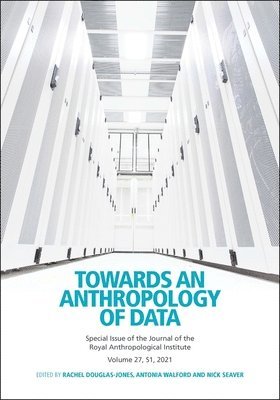
This volume presents a set of theoretically inventive pieces that engage with data across its many locations, from government databases to ecological field stations, from kitchen tables to concrete bunkers. Contributors demonstrate how thinking with data can be conceptually generative for anthropology, prompting us to reconsider our understanding of topics including bodies, persons, and the social itselfShows how 'big' data which may have once seemed limited to business or high tech, ethnographers are now finding data – and its attendant values and practices – in their field sites around the worldExamines how data has motivated a sweep of dystopian visions, signaling the invasion of privacy, political manipulation, or shadowy data doublesDiscusses how anthropologists have been cautious in taking data itself as an object of theoretical interest, even as the effects of data become manifest in our ethnographiesBy putting data in its place, the chapters collected here develop conceptual tools that will prove useful for anthropologists who find 'data' in their data
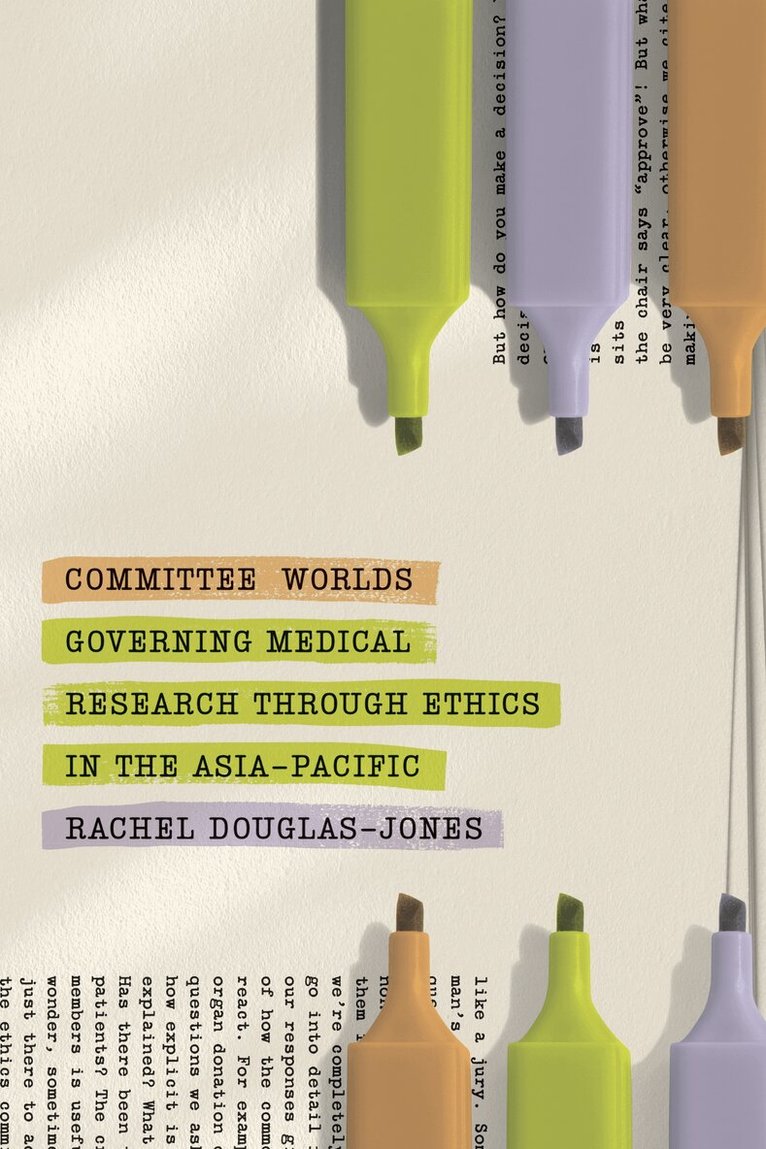
Committee Worlds
Governing Medical Research Through Ethics in the Asia-Pacific
Inbunden, Engelska, 2026
710 kr
Skickas inom 7-10 vardagar
Medical research is a global endeavor; a complex network of international drugs trials and data collection in the pursuit of novel treatments. And the Asia-Pacific region is considered an ideal "market" for such trials, with large populations and good hospitals. However, to become hosts to global trials, and to export valid trial data, researchers are required to engage local research ethics committees. Supported through grants from the World Health Organization, the Forum of Ethics Review Committees of Asia and the Pacific (FERCAP) was established in 2000, and has spent the last twenty years building capacity for ethics assessment in hospitals and universities across the region. They are the translators of global ethics standards and principles for regional audiences.Through a decade of ethnographic engagement with FERCAP, following members from their base in Thailand to workshops across Sri Lanka, the Philippines, Taiwan, and mainland China, Rachel Douglas-Jones demonstrates that research ethics committees, their material and social form, are spaces of contestation where the futures of global medical research are decided. With this book, Douglas-Jones contributes a key reference for studies of "the committee" upon which future work in the anthropology of policy can build. Understanding how ethics review committees do their work allows anthropologists of policy, global health, and bureaucracy to consider the values embedded in ethics as a bureaucratic practice.
1 747 kr
Skickas inom 3-6 vardagar
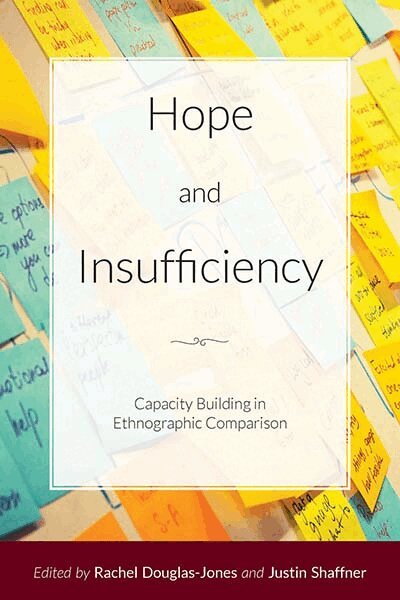
A process through which skills, knowledge, and resources are expanded, capacity building, remains a tantalizing and pervasive concept throughout the field of anthropology, though it has received little in the way of critical analysis. By exploring the concept’s role in a variety of different settings including government lexicons, religious organizations, environmental campaigns, biomedical training, and fieldwork from around the globe, Hope and Insufficiency seeks to question the histories, assumptions, intentions, and enactments that have led to the ubiquity of capacity building, thereby developing a much-needed critical purchase on its persuasive power.
496 kr
Skickas inom 3-6 vardagar
A process through which skills, knowledge, and resources are expanded, capacity building, remains a tantalizing and pervasive concept throughout the field of anthropology, though it has received little in the way of critical analysis. By exploring the concept's role in a variety of different settings including government lexicons, religious organizations, environmental campaigns, biomedical training, and fieldwork from around the globe, Hope and Insufficiency seeks to question the histories, assumptions, intentions, and enactments that have led to the ubiquity of capacity building, thereby developing a much-needed critical purchase on its persuasive power.
1 910 kr
Skickas inom 10-15 vardagar
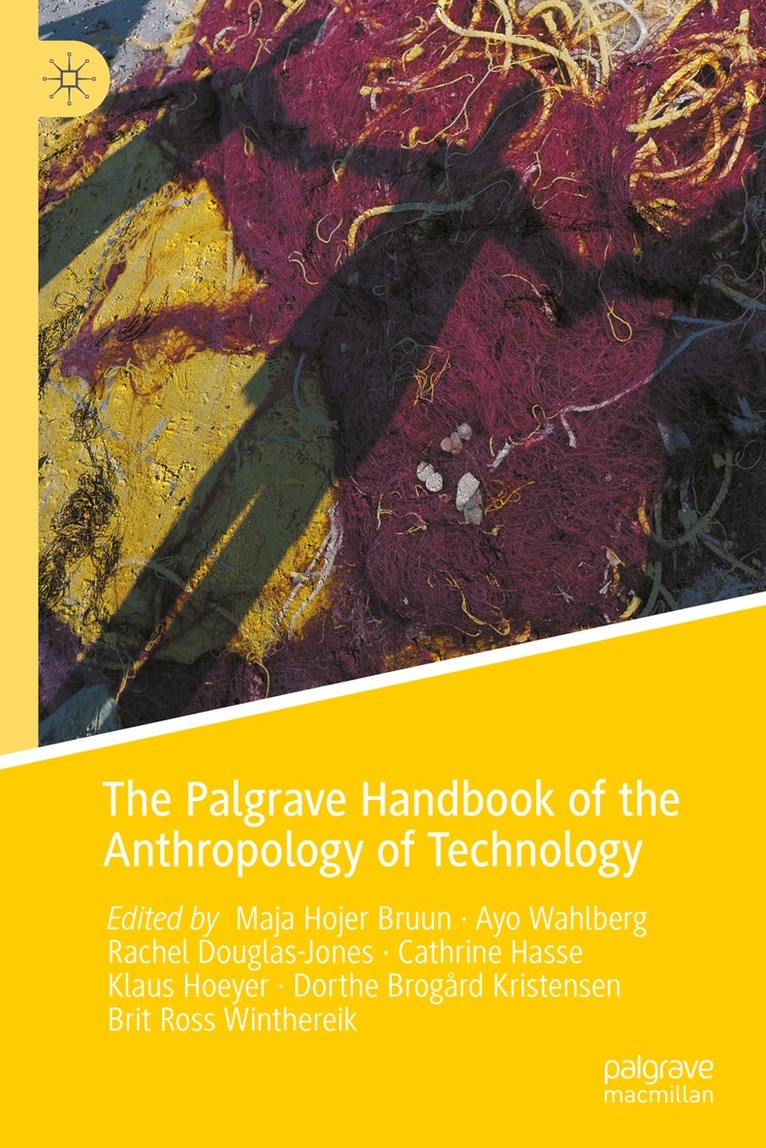
This Handbook offers an overview of the thriving and diverse field of anthropological studies of technology. It features 39 original chapters, each reviewing the state of the art of current research and enlivening the field of study through ethnographic analysis of human-technology interfaces, forms of social organisation, technological practices and/or systems of belief and meaning in different parts of the world.The Handbook is organised around some of the most important characteristics of anthropological studies of technology today: the diverse knowledge practices that technologies involve and on which they depend; the communities, collectives, and categories that emerge around technologies; anthropology’s contribution to proliferating debates on ethics, values, and morality in relation to technology; and infrastructures that highlight how all technologies are embedded in broader political economies and socio-historical processes that shape and often reinforce inequality and discrimination while also generating diversity. All chapters share a commitment to human experiences, embodiments, practices, and materialities in the daily lives of those people and institutions involved in the development, manufacturing, deployment, and/or use of particular technologies.Chapters 11 and 31 are available open access under a Creative Commons Attribution 4.0 International License via link.springer.com.
1 910 kr
Skickas inom 10-15 vardagar
This Handbook offers an overview of the thriving and diverse field of anthropological studies of technology. It features 39 original chapters, each reviewing the state of the art of current research and enlivening the field of study through ethnographic analysis of human-technology interfaces, forms of social organisation, technological practices and/or systems of belief and meaning in different parts of the world.The Handbook is organised around some of the most important characteristics of anthropological studies of technology today: the diverse knowledge practices that technologies involve and on which they depend; the communities, collectives, and categories that emerge around technologies; anthropology’s contribution to proliferating debates on ethics, values, and morality in relation to technology; and infrastructures that highlight how all technologies are embedded in broader political economies and socio-historical processes that shape and often reinforce inequality and discrimination while also generating diversity. All chapters share a commitment to human experiences, embodiments, practices, and materialities in the daily lives of those people and institutions involved in the development, manufacturing, deployment, and/or use of particular technologies.Chapters 11 and 31 are available open access under a Creative Commons Attribution 4.0 International License via link.springer.com.