Rachel Fishberg – författare
Visar alla böcker från författaren . Handla med fri frakt och snabb leverans.
2 produkter
2 produkter
Inbunden, Engelska, 2026
1 504 kr
Skickas inom 5-8 vardagar
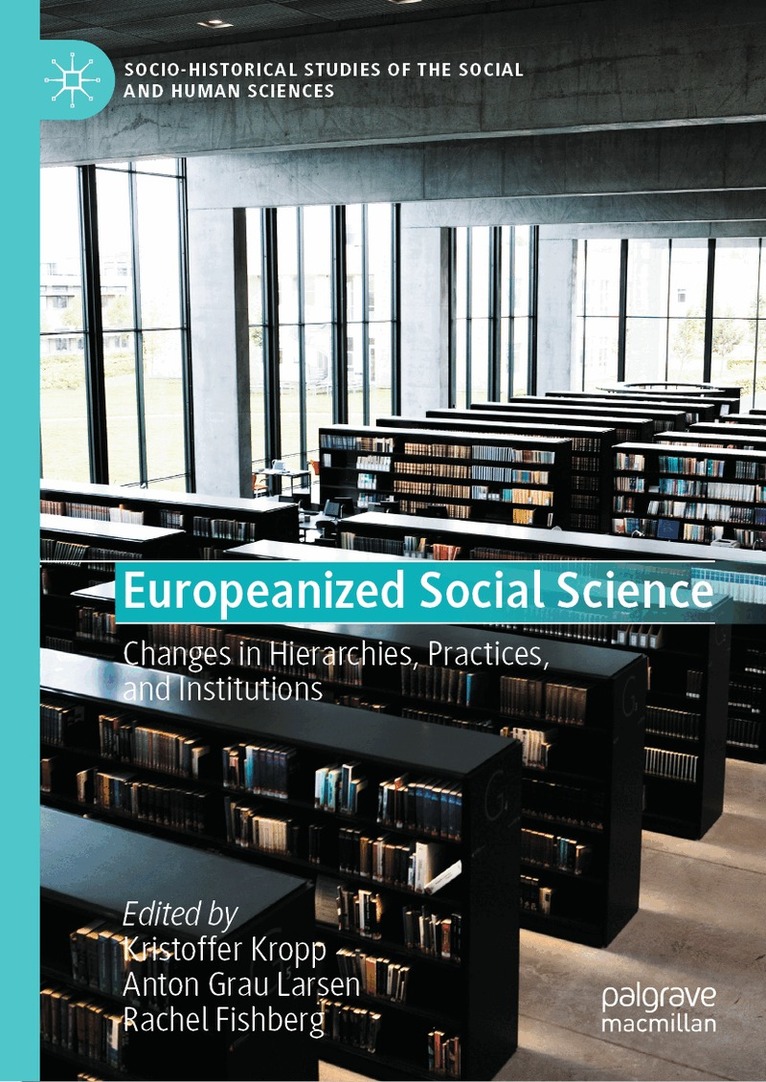
This book examines the increasing internationalization of the social sciences, focusing specifically on how Europeanization has reshaped the production of social science knowledge. Over recent decades, research has highlighted how ideas, people, and techniques have circulated between nation-states and how international organizations have facilitated these flows. Following a similar trajectory to nation-states, the EU has driven shifts in knowledge production to address its unique challenges, including economic and social integration, cultural coordination, homogenization, standardization, and institutional construction. The book explores these dynamics through 10 chapters that analyze the processes and consequences of Europeanization. Drawing on diverse methods and analytical approaches, the chapters are structured around three key dimensions: hierarchies, practices, and institutions. Together, they provide a comprehensive account of how European institutions, networks, and ideas have transformed the social sciences.
1 891 kr
Läs direkt efter köp
This book examines the increasing internationalization of the social sciences, focusing specifically on how Europeanization has reshaped the production of social science knowledge. Over recent decades, research has highlighted how ideas, people, and techniques have circulated between nation-states and how international organizations have facilitated these flows. Following a similar trajectory to nation-states, the EU has driven shifts in knowledge production to address its unique challenges, including economic and social integration, cultural coordination, homogenization, standardization, and institutional construction. The book explores these dynamics through 10 chapters that analyze the processes and consequences of Europeanization. Drawing on diverse methods and analytical approaches, the chapters are structured around three key dimensions: hierarchies, practices, and institutions. Together, they provide a comprehensive account of how European institutions, networks, and ideas have transformed the social sciences.