Rachelle Bosua - Böcker
Visar alla böcker från författaren Rachelle Bosua. Handla med fri frakt och snabb leverans.
3 produkter
3 produkter
922 kr
Skickas inom 5-8 vardagar
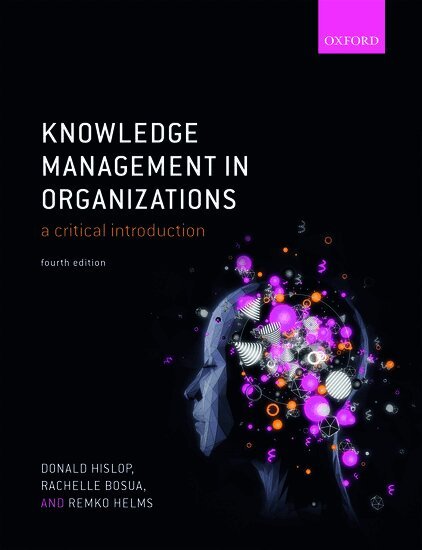
Knowledge Management in Organizations is the most comprehensive and critical textbook on the subject. Encompassing a number of perspectives - including organizational behaviour, HRM, systems, and sociocultural factors - the text introduces the concept of knowledge before examining how it can be effectively managed within the organizations in which we work. The international author team ensure the broad theoretical coverage is brought to life with practical illustrations and case studies exploring topics such as knowledge sharing via social media, knowledge transfer in different cultural contexts, and the interaction of leadership, culture, and knowledge management in Australian SMEs. Examples are diverse, international, and highly relevant to each chapter, showcasing the significance of knowledge management in all types of organizational settings.'Time to Reflect' boxes, review and discussion questions, and a question or activity to accompany every illustration and case study ensure students are challenged to engage with the subject critically and reflectively. Despite the critical approach and depth of coverage, the text remains accessible through its widely praised writing style, coherent structure, in-chapter definition boxes, and manageable size. This book is accompanied by a selection of online resources:For students:Extra online casesWeb links to additional resources and relevant websitesExtension questionsFor lecturers:Suggested exam questions Suggested essay/coursework questionsSuggestions for classroom activities Figures and tables from the book
692 kr
Skickas inom 7-10 vardagar
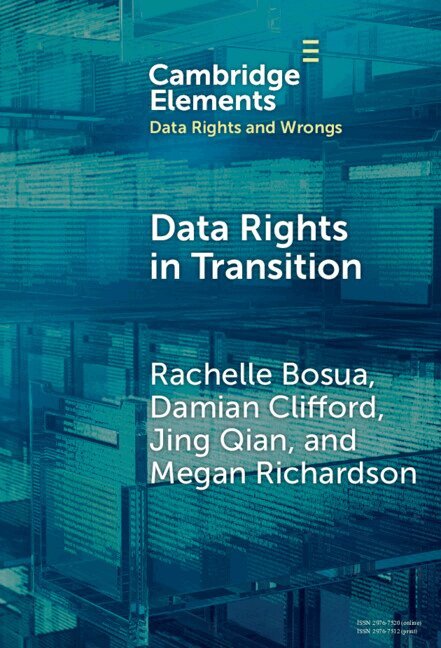
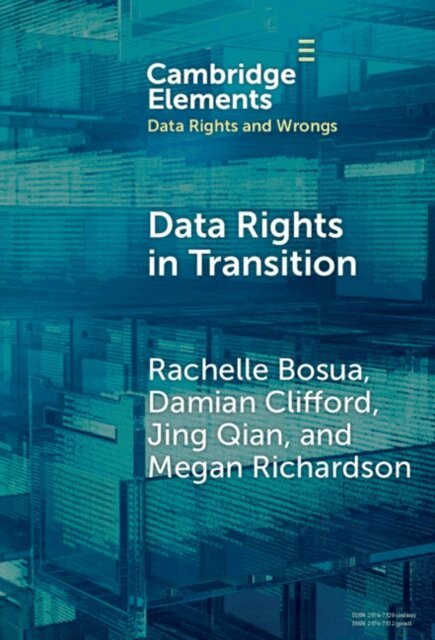
Data Rights in Transition maps the development of data rights that formed and reformed in response to the socio-technical transformations of the postwar twentieth century. The authors situate these rights, with their early pragmatic emphasis on fair information processing, as different from and less symbolically powerful than utopian human rights of older centuries. They argue that, if an essential role of human rights is 'to capture the world's imagination', the next generation of data rights needs to come closer to realising that vision - even while maintaining their pragmatic focus on effectiveness. After a brief introduction, the sections that follow focus on socio-technical transformations, emergence of the right to data protection, and new and emerging rights such as the right to be forgotten and the right not to be subject to automated decision-making, along with new mechanisms of governance and enforcement.
215 kr
Skickas inom 7-10 vardagar
Data Rights in Transition maps the development of data rights that formed and reformed in response to the socio-technical transformations of the postwar twentieth century. The authors situate these rights, with their early pragmatic emphasis on fair information processing, as different from and less symbolically powerful than utopian human rights of older centuries. They argue that, if an essential role of human rights is 'to capture the world's imagination', the next generation of data rights needs to come closer to realising that vision - even while maintaining their pragmatic focus on effectiveness. After a brief introduction, the sections that follow focus on socio-technical transformations, emergence of the right to data protection, and new and emerging rights such as the right to be forgotten and the right not to be subject to automated decision-making, along with new mechanisms of governance and enforcement.