Rafael Barroso Cabrera - Böcker
Visar alla böcker från författaren Rafael Barroso Cabrera. Handla med fri frakt och snabb leverans.
6 produkter
6 produkter
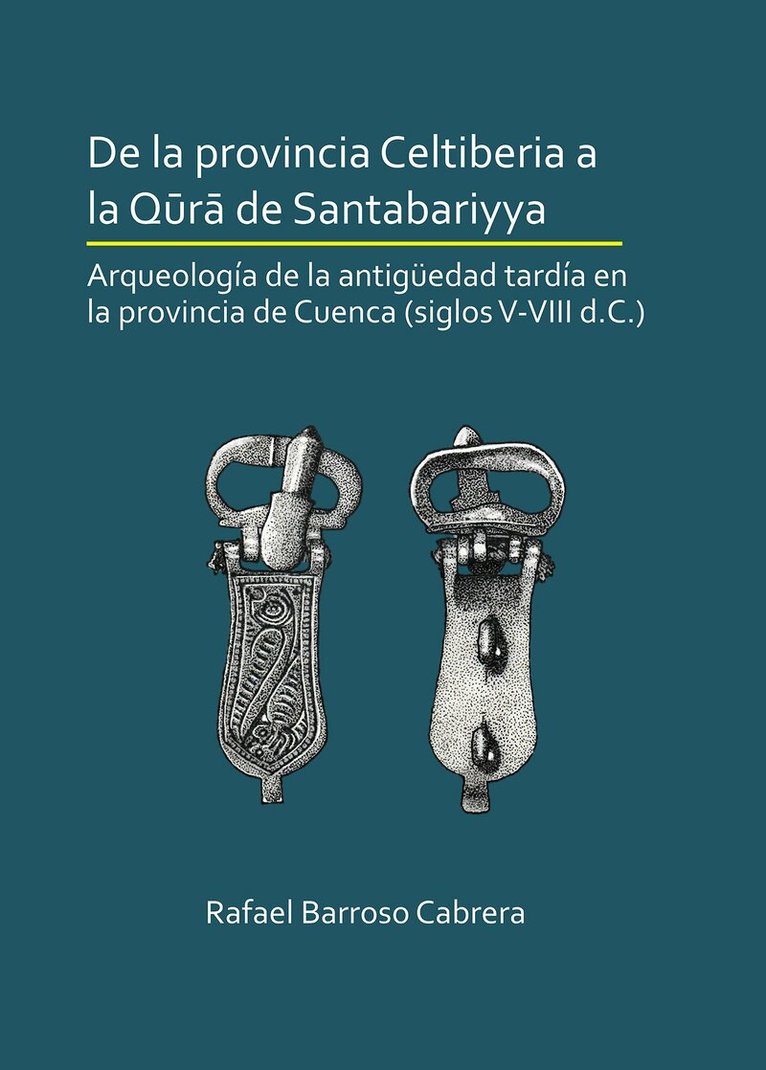
De la provincia Celtiberia a la qūrā de Santabariyya: Arqueología de la Antigüedad tardía en la provincia de Cuenca (siglos V-VIII d.C.)
Häftad, Spanska, 2019
1 129 kr
Skickas
The central position of the province of Cuenca, Spain, was a decisive factor in its relationship with Toledo, the capital of the Visigothic kingdom. Also, its location meant that, from the middle of the 6th Century, it was directly affected by some of the most relevant historical episodes of those times: the foundation of the royal city of Reccopoli, the establishment of the Servitanus monastery, the transformation of Toledo as the metropolitan seat of the Carthaginian province and the military campaigns against the imperial forces. Parallel to this, archaeological excavations document a process of disrupting the old urban centres in favour of small populations within their municipal territory. This process was resolved with a shift of power centres towards other cities supported by the political power of Toledo: Toledo itself in the case of Segobriga, Reccopoli in the Arcavica’s case and Illunum to the detriment of Valeria. In this way, the ancient Roman cities were reduced to serve as a symbolic reference of the small villages that developed in the shadow of the old urban centres. This volume presents a historical and archaeological study of the province of Cuenca in Late Antiquity. The study concludes with an examination of the archaeological collection from the province, which has been divided into three large groups: monumental sculpture and epigraphic items, ceramic productions and metalwork arts. The first group is mainly constituted by the findings made in the excavations of Cabeza de Griego (Segobriga). Most of the pottery productions correspond to vessels placed as funerary deposits. Due to the absence of excavations, the ceramics for kitchen and storage use are hardly represented, whereas there is an overrepresentation of types destined for use as libations or offerings. Finally, most of the elements of industrial arts correspond to elements of the Latin-Mediterranean fashion or Byzantine style of the 7th Century. The almost total absence of materials corresponding to the Pontic-Danubian fashion also should be noted. | La posición central de la provincia de Cuenca ha sido el factor determinante en su relación con Toledo, la capital del reino visigodo. Esta situación fue la causa también de que, desde mediados del siglo VI, se viera directamente afectada por algunos de los episodios históricos más relevantes del momento: la fundación de la ciudad regia de Recópolis, el establecimiento del monasterio Servitano, la transformación de Toledo en sede metropolitana de la provincia cartaginesa y las campañas militares contra los ejércitos imperiales. De forma paralela, las excavaciones arqueológicas documentan un proceso de desestructuración de los antiguos centros urbanos a favor de pequeñas poblaciones de su territorio. Este proceso se resolvió con un cambio de centros de poder hacia otras ciudades apoyadas por el poder político de Toledo: Toledo mismo en el caso de Segóbriga, Recópolis en el caso de Arcávica e Illunum en detrimento de Valeria. De este modo, las ciudades romanas quedaron reducidas servir como referentes simbólicos de las pequeñas poblaciones que se desarrollaron a la sombra de los antiguos centros urbanos. El presente trabajo se completa con el estudio de la colección arqueológica procedente de la provincia, que se ha dividido en tres grandes grupos: escultura monumental y epigrafía, producciones cerámicas y artes industriales. El primer grupo está constituido principalmente por los hallazgos realizados en las excavaciones de Cabeza de Griego (Segóbriga). Por otro lado, la mayoría de las producciones de cerámica corresponden a vasijas colocadas como depósitos funerarios. Debido a la ausencia de excavaciones, la cerámica de cocina y de almacenamiento apenas aparece representada, mientras que hay una sobrerrepresentación de tipos destinados a libaciones u ofrendas. Finalmente, la mayoría de los materiales de las artes industriales corresponden a elementos de la moda latino-mediterránea o del estilo bizantino del siglo VII. La ausencia casi total de materiales correspondientes a la moda póntico-danubiana es sumamente significativa.
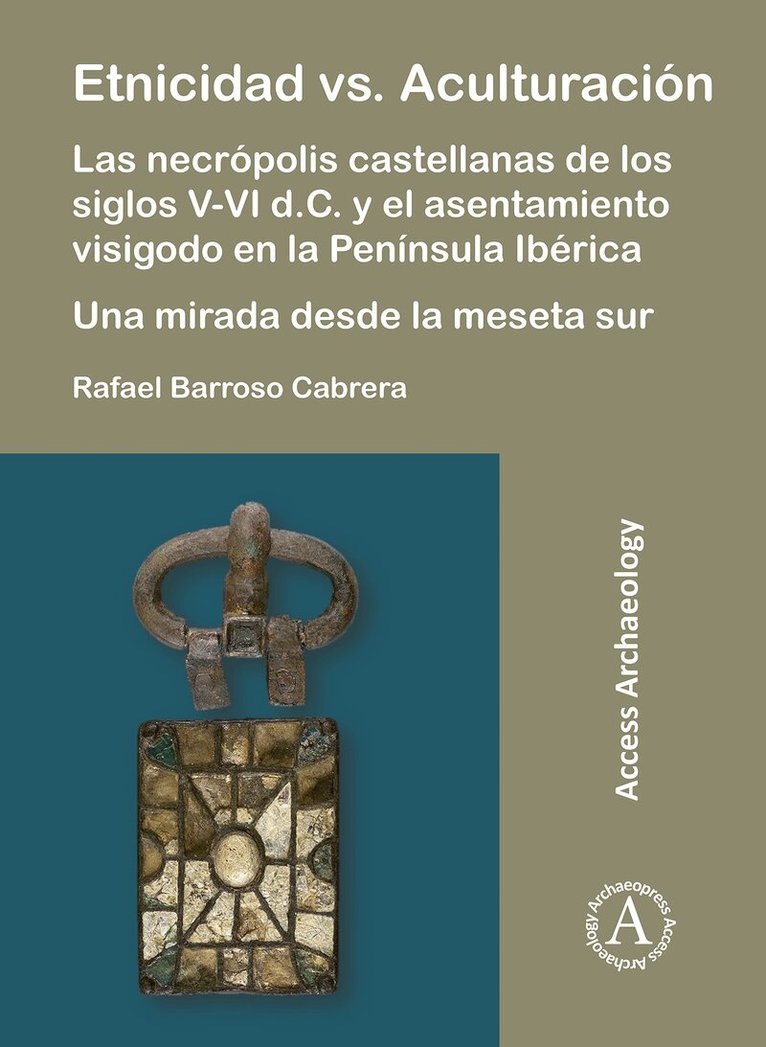
Etnicidad vs. Aculturación: Las necrópolis castellanas de los siglos V-VI d.C. y el asentamiento visigodo en la Península Ibérica. Una mirada desde la meseta sur
Häftad, Spanska, 2018
531 kr
Skickas
The Visigoth settlement in the Iberian Peninsula and its relationship with the archaeological record of the 5th-6th centuries AD continues to be one of the most controversial issues in Spanish archaeology. The controversy relates to politics as much as it relates to archaeological research with two points remaining particularly controversial: the alleged use of the Visigoth past by the Francoist intelligentsia as an ideological affirmation of the regime and the contribution of archaeologist Julio Martínez Santa-Olalla in supporting and enabling this re-interpretation of Visigothic archaeology. The purely archaeological aspect of the controversy relates to an archaeological interpretation, stemming from the ranks of the so-called New Archeology, of the Castilian necropoleis containing grave goods of Pontic-Danubian type. This interpretation places special emphasis on social and cultural phenomena above the ethnic criteria defended by the Vienna School. This volume approaches the ideological question that underlies these controversies, as well as their repercussions in the direction adopted by later archaeological investigations in relation to the history of Spain. The author attempts to deconstruct the work of Martínez Santa-Olalla and places it in the context of the scientific production of his time. At the same time, it relativizes the role played by the Visigoth period in the Francoist ideological construction. Once the discussion is framed in these terms, the author dedicates his study to a refutation of the cultural interpretation of the phenomenon of the Visigothic necropoleis of the Castilian plateau based on the archaeological data and by comparing this data with literary sources. The study also addresses two other historical problems that could be related to the Gothic settlement in the Castilian plateau: the creation of the bishopric of Segovia and the flourishing of the city of Toledo. | El asentamiento visigodo en la Península Ibérica y su relación con el registro arqueológico de los siglos V-VI d.C. continúa siendo en la actualidad una de las cuestiones más controvertidas de la arqueología española. Gran parte de esa controversia tiene que ver con aspectos que trascienden a la propia investigación arqueológica y nos sitúan en el plano de la política. Así, a la hora de abordar el problema hay dos puntos que han resultado especialmente polémicos: la presunta utilización del pasado visigodo por parte de la intelectualidad franquista como afirmación ideológica del régimen y la contribución del arqueólogo burgalés Julio Martínez Santa-Olalla en la fijación del esquema de arqueología visigoda. Por otro lado, el aspecto puramente arqueológico de la controversia tiene que ver con la interpretación que desde las filas de la denominada New Archaeology se viene realizando de las necrópolis castellanas con ajuares de tipo póntico-danubiano. Dicha interpretación hace especial hincapié en fenómenos sociales y culturales por encima de los criterios étnicos defendidos por la Escuela de Viena. El presente estudio aborda de forma lúcida la cuestión ideológica que subyace detrás de la polémica, así como las repercusiones que ha tenido en la posterior dirección adoptada por la investigación arqueológica en relación con la propia historia de España. En este sentido, el autor realiza un ejercicio de deconstrucción de la figura de Martínez Santa-Olalla y lo sitúa en el contexto de la producción científica de su época. Al mismo tiempo, relativiza el papel desempeñado por el periodo visigodo en la construcción ideológica franquista. Una vez situada la discusión en estos términos, el autor dedica su estudio a una refutación de la interpretación en clave cultural del fenómeno de las necrópolis visigodas de la meseta castellana desde los propios datos arqueológicos y a partir del cotejo de estos datos con los testimonios que proporcionan las fuentes literarias. Además, el presente estudio aborda también otros dos problemas históricos que podrían estar relacionados con el asentamiento godo en la meseta castellana: la creación de la sede episcopal segoviana y el auge de la ciudad de Toledo.
Tres usurpadores godos: Tres estudios sobre la tiranía en el reino visigodo de Toledo
Häftad, Spanska, 2021
905 kr
Skickas
This book presents a study of three famous usurpations of the Visigothic period: the uprising of Prince Hermenegild (579-585); the rebellion of Duke Argimundo at the beginning of the reign of Recaredo; and Duke Theudemirus and the role he played in the transmission of power between Visigoths and Arabs after the fall of the kingdom of Toledo.
Hermenegildvs Rex: Prince, Usurper, and Martyr
A Critical Study on the Rebellion of St Hermenegild (578-585)
Häftad, Engelska, 2025
531 kr
Skickas
The rebellion of Hermenegild and his conversion form one of the most controversial and darkest episodes in the history of Spain. Even at the time, this event was the subject of widely differing interpretations which influenced subsequent versions. Today, there is still no consensus among researchers on the real reasons for the crisis that finally led to civil war between Leovigild and his son. However, from the outset, the issue was polarised between those who saw it as a simple usurpation motivated by ambition for the crown and those who considered the rebellion as a legitimate defence of the true faith. Beyond the controversy, the crisis caused by the prince’s royal anointing was a decisive episode in the historical development of the kingdom of Toledo, preparing the ground for the conversion of Reccared to Catholicism and accelerating the unification of Arians and Catholics, Goths and Romans. This study aims to provide a coherent response to the main questions raised by this important historical episode (the nature of the rebellion, the true motivations and reactions, personal responsibilities, political and religious consequences, etc.), as well as highlighting the importance of Hermenegild’s conversion in relation to the subsequent sacralisation of the Visigothic royal institution.
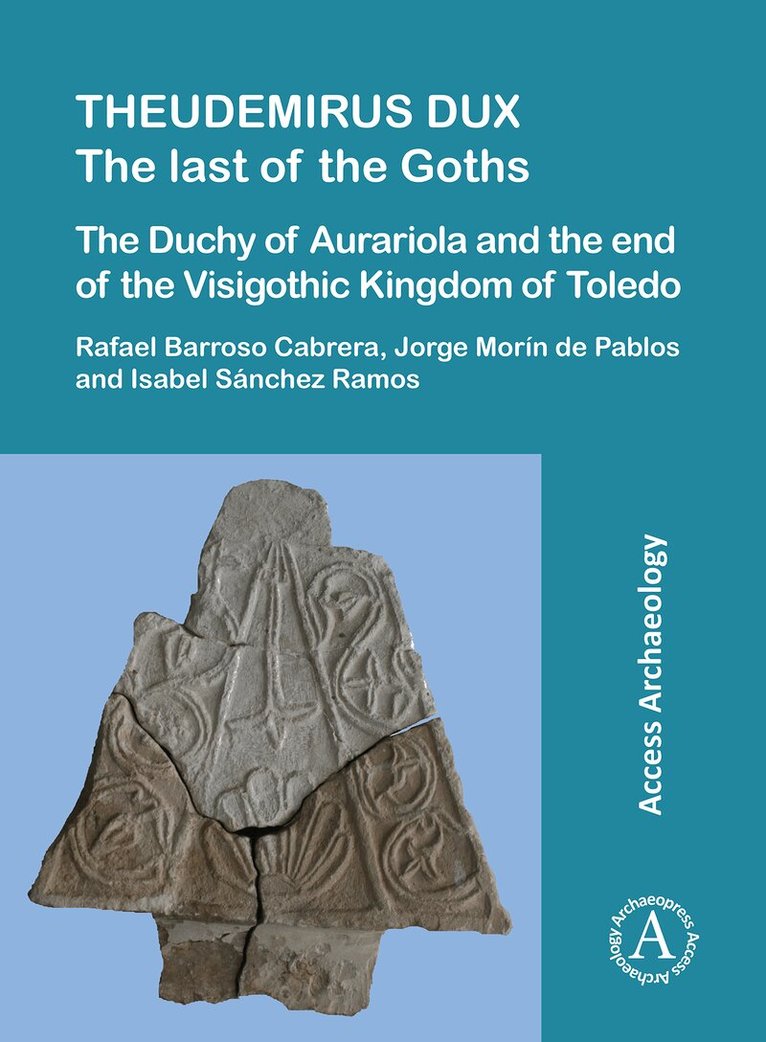
Theudemirus Dux: The Last of the Goths
The Duchy of Aurariola and the End of the Visigothic Kingdom of Toledo
Häftad, Engelska, 2025
531 kr
Skickas
This book examines the figure of Duke Theudemir, one of the last great nobles of the Kingdom of Toledo, and the impact of his career on the transfer of power between the Visigothic nobility and the Arab conquerors. In the historical record, Theudemir appears as the archetypal ambitious aristocrat involved in the complex political intrigues that led to the ruin of the Visigothic Kingdom of Toledo in 711. Using this as a springboard, the book also analyzes the complex historical and administrative situation in the southeast of the Iberian Peninsula between the Byzantine invasion and the Arab occupation. Finally, the important archaeological site of Pla de Nadal (Ribarroja de Turia, Valencia) and its identification with the original power centre of Duke Theudemir is considered.
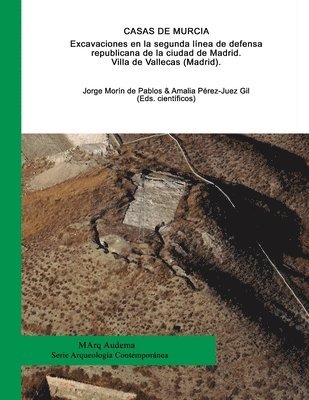
Casas de Murcia. Excavaciones en la segunda línea de defensa republicana de la ciudad de Madrid. Villa de Vallecas (Madrid).
Häftad, Spanska
1 005 kr
Skickas inom 3-6 vardagar