
Rafael Scopacasa – författare
Visar alla böcker från författaren Rafael Scopacasa. Handla med fri frakt och snabb leverans.
3 produkter
3 produkter
E-bok
PDF, Engelska, 20151 797 kr
Läs direkt efter köp
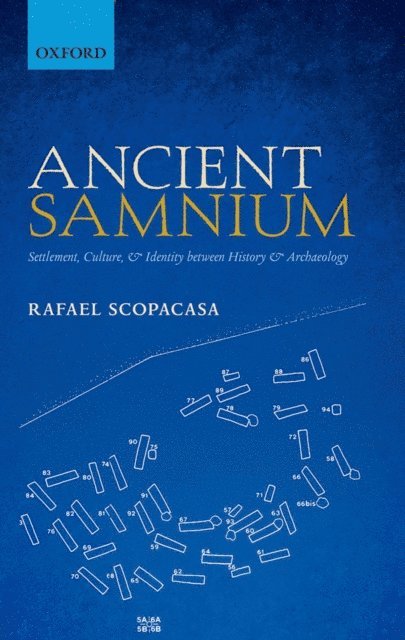
Ancient Samnium focuses on the region of Samnium in Italy, where a rich blend of historical, literary, epigraphic, numismatic, and archaeological evidence supports a fresh perspective on the complexity and dynamism of a part of the ancient Mediterranean that is normally regarded as marginal.This volume presents new ways of looking at ancient Italian communities that did not leave written accounts about themselves but played a key role in the early development of Rome, first as staunch opponents and later as key allies. It combines written and archaeological evidence to form a new understanding of the ancient inhabitants of Samnium during the last six centuries BC, how they identified themselves, how they developed unique forms of social and political organisation, and how theybecame entangled with Rome''s expanding power and the impact that this had on their daily lives.
Inbunden, Engelska, 2015
2 536 kr
Skickas inom 5-8 vardagar
Ancient Samnium focuses on the region of Samnium in Italy, where a rich blend of historical, literary, epigraphic, numismatic, and archaeological evidence supports a fresh perspective on the complexity and dynamism of a part of the ancient Mediterranean that is normally regarded as marginal. This volume presents new ways of looking at ancient Italian communities that did not leave written accounts about themselves but played a key role in the early development of Rome, first as staunch opponents and later as key allies. It combines written and archaeological evidence to form a new understanding of the ancient inhabitants of Samnium during the last six centuries BC, how they identified themselves, how they developed unique forms of social and political organisation, and how they became entangled with Rome's expanding power and the impact that this had on their daily lives.
122 kr
Läs direkt efter köp
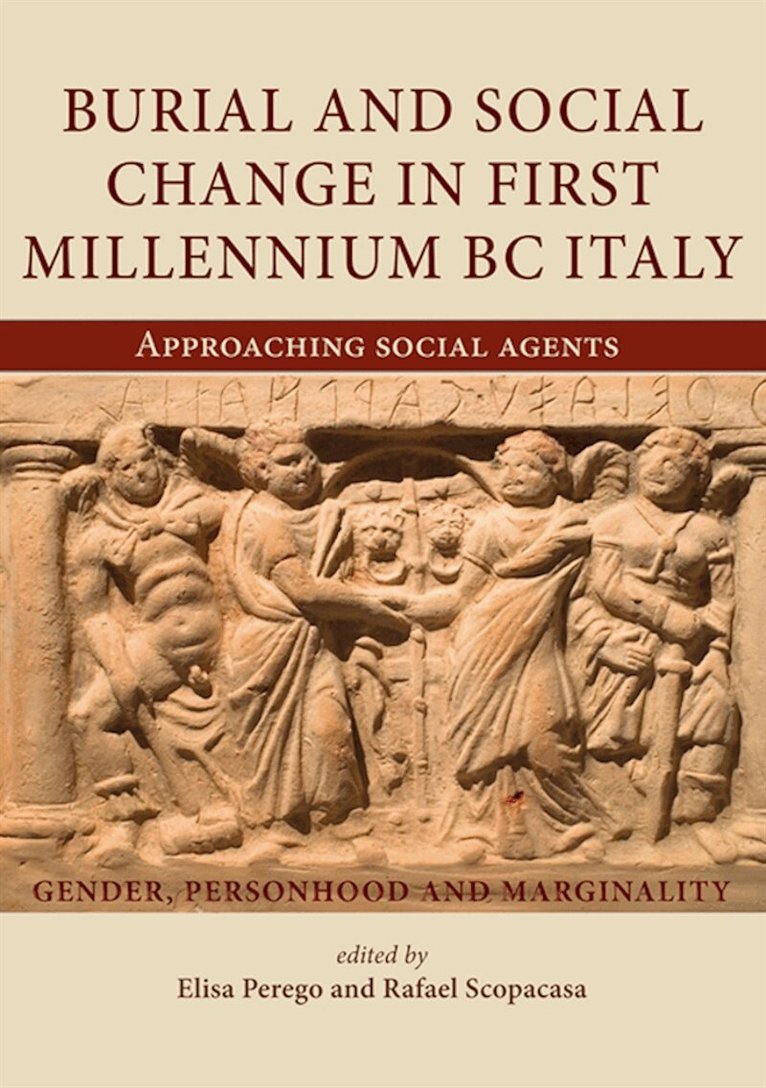
In the first millennium BC, communities in Italy underwent crucial transformations which scholars have often subsumed under the heading of ‘state formation’, namely increased social stratification, the centralization of political power and, in some cases, urbanization. Most research has tended to approach the phenomenon of state formation and social change in relation to specific territorial dynamics of growth and expansion, changing modes of exploitation of food and other resources over time, and the adoption of selected socio-ritual practices by the ruling élites in order to construct and negotiate authority. In contrast, comparatively little attention has been paid to the question of how these key developments resonated across the broader social transect, and how social groups other than ruling élites both promoted these changes and experienced their effects. The chief aim of this collection of 14 papers is to harness innovative approaches to the exceptionally rich mortuary evidence of first millennium BC Italy, in order to investigate the roles and identities of social actors who either struggled for power and social recognition, or were manipulated and exploited by superior authorities in a phase of tumultuous sociopolitical change throughout the entire Mediterranean basin. Contributors provide a diverse range of approaches in order to examine how power operated in society, how it was exercised and resisted, and how this can be studied through mortuary evidence. Section 1 addresses the construction of identity by focusing mainly on the manipulation of age, ethnic and gender categories in society in regions and sites that reached notable power and splendor in first millennium BC Italy. These include Etruria, Latium, Campania and the rich settlement of Verucchio, in Emilia Romagna. Each paper in Section 2 offers a counterpoint to a contribution in Section 1 with an overall emphasis on scholarly multivocality, and the multiplicity of the theoretical approaches that can be used to read the archaeological evidence.