Rafael Velázquez Flores - Böcker
Visar alla böcker från författaren Rafael Velázquez Flores. Handla med fri frakt och snabb leverans.
3 produkter
3 produkter
3 320 kr
Skickas inom 10-15 vardagar
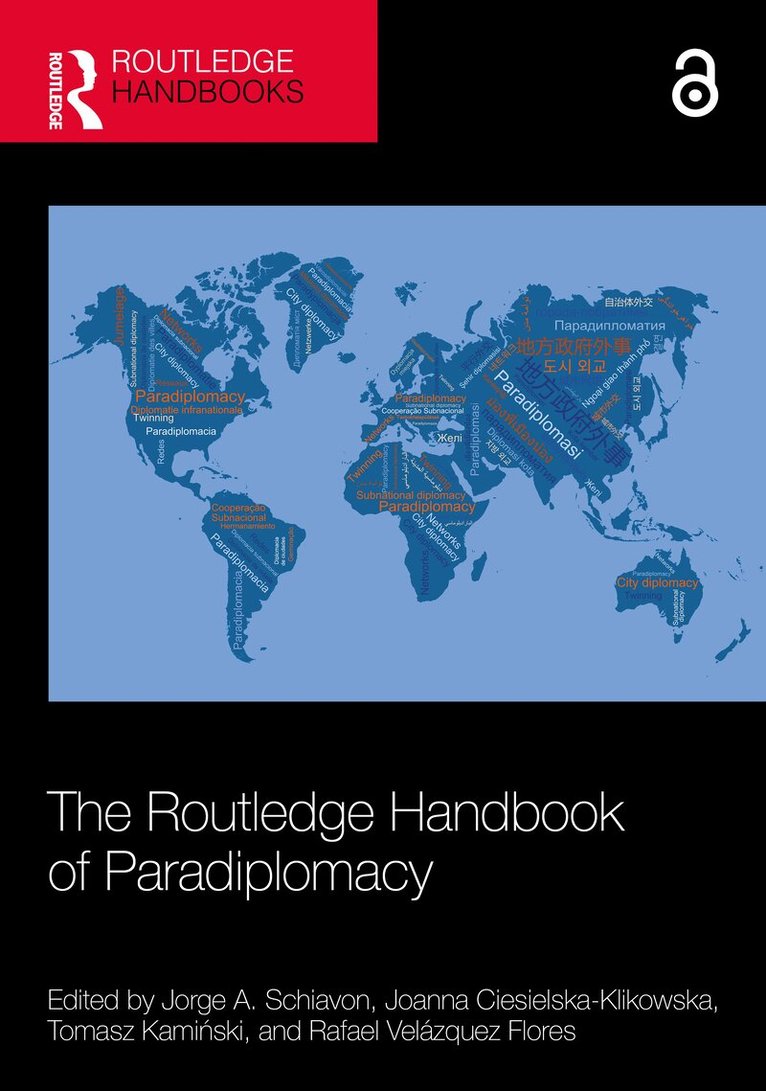
This handbook provides an innovative, comprehensive, and authoritative examination of how subnational governments, regions, and municipalities participate in and shape the field of International Relations (IR).Covering the conceptual, theoretical, methodological, institutional, and practical dimensions of paradiplomacy, it is divided into five parts. Part I focuses on paradiplomacy as a distinct field of research, its conceptual evolution, and its theoretical foundations through classical and alternative theories of IR. Part II presents methodological approaches, including comparative, quantitative, qualitative, and legal studies, as well as multi-level and polycentric governance analyses. Part III examines institutional aspects, discussing the roles of regions, cities, networks, cross-border cooperation, protodiplomacy, identity, and substates’ involvement in international organizations. Part IV explores the intersection of paradiplomacy with public policy, covering topics such as environment, climate change, migration, urban management, culture, trade, finance, economic development, security, and decentralized international cooperation. Part V provides a detailed worldwide regional analysis, with case studies from Europe, the Americas, Asia and the Pacific, and Africa. Offering a truly global perspective provided by experienced researchers from all over the world, this handbook will appeal to a broad audience, including scholars and students of International Relations, Urban and Regional Studies, Political Science, Public Policy, Comparative Politics, Diplomacy, Foreign Policy, Governance, and Federalism.
1 487 kr
Skickas inom 10-15 vardagar
This book explores Mexico's foreign policy using the ‘principled pragmatism’ approach. It describes and explains main external actions from the country’s independence in the nineteenth century to Andrés Manuel López Obrador’s administration. The principal argument is that Mexico has resorted to principled pragmatism due to geographic, historical, economic, security, and political reasons. In other words, the nation uses this instrument to deal with the United States, defend national interests, appease domestic groups, and promote economic growth.The key characteristics of Mexico’s principled pragmatism in foreign policy are that the nation projects a double-edged diplomacy to cope with external and domestic challenges at the same time. This policy is mainly for domestic consumption, and it is also linked to the type of actors that are involved in the decision-making process and to the kind of topics included in the agenda. This principled pragmatism is related to the nature of theintention: principism is deliberate and pragmatism is forced; and this policy is used to increase Mexico’s international bargaining power.
1 487 kr
Skickas inom 10-15 vardagar
This book explores Mexico's foreign policy using the ‘principled pragmatism’ approach. It describes and explains main external actions from the country’s independence in the nineteenth century to Andrés Manuel López Obrador’s administration. The principal argument is that Mexico has resorted to principled pragmatism due to geographic, historical, economic, security, and political reasons. In other words, the nation uses this instrument to deal with the United States, defend national interests, appease domestic groups, and promote economic growth.The key characteristics of Mexico’s principled pragmatism in foreign policy are that the nation projects a double-edged diplomacy to cope with external and domestic challenges at the same time. This policy is mainly for domestic consumption, and it is also linked to the type of actors that are involved in the decision-making process and to the kind of topics included in the agenda. This principled pragmatism is related to the nature of theintention: principism is deliberate and pragmatism is forced; and this policy is used to increase Mexico’s international bargaining power.