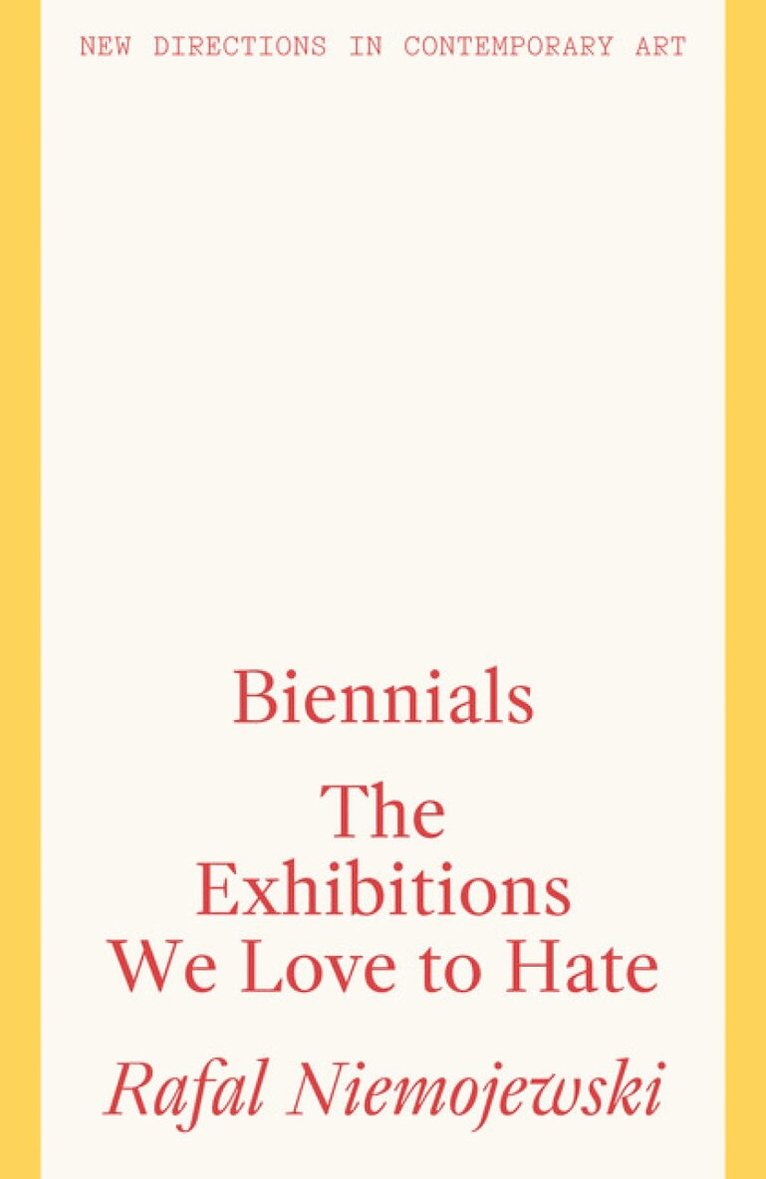
Biennials: The Exhibitions We Love to Hate examines one of the most significant recent transitions in the contemporary-art world: the proliferation of large-scale international recurrent survey shows of contemporary art, commonly referred to as contemporary biennials. Since the mid-1980s biennials have been instrumental in shaping curating as an autonomous practice. They have also been responsible for substantially reconfiguring the art world and disrupting the existing value chain of the art market, which now relies on biennials as much as it does on major museums’ acquisitions and exhibitions.At the same time, the arrival of new biennials in various parts of the world has also been associated with some of the most palpable side-effects of globalization. Branded by some critics as dollar-generating leisure events and showcases for highly consumable works of art, biennials have been repeatedly accused of homogenizing artistic and curatorial practices and leading to a certain fatigue. This publication makes an essential contribution to a fascinating cultural debate.
Examine one of the most significant recent transitions in the contemporary art world: the proliferation of large-scale international recurrent survey shows of contemporary art, commonly referred to as contemporary biennials. Since the mid-1980s biennials have been instrumental in shaping curating as an autonomous practice. These exhibitions are also said to have provided increased visibility for certain types of new art practices, notably those that are socially and politically committed, research-based, and site-specific, and to have undermined some of the more traditional art media, such as painting, drawing, or sculpture. They have been responsible for substantially reshaping the contemporary art world and disrupting the existing value chain of the art market, which now relies on biennials as much as it does on major museums' acquisitions and exhibitions. Rafal Niemojewski, Director of the Biennial Foundation, deftly unpicks the critical discussion and controversy surrounding contemporary biennials. Branded by some critics as showcases of neo-liberalism run amok, in which culture has become synonymous with the dollar-generating leisure industry, biennials have also been associated with the production of monumental artworks which are both highly consumable and photogenic (Instagrammable). The exhibitions we love to hate? This engaging publication makes an essential contribution to a fascinating cultural debate.
Biennials: The Exhibitions We Love to Hate examines one of the most significant recent transitions in the contemporary-art world: the proliferation of large-scale international recurrent survey shows of contemporary art, commonly referred to as contemporary biennials. Since the mid-1980s biennials have been instrumental in shaping curating as an autonomous practice. They have also been responsible for substantially reconfiguring the art world and disrupting the existing value chain of the art market, which now relies on biennials as much as it does on major museums’ acquisitions and exhibitions.At the same time, the arrival of new biennials in various parts of the world has also been associated with some of the most palpable side-effects of globalization. Branded by some critics as dollar-generating leisure events and showcases for highly consumable works of art, biennials have been repeatedly accused of homogenizing artistic and curatorial practices and leading to a certain fatigue. This publication makes an essential contribution to a fascinating cultural debate.
Examine one of the most significant recent transitions in the contemporary art world: the proliferation of large-scale international recurrent survey shows of contemporary art, commonly referred to as contemporary biennials. Since the mid-1980s biennials have been instrumental in shaping curating as an autonomous practice. These exhibitions are also said to have provided increased visibility for certain types of new art practices, notably those that are socially and politically committed, research-based, and site-specific, and to have undermined some of the more traditional art media, such as painting, drawing, or sculpture. They have been responsible for substantially reshaping the contemporary art world and disrupting the existing value chain of the art market, which now relies on biennials as much as it does on major museums' acquisitions and exhibitions. Rafal Niemojewski, Director of the Biennial Foundation, deftly unpicks the critical discussion and controversy surrounding contemporary biennials. Branded by some critics as showcases of neo-liberalism run amok, in which culture has become synonymous with the dollar-generating leisure industry, biennials have also been associated with the production of monumental artworks which are both highly consumable and photogenic (Instagrammable). The exhibitions we love to hate? This engaging publication makes an essential contribution to a fascinating cultural debate.