Rahman Azari – författare
Visar alla böcker från författaren Rahman Azari. Handla med fri frakt och snabb leverans.
4 produkter
4 produkter
3 435 kr
Skickas inom 10-15 vardagar
This handbook explores the critically important topic of embodied carbon, providing advanced insights that focus on measuring and reducing embodied carbon from across the built environment, including buildings, urban areas and cities, and construction materials and components.Split into five distinct sections, international experts, researchers, and professionals present the recent developments in the field of embodied carbon from various perspectives and at different scales of material, building, and city. Following an introduction to the embodied carbon question, the chapters in Section 1 then cover the key debates around issues such as the politics of embodied carbon, links between embodied carbon and thermal mass, and the misuse of carbon offsets. Section 2 reviews the embodied carbon policies in a selected number of countries. Sections 3, 4, and 5 approach the topic of embodied carbon from urban-, building-, and material-scale perspectives, respectively, and use case studies to demonstrate estimation techniques and present opportunities and challenges in embodied carbon mitigation.This will be important reading for upper-level students and researchers in Architecture, Urban Planning, Engineering, and Construction disciplines. Presenting case studies of embodied carbon assessment, this book will also help practicing architects, engineers, and urban planners understand embodied carbon estimation techniques and different mitigation strategies.
721 kr
Skickas inom 10-15 vardagar
This handbook explores the critically important topic of embodied carbon, providing advanced insights that focus on measuring and reducing embodied carbon from across the built environment, including buildings, urban areas and cities, and construction materials and components.Split into five distinct sections, international experts, researchers, and professionals present the recent developments in the field of embodied carbon from various perspectives and at different scales of material, building, and city. Following an introduction to the embodied carbon question, the chapters in Section 1 then cover the key debates around issues such as the politics of embodied carbon, links between embodied carbon and thermal mass, and the misuse of carbon offsets. Section 2 reviews the embodied carbon policies in a selected number of countries. Sections 3, 4, and 5 approach the topic of embodied carbon from urban-, building-, and material-scale perspectives, respectively, and use case studies to demonstrate estimation techniques and present opportunities and challenges in embodied carbon mitigation.This will be important reading for upper-level students and researchers in Architecture, Urban Planning, Engineering, and Construction disciplines. Presenting case studies of embodied carbon assessment, this book will also help practicing architects, engineers, and urban planners understand embodied carbon estimation techniques and different mitigation strategies.
2 328 kr
Skickas inom 10-15 vardagar
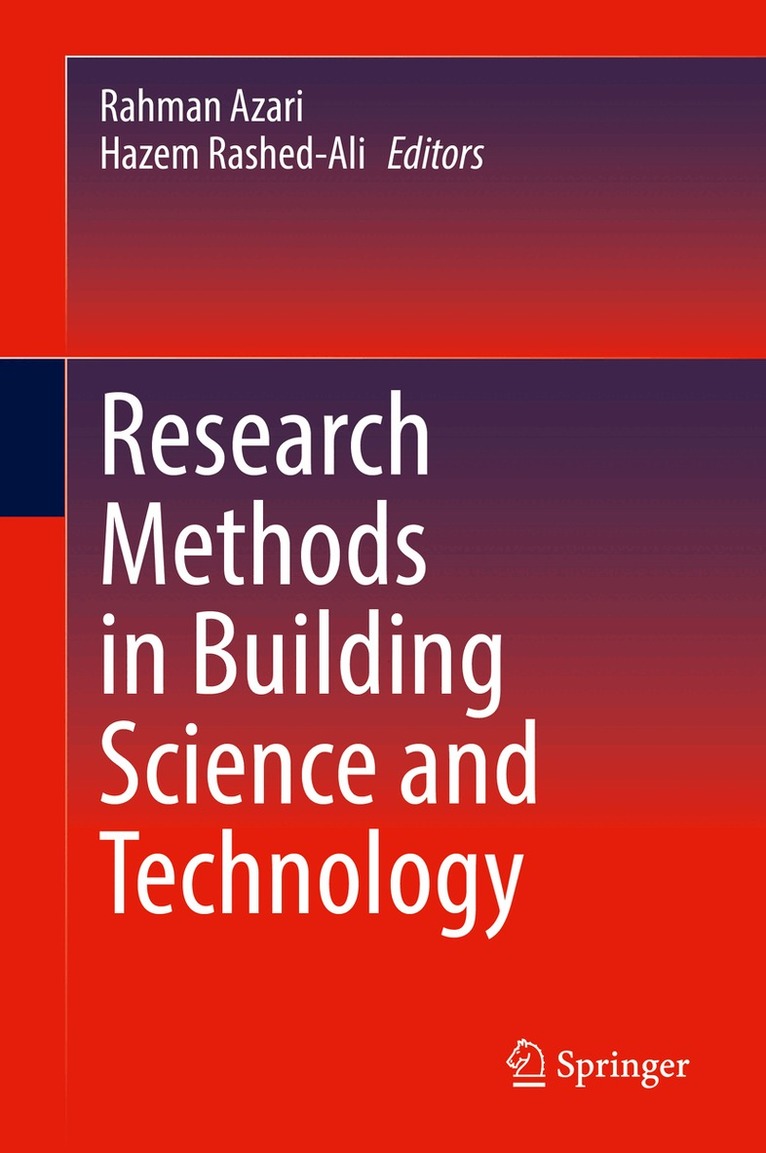
This book covers the range of methodological approaches, methods and tools currently used in various areas of building science and technology research and addresses the current lack of research-method literature in this field. The book covers the use of measurement-based methods in which data is collected by measuring the properties and their variations in ‘actual’ physical systems, simulation-based methods which work with ‘models’ of systems or processes to describe, examine and analyze their behaviors, performances and operations, and data-driven methodologies in which data is collected via measurement or simulation to identify and examine the associations and patterns and predict the future in a targeted system. The book presents a survey of key methodologies in various specialized areas of building science and technology research including window systems, building enclosure, energy performance, lighting and daylighting, computational fluid dynamics, indoor and outdoor thermalcomfort, and life cycle environmental impacts.Provides advanced insight into the research methods and presents the key methodologies within the field of building science and technology.Reviews simulation-based and experimentation/field-based methods of data collection and analysis in diverse areas of building science and technology, such as energy performance, window and enclosure studies, environmental LCA, daylighting, CFD, and thermal comfort.Provides a range of perspectives from building science faculty and researcher contributors with diverse research interests.Appropriate for use in university courses.
2 328 kr
Skickas inom 10-15 vardagar
This book covers the range of methodological approaches, methods and tools currently used in various areas of building science and technology research and addresses the current lack of research-method literature in this field. The book covers the use of measurement-based methods in which data is collected by measuring the properties and their variations in ‘actual’ physical systems, simulation-based methods which work with ‘models’ of systems or processes to describe, examine and analyze their behaviors, performances and operations, and data-driven methodologies in which data is collected via measurement or simulation to identify and examine the associations and patterns and predict the future in a targeted system. The book presents a survey of key methodologies in various specialized areas of building science and technology research including window systems, building enclosure, energy performance, lighting and daylighting, computational fluid dynamics, indoor and outdoor thermalcomfort, and life cycle environmental impacts.Provides advanced insight into the research methods and presents the key methodologies within the field of building science and technology.Reviews simulation-based and experimentation/field-based methods of data collection and analysis in diverse areas of building science and technology, such as energy performance, window and enclosure studies, environmental LCA, daylighting, CFD, and thermal comfort.Provides a range of perspectives from building science faculty and researcher contributors with diverse research interests.Appropriate for use in university courses.