Raimund Karl – författare
Visar alla böcker från författaren Raimund Karl. Handla med fri frakt och snabb leverans.
2 produkter
2 produkter
16 225 kr
Skickas inom 5-8 vardagar
The Celtic World, a new title in the Routledge Critical Concepts in Historical Studies series, brings together canonical and the best cutting-edge scholarship in Celtic Studies, including key journal articles, many of which have been translated into English specifically for this set. Organized into four volumes, it gives an overview of the most important issues in the fields of theory, archaeology, history and linguistics, covering different aspects of Celtic cultures in Central and Western Europe, from Antiquity to the Middle Ages.There are several Celtic worlds: some in the past, some in the present, some in archaeology, some in language, some in history. In this collection, several of these worlds are explored in depth. The present discussions in Celtic Studies about how to deal with its subject—and if it exists at all—are examined, as is the debate about where it should turn in the future. The greater part of this set, however, investigates the Celtic pasts and the three main strands that provide us with evidence about it: archaeology, history and linguistics.The first volume deals with Theory in Celtic Studies, from the ‘Celticity’ debate and the nativism-versus-antinativism controversy to the search for the discipline’s future role. Volume 2 covers Celtic archaeology, from the search for ‘Celtic origins’ via late Hallstatt ‘princely’ tombs and La Tène culture to Romano-Celtic and ‘late Celtic’ archaeology of the British Isles. Volume 3 looks at historical sources on Celtic topics, in Antiquity, ‘the age of Arthur’ and the early Middle Ages. Finally, the fourth volume covers language from the earliest to medieval attestations, examining their typology and language contacts.The collection is completed by an introduction to each volume, newly written by the editors, together with a full index. It is destined to be welcomed by Celtic Studies scholars—and those working in allied disciplines such as archaeology, history and linguistics—as an invaluable reference resource.
E-bok
Engelska, 201981 kr
Läs direkt efter köp
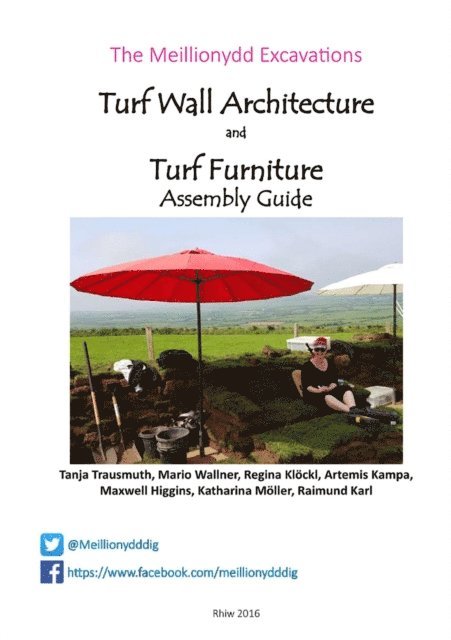
Bei archäologischen Ausgrabungen muss oft der fruchtbare Oberboden separat gelagert werden, um ihn nach Abschluss der Grabungsarbeiten wieder zuoberst auf die wiederverfüllten Grabungsschnitte aufzubringen, um Flurschaden und Ernteausfälle für den Grundeigentümer zu vermeiden. Wird die Grabung auf Grünbrache oder Weideland ausgeführt, bietet es sich beim händischen Bodenabtrag an, den Oberboden in Form von Rasenziegeln zu stechen, die in Form sauber aufgeschlichteter Rasenziegelmauern und Rasenziegelmobiliar gelagert und dadurch gleichzeitig in für die Feldarbeit nutzbringender Weise verwendet werden können, z.B. als Windschutz, Pausenbereiche und improvisierter Büroraum im Feld. Bei archäologischen Ausgrabungen in Meillionydd in Nordwales haben wir eine Reihe von einfachen Bautechniken und Bauanleitungen für derartige Rasenziegelmauern und Rasenziegelmöbel entwickelt, die selbstverständlich auch in anderen Kontexten als bei archäologischen Ausgrabungen - insbesondere in der Gartengestaltung - verwendet werden können, um "grüne" Gartenmöbel und Gartenarchitektur zu erzeugen, die sich für viele verschiedene Zwecke praktisch nutzen lässt. Der "Turf Wall Architecture and Turf Furniture Assembly Guide" enthält Bauanleitungen, die es auch Ihnen ermöglichen, diese praktische Landschaftsarchitektur zu erzeugen.