Rajat Kumar Kujur – författare
Visar alla böcker från författaren Rajat Kumar Kujur. Handla med fri frakt och snabb leverans.
4 produkter
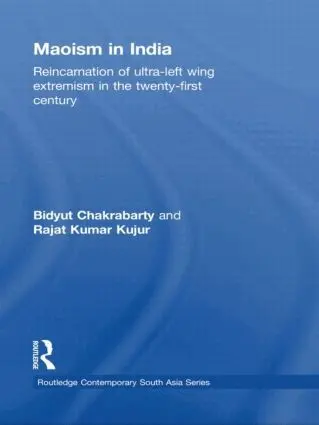
Maoism in India
Reincarnation of Ultra-Left Wing Extremism in the Twenty-First Century
Av Bidyut Chakrabarty, Rajat Kumar Kujur
Häftad, 2012
211 kr
Lägg i varukorg
The rise of Maoism as one of the organized political movement in India is the outcome of a historical situation. Both colonialism and the failure of the Indian state to implement land reforms more stringently in the aftermath of independence resulted in terrible sufferings of the marginalized, …
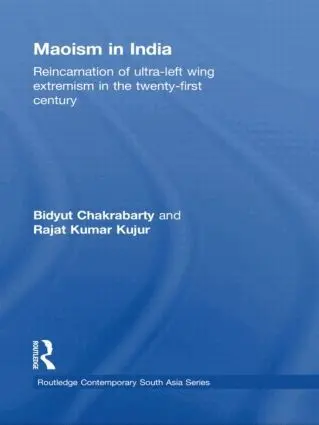
Maoism in India
Reincarnation of Ultra-Left Wing Extremism in the Twenty-First Century
Av Bidyut Chakrabarty, Rajat Kumar Kujur
Inbunden, 2009
765 kr
Lägg i varukorg
The rise of Maoism as one of the organized political movement in India is the outcome of a historical situation. Both colonialism and the failure of the Indian state to implement land reforms more stringently in the aftermath of independence resulted in terrible sufferings of the marginalized, …
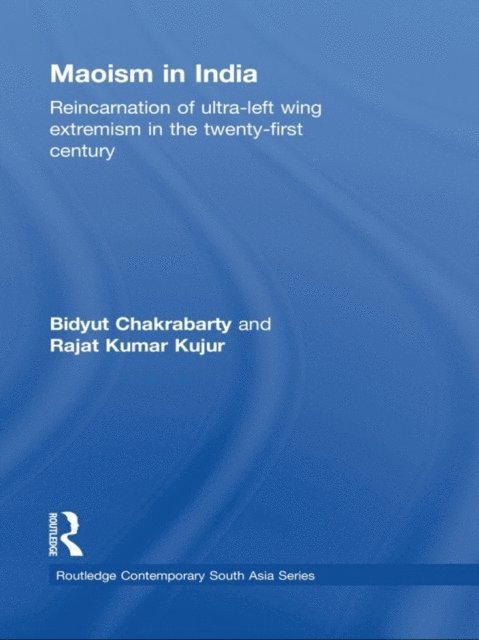
Maoism in India
Reincarnation of Ultra-Left Wing Extremism in the Twenty-First Century
Av Bidyut Chakrabarty, Rajat Kumar Kujur
E-bok, 2009
237 kr
Lägg i varukorg
The rise of Maoism as one of the organized political movement in India is the outcome of a historical situation. Both colonialism and the failure of the Indian state to implement land reforms more stringently in the aftermath of independence resulted in terrible sufferings of the marginalized, …
Maoism in India
Reincarnation of Ultra-Left Wing Extremism in the Twenty-First Century
Av Bidyut Chakrabarty, Rajat Kumar Kujur
E-bok, 2009
243 kr
Lägg i varukorg
The rise of Maoism as one of the organized political movement in India is the outcome of a historical situation. Both colonialism and the failure of the Indian state to implement land reforms more stringently in the aftermath of independence resulted in terrible sufferings of the marginalized, …