Rajeev Varshney - Böcker
Visar alla böcker från författaren Rajeev Varshney. Handla med fri frakt och snabb leverans.
13 produkter
13 produkter
2 322 kr
Skickas inom 7-10 vardagar
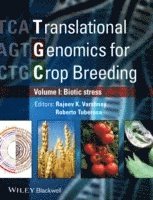
Genomic Applications for Crop Breeding: Biotic Stress is the first of two volumes looking at the latest advances in genomic applications to crop breeding. This volume focuses on genomic-assisted advances for improving economically important crops against biotic stressors, such as viruses, fungi, nematodes, and bacteria. Looking at key advances in crops such as rice, barley, wheat, and potato amongst others, Genomic Applications for Crop Breeding: Biotic Stress will be an essential reference for crop scientists, geneticists, breeders, industry personnel and advanced students in the field.
Translational Genomics for Crop Breeding, Volume 2
Improvement for Abiotic Stress, Quality and Yield Improvement
Inbunden, Engelska, 2013
2 536 kr
Skickas inom 7-10 vardagar
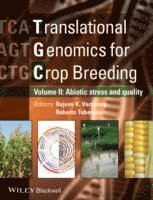
Genomic Applications for Crop Breeding: Abiotic Stress, Quality and Yield Improvement is the second of two volumes looking at the latest advances in genomic applications to crop breeding. This volume focuses on advances improving crop resistance to abiotic stresses such as extreme heat, drought, flooding as well as advances made in quality and yield improvement. Chapters examine advances in such key crops as rice, maize, and sugarcane, among others. Genomic Applications for Crop Breeding: Abiotic Stress, Quality and Yield Improvement complements the earlier volume on biotic stressors and will be an essential purchase for those interested in crop science and food production.
4 018 kr
Skickas inom 7-10 vardagar
The Genomics Applications in Crop Improvement two volume set brings together a diverse field of international experts in plant breeding genomics to share their experiences in the field, from success stories to lessons learnt. In recent years advances in genetics and genomics have greatly enhanced our understanding of the structural and functional aspects of plant genomes. Several novel genetic and genomics approaches such as association genetics, advanced back-cross QTL analysis, allele mining, comparative and functional genomics, transcriptomics, proteomics, etc. offer unprecedented opportunities to examine crop genetic variation and utilize this variability for breeding purposes. Enhancing the prediction of the phenotype from a genotype using genomics tools is referred to as 'genomics-assisted breeding'. To date, genomics-assisted breeding has shown its potential for crop improvement in several crops, however these successes have been largely restricted to temperate cereal and legume crops, and others such as Eucalyptus, sugarcane, tomato and other vegetables crops. Moreover, while success stories are available for improving resistance to biotic stresses, only a few examples are available on development of superior lines for abiotic stresses. These volumes will allow researchers the tools to begin to apply these technologies more broadly and will hopefully lead to lasting improvements in a wide variety of economically important crops.Volume One, Biotic Stress, focuses on genomic-assisted advances for improving economically important crops against biotic stressors, such as viruses, fungi, nematodes, and bacteria. Looking at key advances in crops such as rice, barley, wheat, and potato amongst others.Volume Two, Abiotic Stress, Quality and Yield Improvement, focuses on advances improving crop resistance to abiotic stresses such as extreme heat, drought, flooding as well as advances made in quality and yield improvement. Chapters examine advances in such key crops as rice, maize, and sugarcane, among others. Two volumes covering important topics in crop genomics and applying thatinformation to breeding improved varieties of economically important cropsVolumes cover improving resistance to abiotic and biotic stressors as well as breedingefforts to improve yield and qualityIncludes chapters on current challenges for plant breeders such as fusarium disease in wheat and cyst nematodes in soybean cropsOrganized by crop, with chapters covering a variety of topics for each including disease resistance, drought tolerance, salinity tolerance and overall improvement of yieldWritten by an international team of expertsThis book is intended for crop science researchers, plant biologists, geneticists, physiologists, cellular and molecular biologists, and advanced students in related fields will also find this set useful.
Genomic Solutions for Breeding Climate-resilient Crops
Unlocking Nature’s Blueprint for Sustainable Agriculture
Inbunden, Engelska, 2026
1 810 kr
Kommande
Climate change is exerting profound and increasingly complex pressures on global agriculture, threatening food security, ecosystem viability and rural livelihoods worldwide. While past gains in crop productivity have been realized largely using fertilizers, agrochemicals, and intensive farming practices, these methods rely on finite resources and pose long-term environmental and economic sustainability challenges. In this context, recent advancements in genomics are transforming crop improvement by facilitating a shift from input-intensive practices toward knowledge-driven, climate-smart and sustainable agricultural systems. The rapid expansion of high-quality crop reference genomes, driven by the widespread adoption of high-throughput sequencing, long-read technologies and advanced assembly platforms, has ushered in the era of pangenomes and super-pangenomes. These genomic frameworks capture the full spectrum of allelic, structural and haplotypic diversity, providing unprecedented opportunities to discover, deploy and stack climate-adaptive traits. As a result, genomics-assisted breeding is now enabling the precise identification of quantitative trait loci, genomic regions and genes associated with abiotic and biotic stress tolerance, as well as improved resource-use efficiency and yield stability. This book provides a comprehensive and forward-looking synthesis of how climate change is reshaping agriculture and how cutting-edge genomic technologies can be leveraged to deliver resilient, high-performing and environmentally sustainable crops. It will appeal to researchers in plant genetics, breeding and genomics, and also to crop breeders, plant biotechnologists, environmental scientists and policymakers.
1 584 kr
Skickas inom 10-15 vardagar
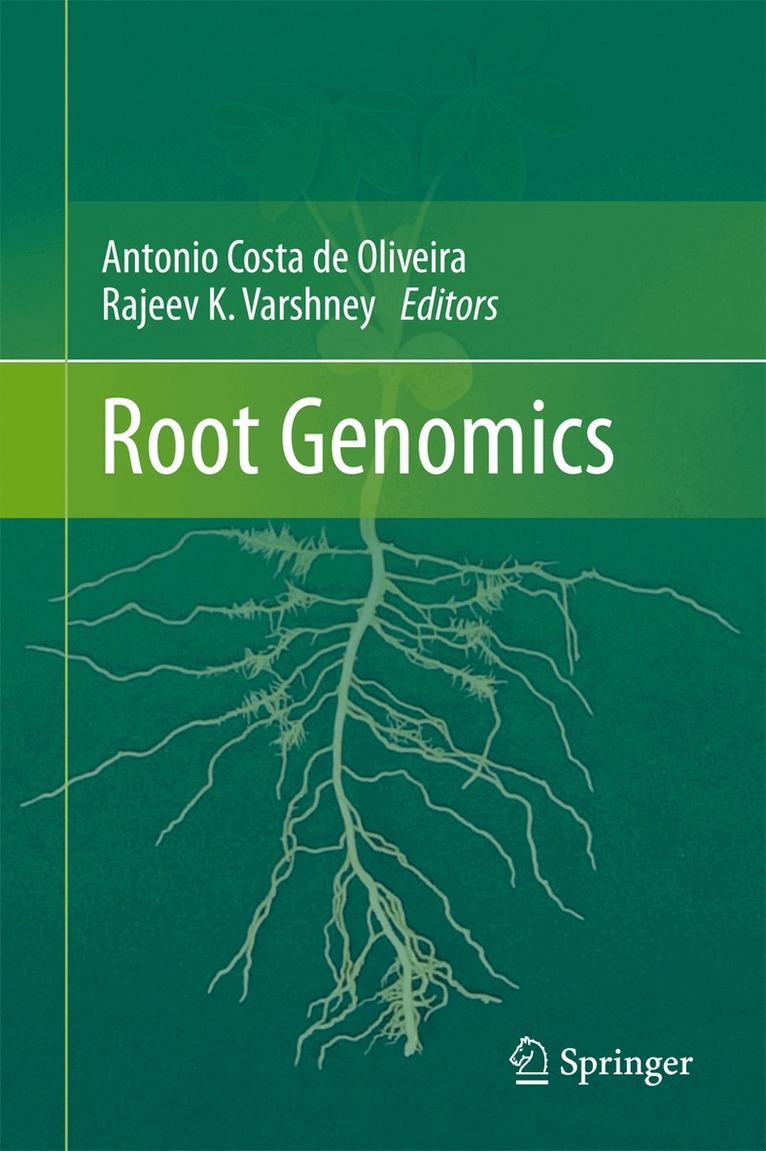
With the predicted increase of the human population and the subsequent need for larger food supplies, root health in crop plants could play a major role in providing sustainable highly productive crops that can cope with global climate changes. While the essentiality of roots and their relation to plant performance is broadly recognized, less is known about their role in plant growth and development. “Root Genomics” examines how various new genomic technologies are rapidly being applied to the study of roots, including high-throughput sequencing and genotyping, TILLING, transcription factor analysis, comparative genomics, gene discovery and transcriptional profiling, post-transcriptional events regulating microRNAs, proteome profiling and the use of molecular markers such as SSRs, DArTs, and SNPs for QTL analyses and the identification of superior genes/alleles. The book also covers topics such as the molecular breeding of crops in problematic soils and the responses of roots to a variety of stresses.
1 584 kr
Skickas inom 10-15 vardagar
With the predicted increase of the human population and the subsequent need for larger food supplies, root health in crop plants could play a major role in providing sustainable highly productive crops that can cope with global climate changes.
2 110 kr
Skickas inom 10-15 vardagar
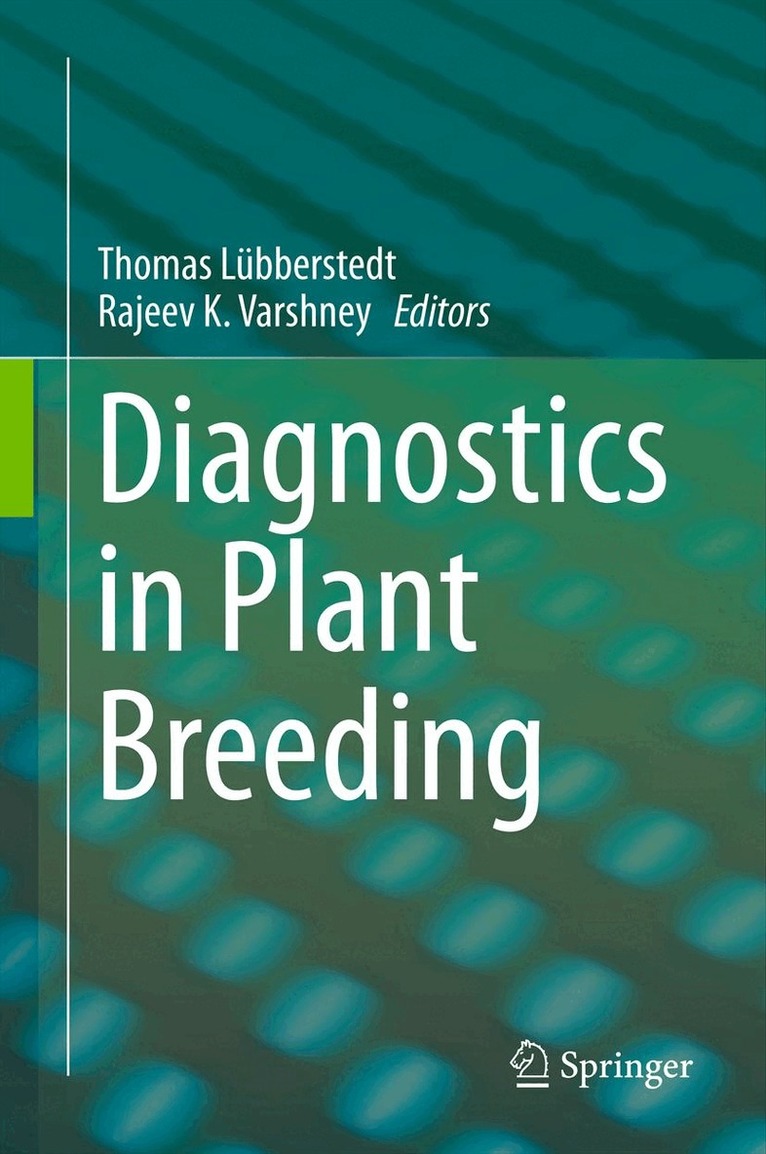
“Diagnostics in Plant Breeding” is systematically organizing cutting-edge research reviews on the development and application of molecular tools for the prediction of plant performance. Given its significance for mankind and the available research resources, medical sciences are leading the area of molecular diagnostics, where DNA-based risk assessments for various diseases and biomarkers to determine their onset become increasingly available. So far, most research in plant genomics has been directed towards understanding the molecular basis of biological processes or phenotypic traits. From a plant breeding perspective, however, the main interest is in predicting optimal genotypes based on molecular information for more time- and cost-efficient breeding schemes. It is anticipated that progress in plant genomics and in particular sequence technology made recently will shift the focus from “explanatory” to “predictive” in crop science. This book assembles chapters on all areas relevant to development and application of predictive molecular tools in plant breeding by leading authorties in the respective areas.
2 110 kr
Skickas inom 10-15 vardagar
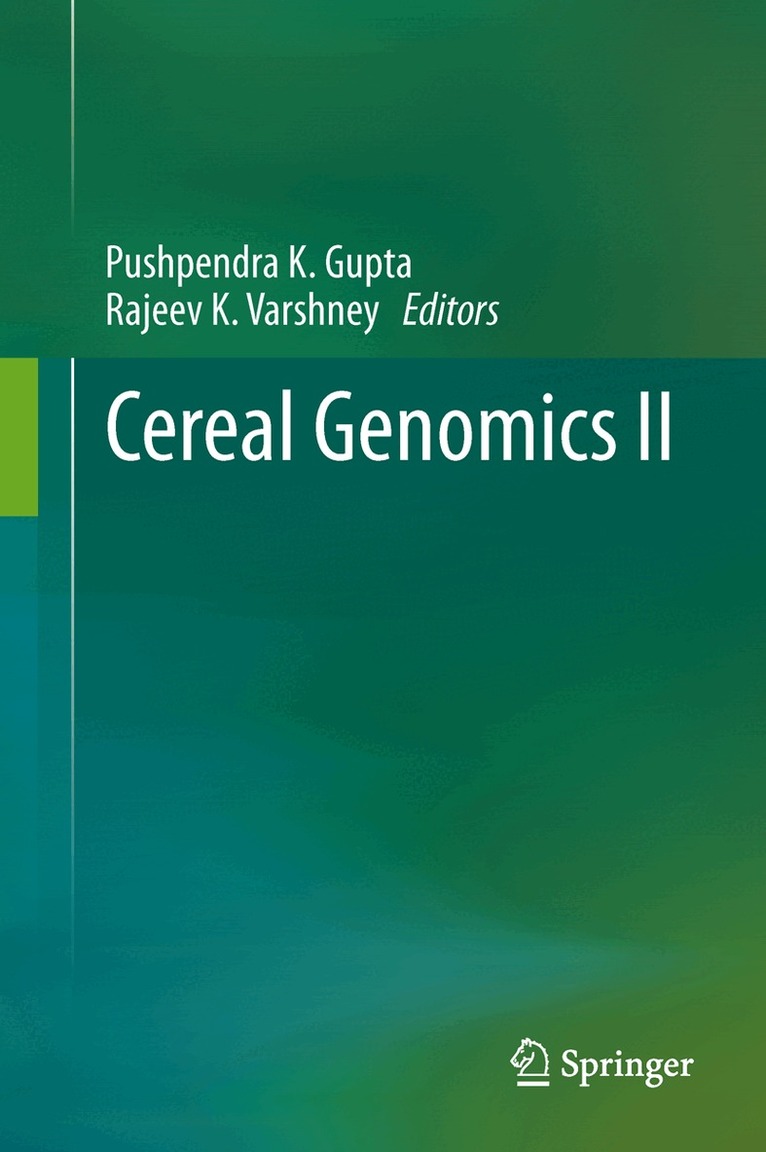
“Cereal Genomics” published in 2004 served the purpose of collecting all information on cereal genomics at one place and was well received by the cereal workers through-out the world. The last eight years have witnessed significant advancement in the field of cereal genomics. For instance, high-density genetic maps, physical maps, QTL maps and even draft genome sequence have become available for several cereal species. Furthermore, the next generation sequencing (NGS) technologies have revolutionized genomics research, so that it is possible now to sequence genomes of hundreds or thousands of accessions of an individual cereal crop. Significant amounts of data generated using these NGS technologies created a demand for computational tools to analyse this massive data. In view of these developments, the Editors realised that there was a need to have an updated volume on the present status and future prospects of cereal genomics. These developments related to technology and the toolshave been documented in this volume, thus supplementing our earlier edited volume “Cereal Genomics”. “Cereal Genomics II” discusses advances in cereal genomics research made during the last eight years, and presents state-of-art cereal genomics and its utilization involving both basic research such as comparative genomics and functional genomics, and applied research like QTL mapping and molecular breeding.
2 110 kr
Skickas inom 10-15 vardagar
“Diagnostics in Plant Breeding” is systematically organizing cutting-edge research reviews on the development and application of molecular tools for the prediction of plant performance.
2 110 kr
Skickas inom 10-15 vardagar
“Cereal Genomics” published in 2004 served the purpose of collecting all information on cereal genomics at one place and was well received by the cereal workers through-out the world. The last eight years have witnessed significant advancement in the field of cereal genomics. For instance, high-density genetic maps, physical maps, QTL maps and even draft genome sequence have become available for several cereal species. Furthermore, the next generation sequencing (NGS) technologies have revolutionized genomics research, so that it is possible now to sequence genomes of hundreds or thousands of accessions of an individual cereal crop. Significant amounts of data generated using these NGS technologies created a demand for computational tools to analyse this massive data. In view of these developments, the Editors realised that there was a need to have an updated volume on the present status and future prospects of cereal genomics. These developments related to technology and the toolshave been documented in this volume, thus supplementing our earlier edited volume “Cereal Genomics”. “Cereal Genomics II” discusses advances in cereal genomics research made during the last eight years, and presents state-of-art cereal genomics and its utilization involving both basic research such as comparative genomics and functional genomics, and applied research like QTL mapping and molecular breeding.
1 429 kr
Skickas inom 10-15 vardagar
This book provides insights into the challenges of military operations under extreme climatic conditions. Divided into 3 sections, the book covers the impact of extreme environments from high altitude areas to desert terrain, forest conditions, and the marine environment. Chapters discuss the influence of altitude on military operations, the role of the microbiome, and innovative diagnostic and therapeutic approaches. It also addresses physiological solutions for desert warfare and the complexities of jungle operations. Further chapters describe the effects of marine motion and deep-sea challenges, covering strategies for health surveillance, psychological well-being, and precision medicine in combat scenarios. The book is supplemented with basic definitions, descriptive artwork, novel and unexplored research questions The book is relevant for physiologists, researchers in stress biology, and military medicine interested in understanding the impact of extreme climatic conditions on soldier health and performance.
1 523 kr
Skickas inom 10-15 vardagar
The book covers all aspects of future preparedness for COVID-19 pandemic-like situations as the COVID-19 pandemic commences at its endemic stage.
1 101 kr
Skickas inom 10-15 vardagar
The book covers all aspects of future preparedness for COVID-19 pandemic-like situations as the COVID-19 pandemic commences at its endemic stage.