Rajendra Akerkar – författare
947 kr
Skickas inom 10-15 vardagar
947 kr
Skickas inom 10-15 vardagar
1 799 kr
Skickas inom 3-6 vardagar
1 071 kr
Läs direkt efter köp
886 kr
Läs direkt efter köp
2 073 kr
Skickas inom 10-15 vardagar
2 073 kr
Skickas inom 10-15 vardagar
886 kr
Läs direkt efter köp
1 834 kr
Skickas inom 10-15 vardagar
2 283 kr
Läs direkt efter köp
1 834 kr
Skickas inom 10-15 vardagar
AI, Data, and Digitalization
First International Symposium, SAIDD 2023, Sogndal, Norway, May 9–10, 2023, Revised Selected Papers
450 kr
Skickas inom 10-15 vardagar
782 kr
Skickas inom 10-15 vardagar
944 kr
Läs direkt efter köp
837 kr
Skickas inom 10-15 vardagar
1 031 kr
Läs direkt efter köp
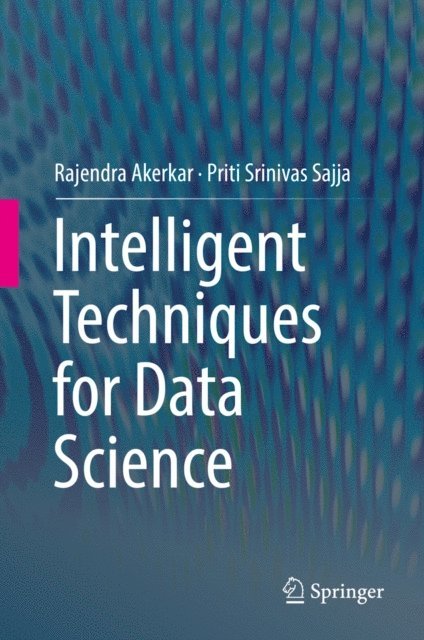
This textbook provides readers with the tools, techniques and cases required to excel with modern artificial intelligence methods. These embrace the family of neural networks, fuzzy systems and evolutionary computing in addition to other fields within machine learning, and will help in identifying, visualizing, classifying and analyzing data to support business decisions./p>
The authors, discuss advantages and drawbacks of different approaches, and present a sound foundation for the reader to design and implement data analytic solutions for real‐world applications in an intelligent manner. Intelligent Techniques for Data Science also provides real-world cases of extracting value from data in various domains such as retail, health, aviation, telecommunication and tourism.
837 kr
Skickas inom 10-15 vardagar
727 kr
Skickas inom 10-15 vardagar
840 kr
Läs direkt efter köp
The big data tsunami changes the perspective of industrial and academic research in how they address both foundational questions and practical applications. This calls for a paradigm shift in algorithms and the underlying mathematical techniques. There is a need to understand foundational strengths and address the state of the art challenges in big data that could lead to practical impact. The main goal of this book is to introduce algorithmic techniques for dealing with big data sets. Traditional algorithms work successfully when the input data fits well within memory. In many recent application situations, however, the size of the input data is too large to fit within memory.
Models of Computation for Big Data, covers mathematical models for developing such algorithms, which has its roots in the study of big data that occur often in various applications. Most techniques discussed come from research in the last decade. The book will be structured as a sequence of algorithmic ideas, theoretical underpinning, and practical use of that algorithmic idea. Intended for both graduate students and advanced undergraduate students, there are no formal prerequisites, but the reader should be familiar with the fundamentals of algorithm design and analysis, discrete mathematics, probability and have general mathematical maturity.
880 kr
Skickas inom 5-8 vardagar
1 101 kr
Läs direkt efter köp
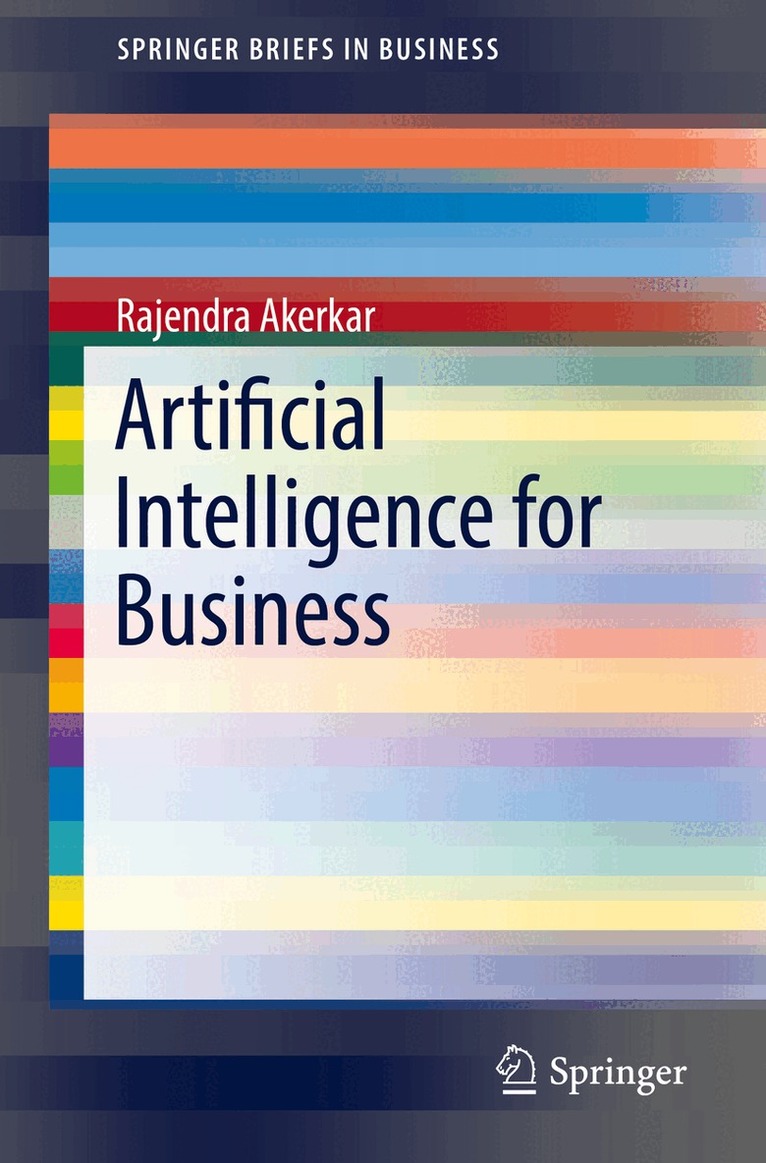
This book offers a practical guide to artificial intelligence (AI) techniques that are used in business. The book does not focus on AI models and algorithms, but instead provides an overview of the most popular and frequently used models in business. This allows the book to easily explain AI paradigms and concepts for business students and executives. Artificial Intelligence for Business is divided into six chapters. Chapter 1 begins with a brief introduction to AI and describes its relationship with machine learning, data science and big data analytics. Chapter 2 presents core machine learning workflow and the most effective machine learning techniques. Chapter 3 deals with deep learning, a popular technique for developing AI applications. Chapter 4 introduces recommendation engines for business and covers how to use them to be more competitive. Chapter 5 features natural language processing (NLP) for sentiment analysis focused on emotions. With the help of sentiment analysis, businesses can understand their customers better to improve their experience, which will help the businesses change their market position. Chapter 6 states potential business prospects of AI and the benefits that companies can realize by implementing AI in their processes.