Rajesh M. Basrur – författare
Visar alla böcker från författaren Rajesh M. Basrur. Handla med fri frakt och snabb leverans.
6 produkter
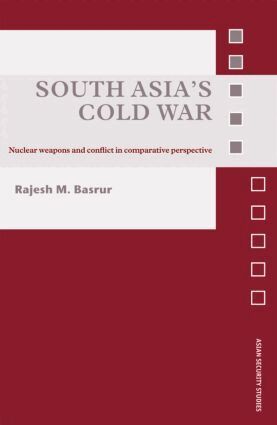
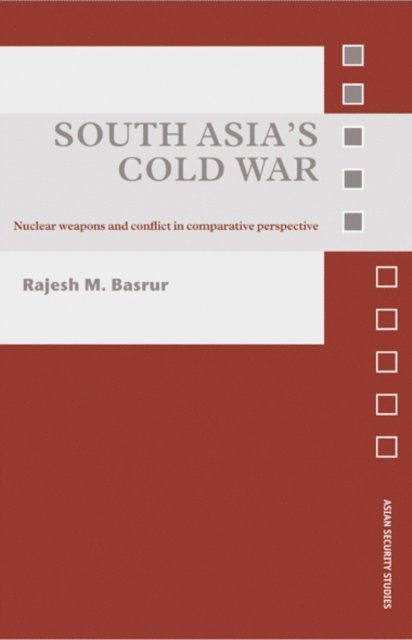
South Asia's Cold War
Nuclear Weapons and Conflict in Comparative Perspective
Inbunden, 2008
2585 kr
Lägg i varukorg
This book is a ground-breaking analysis of the India-Pakistan nuclear confrontation as a form of ‘cold war’ – that is, a hostile relationship between nuclear rivals. Drawing on nuclear rivalries between similar pairs (United States-Soviet Union, United States-China, Soviet Union-China, and United …
South Asia's Cold War
Nuclear Weapons and Conflict in Comparative Perspective
Häftad, 2009
771 kr
Lägg i varukorg
This book is a ground-breaking analysis of the India-Pakistan nuclear confrontation as a form of ‘cold war’ – that is, a hostile relationship between nuclear rivals. Drawing on nuclear rivalries between similar pairs (United States-Soviet Union, United States-China, Soviet Union-China, and United …
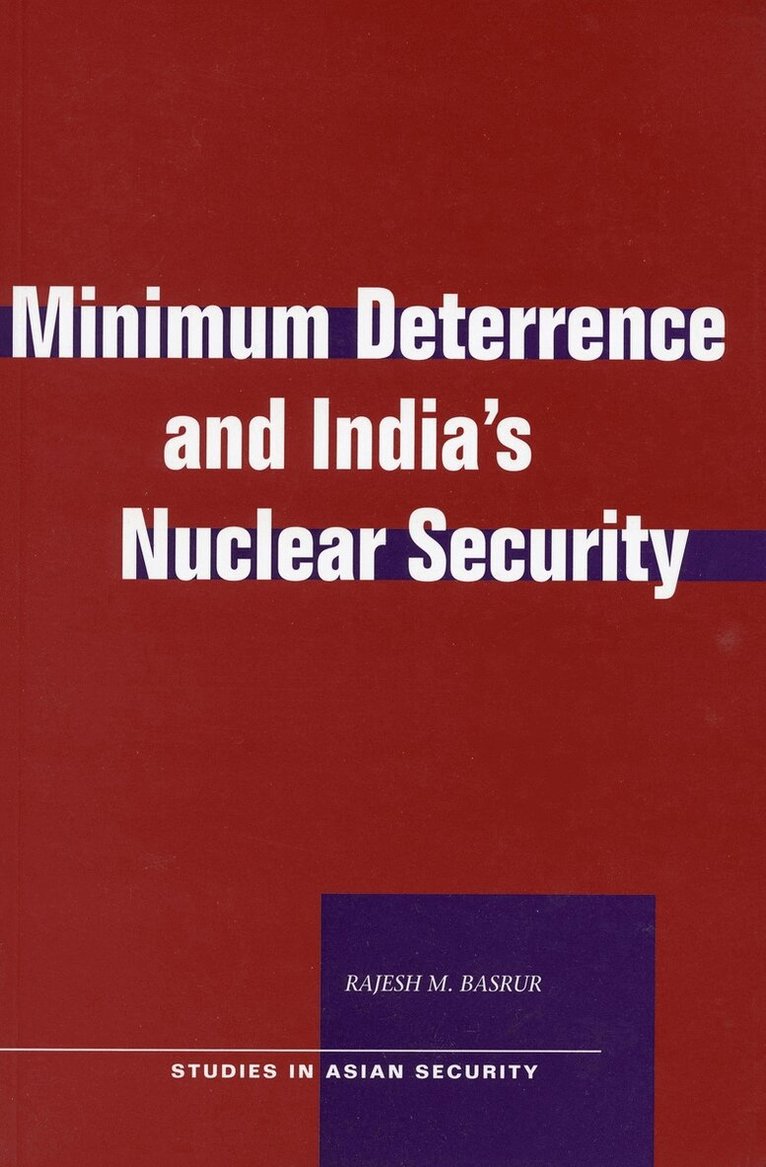
Minimum Deterrence and India's Nuclear Security
Inbunden, 2005
1588 kr
Lägg i varukorg
In this book, a leading authority on India's nuclear program offers an informed and thoughtful assessment of India's nuclear strategy. He shows that the country's nuclear-strategic culture is generally in accord with the principle of minimum deterrence, but is sometimes inconsistent and has a …
Minimum Deterrence and India's Nuclear Security
Häftad, 2005
386 kr
Lägg i varukorg
In this book, a leading authority on India's nuclear program offers an informed and thoughtful assessment of India's nuclear strategy. He shows that the country's nuclear-strategic culture is generally in accord with the principle of minimum deterrence, but is sometimes inconsistent and has a …
South Asia's Cold War
Nuclear Weapons and Conflict in Comparative Perspective
E-bok, 2008
910 kr
Lägg i varukorg
This book is a ground-breaking analysis of the India-Pakistan nuclear confrontation as a form of ‘cold war’ – that is, a hostile relationship between nuclear rivals. Drawing on nuclear rivalries between similar pairs (United States-Soviet Union, United States-China, Soviet Union-China, and United …
South Asia's Cold War
Nuclear Weapons and Conflict in Comparative Perspective
E-bok, 2008
890 kr
Lägg i varukorg
This book is a ground-breaking analysis of the India-Pakistan nuclear confrontation as a form of ‘cold war’ – that is, a hostile relationship between nuclear rivals. Drawing on nuclear rivalries between similar pairs (United States-Soviet Union, United States-China, Soviet Union-China, and United …