Rajesh Thadani – författare
Visar alla böcker från författaren Rajesh Thadani. Handla med fri frakt och snabb leverans.
4 produkter
4 produkter
Inbunden, Engelska, 2025
2 154 kr
Skickas inom 10-15 vardagar
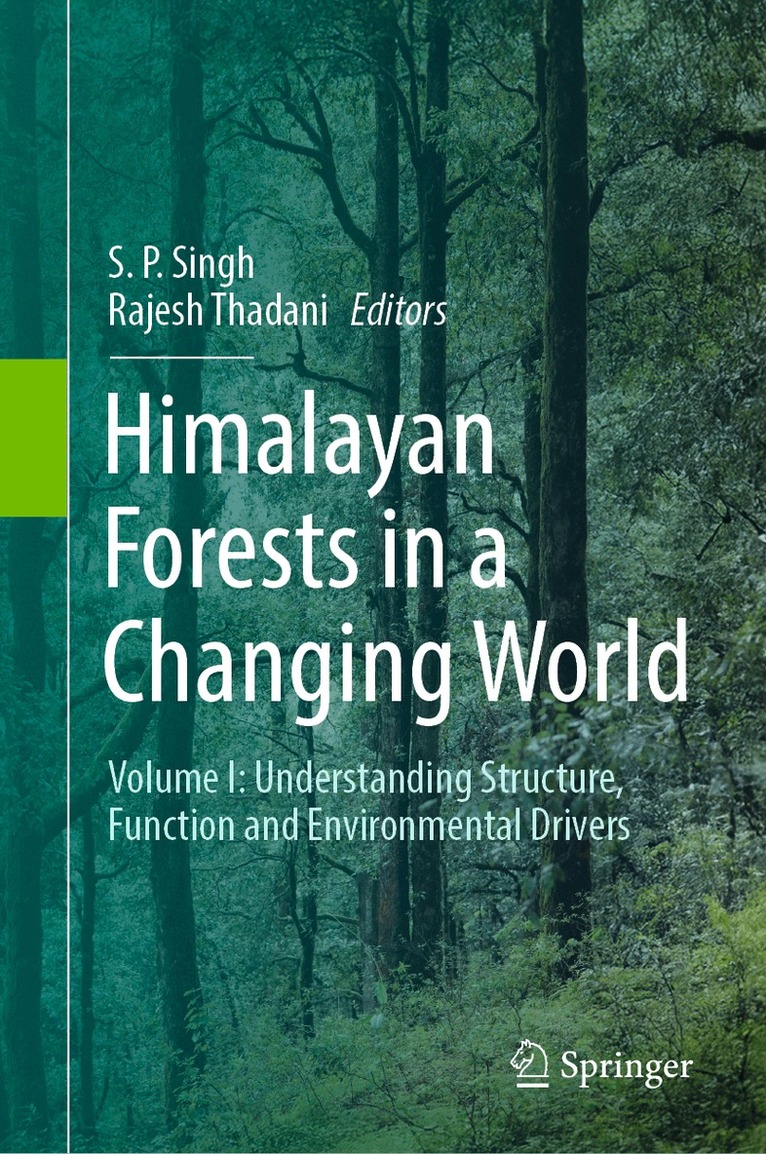
This first volume on Himalayan forests discusses the synthesis of Himalayan forest ecosystems. It begins with contextual foundations that establish the environmental background and climate patterns crucial for understanding these mountains. The chapters provide context through detailed examination of Himalayan climate dynamics and a novel leaf-based classification system, setting the framework for understanding major forest types and associations across elevational gradients. This book places particular emphasis on forest hydrological processes through critical review of water-forest interactions. This then further reveals topographic and climatic factors that govern forest distribution and crucial water regulation services these ecosystems provide to downstream communities. This book covers forest phenology, nutrient cycling, carbon dynamics and productivity and thus demonstrates the intricate functioning of these high-altitude ecosystems. By collating scattered research and enhancing understanding of ecological processes, hydrology and ecosystem functioning, this volume establishes a comprehensive knowledge foundation. The chapter on forest fire focuses on the nature of fire regime, and its ecological implications. The integration of traditional ecological approaches with cutting-edge methodologies provides both theoretical depth and practical applications. Essential for forest researchers, ecosystem ecologists, and graduate students, this volume serves as the definitive reference for understanding Himalayan forests in their unique environmental context.
E-bok
Engelska, 20252 840 kr
Läs direkt efter köp
This first volume on Himalayan forests discusses the synthesis of Himalayan forest ecosystems. It begins with contextual foundations that establish the environmental background and climate patterns crucial for understanding these mountains. The chapters provide context through detailed examination of Himalayan climate dynamics and a novel leaf-based classification system, setting the framework for understanding major forest types and associations across elevational gradients. This book places particular emphasis on forest hydrological processes through critical review of water-forest interactions. This then further reveals topographic and climatic factors that govern forest distribution and crucial water regulation services these ecosystems provide to downstream communities. This book covers forest phenology, nutrient cycling, carbon dynamics and productivity and thus demonstrates the intricate functioning of these high-altitude ecosystems. By collating scattered research and enhancing understanding of ecological processes, hydrology and ecosystem functioning, this volume establishes a comprehensive knowledge foundation. The chapter on forest fire focuses on the nature of fire regime, and its ecological implications. The integration of traditional ecological approaches with cutting-edge methodologies provides both theoretical depth and practical applications. Essential for forest researchers, ecosystem ecologists, and graduate students, this volume serves as the definitive reference for understanding Himalayan forests in their unique environmental context.
Himalayan Forests in a Changing World
Volume II: Climate Impacts, Biodiversity and Human Interactions
Inbunden, Engelska, 2025
2 154 kr
Skickas inom 10-15 vardagar
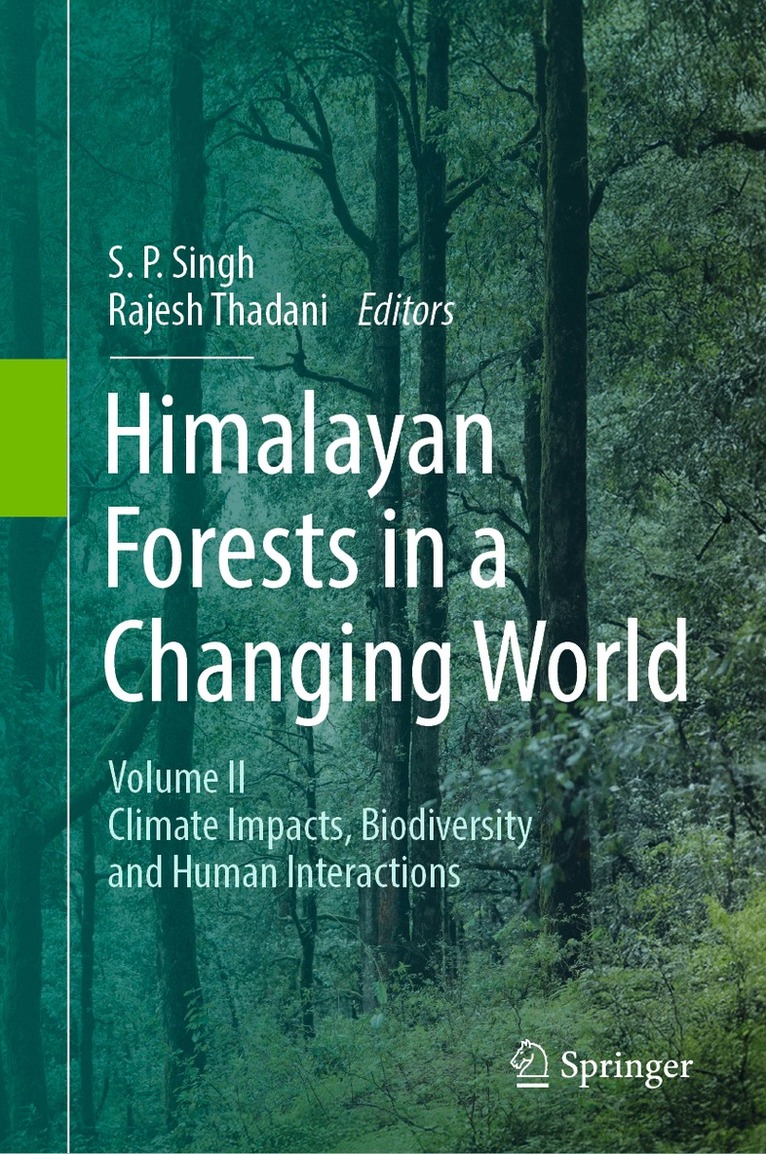
This second volume on Himalayan forests provides critical insights into Himalayan forests' response to the dual pressures of anthropogenic and natural stressors during the unprecedented environmental change. It examines forest reactions to physical disturbances, climatic shifts and the extreme temperature regimes that characterize treelines, thus predicting ecosystem responses under changing conditions. Through detailed analyses of treeline dynamics, fire ecology and wildlife distributions, this volume demonstrates forest ecosystem resilience and vulnerability to environmental stressors and provides insights into the interaction of biotic and abiotic factors. A distinctive focus on human-forest relationships examines both direct benefits and ecosystem service flows that sustain Himalayan communities. From livelihood transitions and shifting cultivation practices to silvicultural approaches, this volume bridges ecological science with practical applications. Coverage of chronic disturbance patterns and forest recovery trajectories provides frameworks for understanding long-term ecosystem dynamics.This volume is a reference for conservation practitioners, climate researchers and forest managers. It addresses contemporary challenges in mountain ecosystems.
Himalayan Forests in a Changing World
Volume II: Climate Impacts, Biodiversity and Human Interactions
E-bok
Engelska, 20252 840 kr
Läs direkt efter köp
This second volume on Himalayan forests provides critical insights into Himalayan forests' response to the dual pressures of anthropogenic and natural stressors during the unprecedented environmental change. It examines forest reactions to physical disturbances, climatic shifts and the extreme temperature regimes that characterize treelines, thus predicting ecosystem responses under changing conditions. Through detailed analyses of treeline dynamics, fire ecology and wildlife distributions, this volume demonstrates forest ecosystem resilience and vulnerability to environmental stressors and provides insights into the interaction of biotic and abiotic factors. A distinctive focus on human-forest relationships examines both direct benefits and ecosystem service flows that sustain Himalayan communities. From livelihood transitions and shifting cultivation practices to silvicultural approaches, this volume bridges ecological science with practical applications. Coverage of chronic disturbance patterns and forest recovery trajectories provides frameworks for understanding long-term ecosystem dynamics.This volume is a reference for conservation practitioners, climate researchers and forest managers. It addresses contemporary challenges in mountain ecosystems.