Rajiv Nayan – författare
Visar alla böcker från författaren Rajiv Nayan. Handla med fri frakt och snabb leverans.
7 produkter
Nuclear Non-Proliferation Treaty and India
Av Rajiv Nayan
Inbunden, 2011
2510 kr
Lägg i varukorg
The relationship of the Nuclear Non-Proliferation Treaty with India has been an interesting subject in the field of security studies. The nuclearisation of India and its subsequent rise are further forcing the world to redefine its relationship with the treaty. However, the international response …
Nuclear Non-Proliferation Treaty and India
Av Rajiv Nayan
Häftad, 2013
749 kr
Lägg i varukorg
The relationship of the Nuclear Non-Proliferation Treaty with India has been an interesting subject in the field of security studies. The nuclearisation of India and its subsequent rise are further forcing the world to redefine its relationship with the treaty. However, the international response …
Nuclear Non-Proliferation Treaty and India
Av Rajiv Nayan
E-bok, 2013
864 kr
Lägg i varukorg
The relationship of the Nuclear Non-Proliferation Treaty with India has been an interesting subject in the field of security studies. The nuclearisation of India and its subsequent rise are further forcing the world to redefine its relationship with the treaty. However, the international response …
Nuclear Non-Proliferation Treaty and India
Av Rajiv Nayan
E-bok, 2013
883 kr
Lägg i varukorg
The relationship of the Nuclear Non-Proliferation Treaty with India has been an interesting subject in the field of security studies. The nuclearisation of India and its subsequent rise are further forcing the world to redefine its relationship with the treaty. However, the international response …
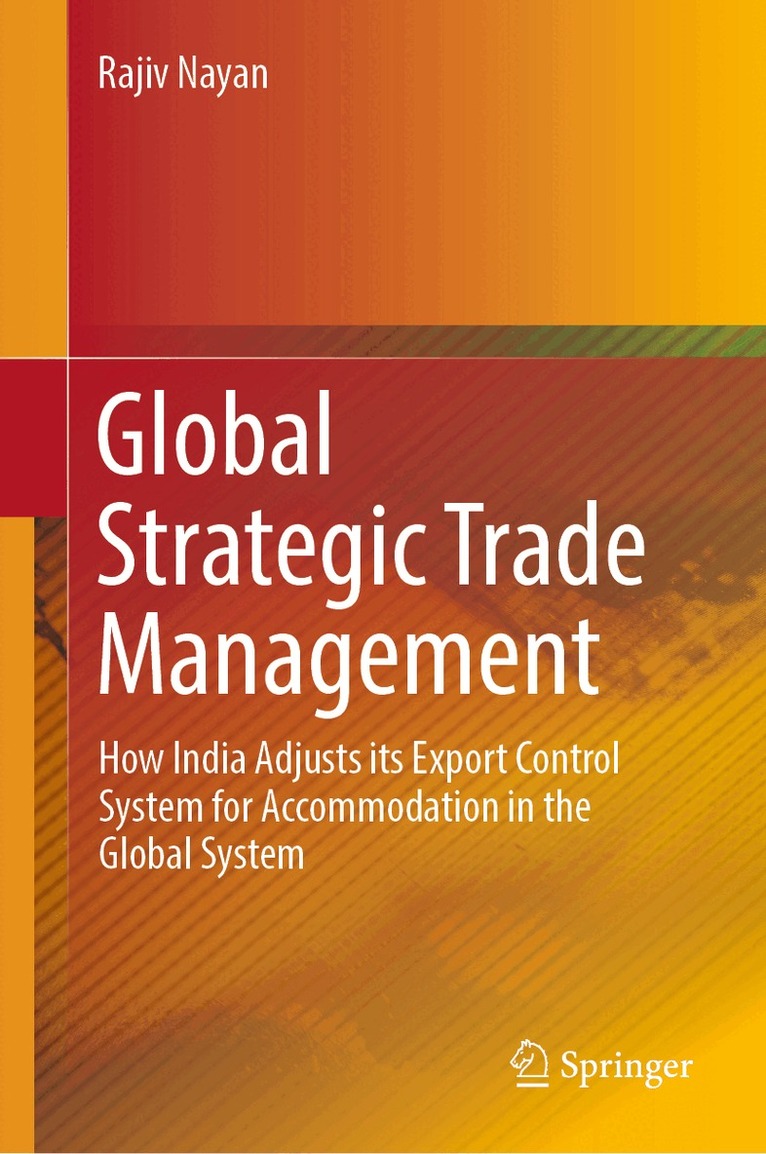
Global Strategic Trade Management
How India Adjusts its Export Control System for Accommodation in the Global System
Av Rajiv Nayan
Inbunden, 2019
1310 kr
Lägg i varukorg
This book examines whether India is successfully integrating and adapting to the global strategic management system. It offers essential insights into the evolution of export controls for goods, which may have implications for the development of Weapons of Mass Destruction – an aspect that is …
Global Strategic Trade Management
How India Adjusts its Export Control System for Accommodation in the Global System
Av Rajiv Nayan
E-bok, 2019
1728 kr
Lägg i varukorg
This book examines whether India is successfully integrating and adapting to the global strategic management system. It offers essential insights into the evolution of export controls for goods, which may have implications for the development of Weapons of Mass Destruction – an aspect that is …
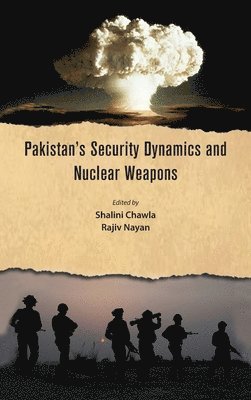
Pakistan's Security Dynamics and Nuclear Weapons
Av Shalini Chawla, Rajiv Nayan
Inbunden, 2022
697 kr
Lägg i varukorg