Raju Sarkar – författare
Visar alla böcker från författaren Raju Sarkar. Handla med fri frakt och snabb leverans.
8 produkter
8 produkter
Inbunden, Engelska, 2022
931 kr
Skickas inom 5-8 vardagar
This book discusses the impact of climate change, land use and land cover, and socio-economic dynamics on landslides in Asian countries.
E-bok
Engelska, 20221 934 kr
Läs direkt efter köp
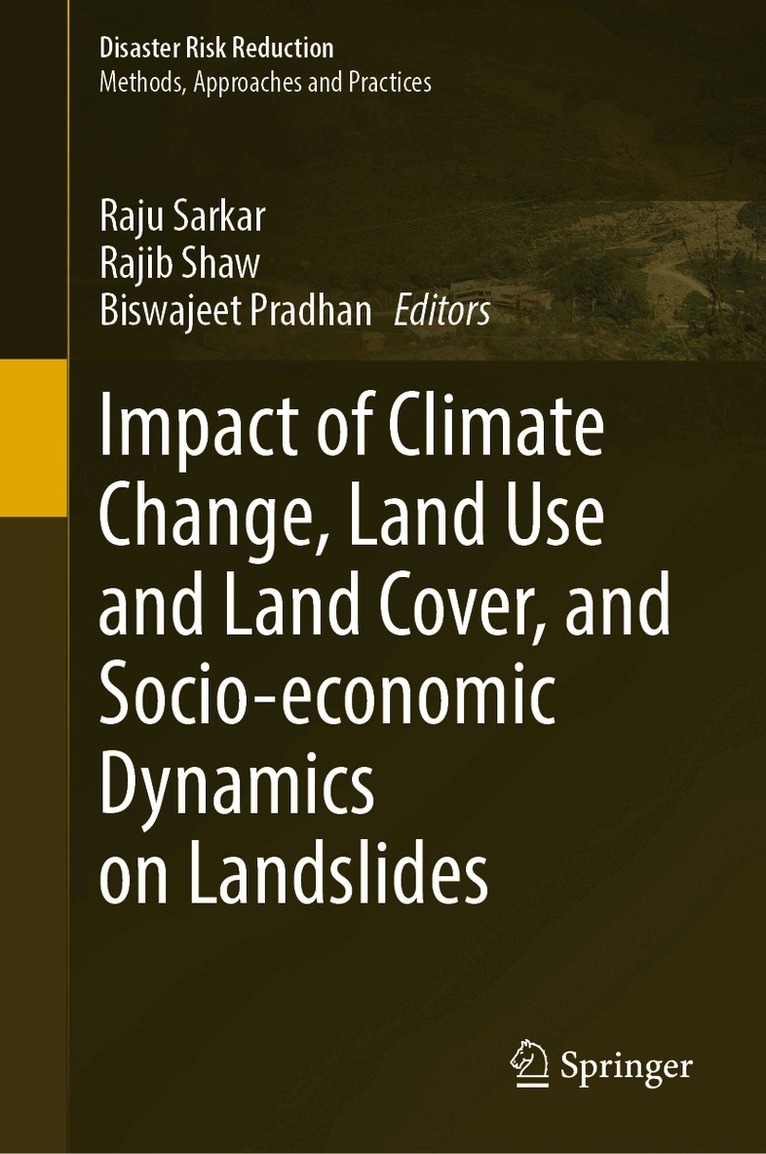
This book discusses the impact of climate change, land use and land cover, and socio-economic dynamics on landslides in Asian countries. Scholars recently have brought about a shift in their focus regarding triggering factors for landslides, from rainfall or earthquake to claiming rapid urbanization, extreme population pressure, improper land use planning, illegal hill cutting for settlements and indiscriminate deforestation. This suggests that the occurrence or probabilities of landslides are shaped by both climate-related and non-climate-related anthropogenic factors. Among these issues, land use and land cover change or improper land use planning is one of the key factors. Further climate change shapes the rainfall pattern and intensity in different parts of the world, and consequently rainfall-triggered landslides have increased. These changes cause socio-economic changes. Conversely, socio-economic and lifestyle changes enhance inappropriate land use and climate change. All these changes in land use, climate and socio-economic aspects are dynamics in nature and shape landslide risks in Asian countries, where they are given serious attention by governments, disaster management professionals, researchers and academicians.This book comprises 21 chapters divided into three major sections highlighting the effect of climate change on landslide incidence with the influence on vegetation and socio-economic aspects. The sections address how climate change and extreme events have triggered landslides. The advances in geospatial techniques with the focus on land use and land cover change along with the effect on socio-economic aspects are also explored.
Häftad, Engelska, 2023
931 kr
Skickas inom 5-8 vardagar
This book discusses the impact of climate change, land use and land cover, and socio-economic dynamics on landslides in Asian countries.
Inbunden, Engelska, 2026
1 712 kr
Skickas inom 10-15 vardagar
This book discusses climate change, environmental dangers, and local communities’ responses to these problems. It is a valuable resource to a wide range of readers, including academics, researchers, and people working in governments, and non-governmental and international organizations.As climate change continues, the location of weather-related hazards may shift, creating new risks. Problems such as floods, landslides, soil erosion, heat waves, droughts, land degradation, and pollution are becoming more common due to human activities and climate change, causing major damage to property and loss of life. For decades, many countries have been looking for ways to deal with the impacts of climate change. These efforts have provided valuable lessons, especially for developing countries that are now facing the growing threat of climate-related disasters. Today, building community resilience to manage these environmental dangers has become a global priority. This book explores the patterns of climate change and the spread of environmental disasters. The volume also highlights how local communities’ knowledge can be used to build resilience against these challenges.The book is organized into three parts. The first part incorporates the modeling of climate change. In part 2, modeling of environmental hazards and its relation with climate change are explored. In part 3, community-based resilience to climate change and different environmental hazards are discussed.
E-bok
Engelska, 20262 149 kr
Läs direkt efter köp
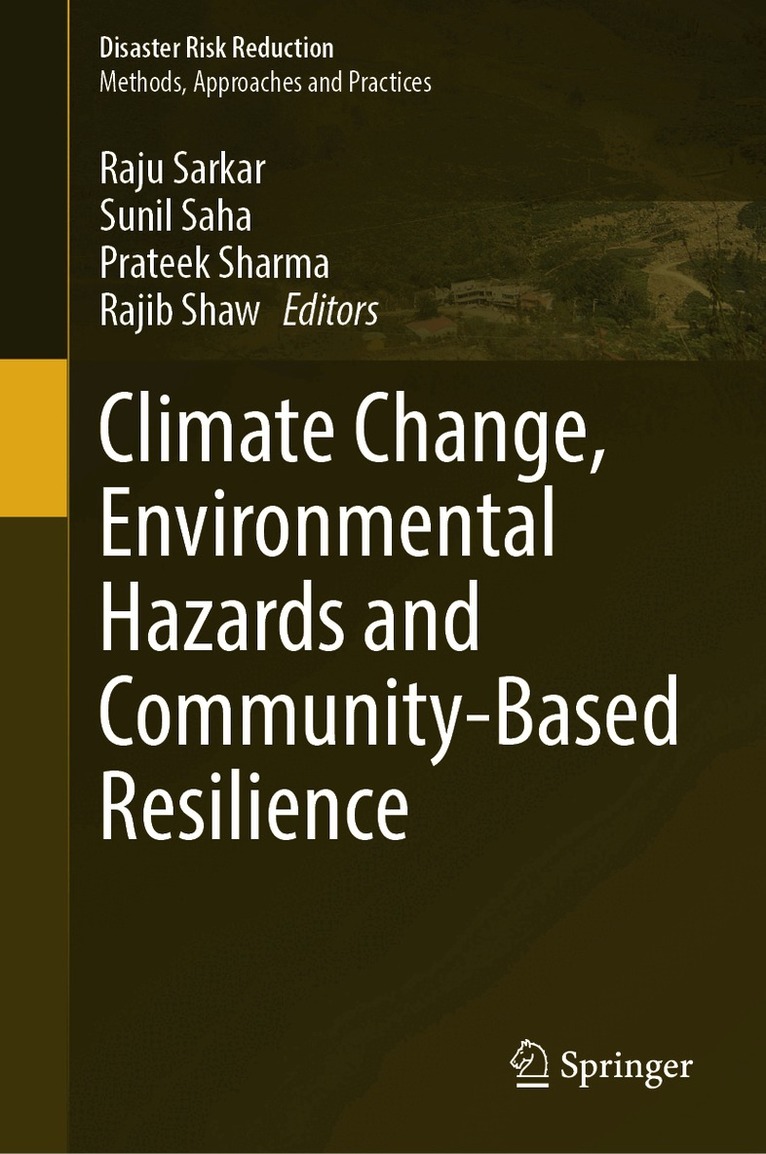
This book discusses climate change, environmental dangers, and local communities’ responses to these problems. It is a valuable resource to a wide range of readers, including academics, researchers, and people working in governments, and non-governmental and international organizations.As climate change continues, the location of weather-related hazards may shift, creating new risks. Problems such as floods, landslides, soil erosion, heat waves, droughts, land degradation, and pollution are becoming more common due to human activities and climate change, causing major damage to property and loss of life. For decades, many countries have been looking for ways to deal with the impacts of climate change. These efforts have provided valuable lessons, especially for developing countries that are now facing the growing threat of climate-related disasters. Today, building community resilience to manage these environmental dangers has become a global priority. This book explores the patterns of climate change and the spread of environmental disasters. The volume also highlights how local communities’ knowledge can be used to build resilience against these challenges.The book is organized into three parts. The first part incorporates the modeling of climate change. In part 2, modeling of environmental hazards and its relation with climate change are explored. In part 3, community-based resilience to climate change and different environmental hazards are discussed.
Inbunden, Engelska, 2024
1 598 kr
Skickas inom 5-8 vardagar
This book explores the use of advanced geospatial techniques in geomorphic hazards modelling and risk reduction. It also compares the accuracy of traditional statistical methods and advanced machine learning methods and addresses the different ways to reduce the impact of geomorphic hazards.In recent years with the development of human infrastructures, geomorphic hazards are gradually increasing, which include landslides, flood and soil erosion, among others. They cause huge loss of human property and lives. Especially in mountainous, coastal, arid and semi-arid regions, these natural hazards are the main barriers for economic development. Furthermore, human pressure and specific human actions such as deforestation, inappropriate land use and farming have increased the danger of natural disasters and degraded the natural environment, making it more difficult for environmental planners and policymakers to develop appropriate long-term sustainability plans. The most challenging task is to develop a sophisticated approach for continuous inspection and resolution of environmental problems for researchers and scientists. However, in the past several decades, geospatial technology has undergone dramatic advances, opening up new opportunities for handling environmental challenges in a more comprehensive manner.With the help of geographic information system (GIS) tools, high and moderate resolution remote sensing information, such as visible imaging, synthetic aperture radar, global navigation satellite systems, light detection and ranging, Quickbird, Worldview 3, LiDAR, SPOT 5, Google Earth Engine and others deliver state-of-the-art investigations in the identification of multiple natural hazards. For a thorough examination, advanced computer approaches focusing on cutting-edge data processing, machine learning and deep learning may be employed. To detect and manage various geomorphic hazards and their impact, several models with a specific emphasis on natural resources and the environment may be created.
E-bok
Engelska, 20241 985 kr
Läs direkt efter köp
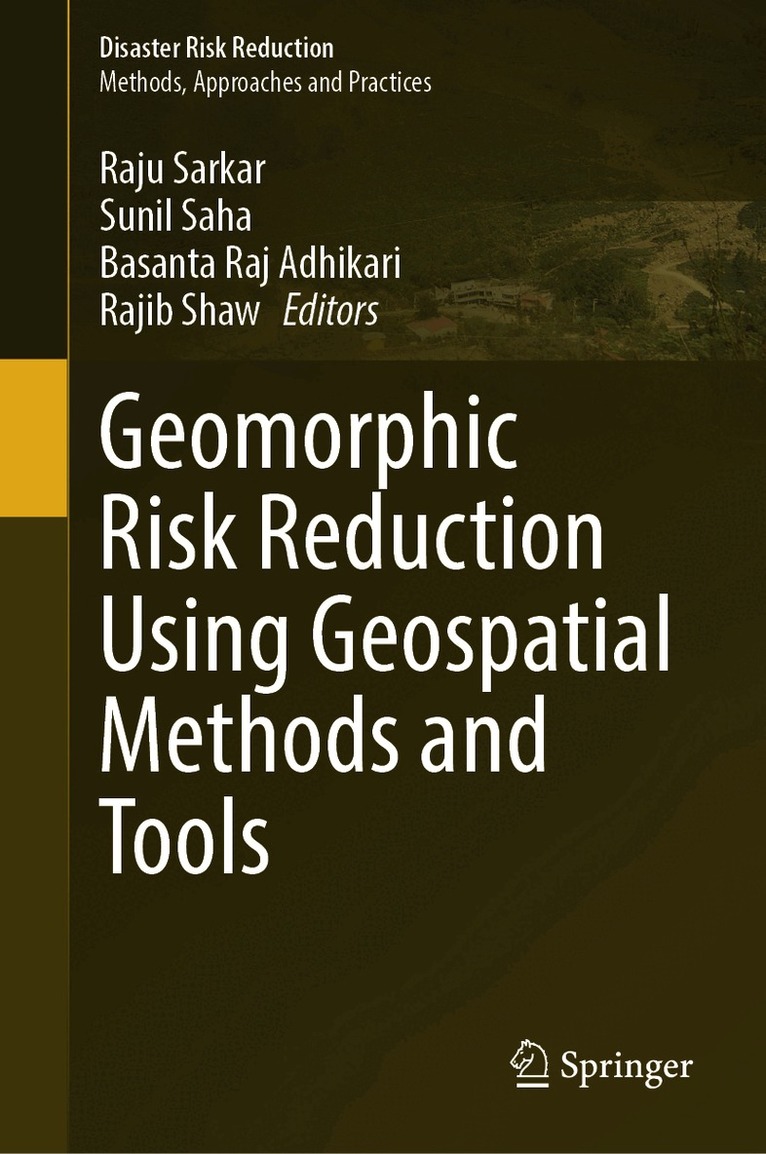
This book explores the use of advanced geospatial techniques in geomorphic hazards modelling and risk reduction. It also compares the accuracy of traditional statistical methods and advanced machine learning methods and addresses the different ways to reduce the impact of geomorphic hazards.In recent years with the development of human infrastructures, geomorphic hazards are gradually increasing, which include landslides, flood and soil erosion, among others. They cause huge loss of human property and lives. Especially in mountainous, coastal, arid and semi-arid regions, these natural hazards are the main barriers for economic development. Furthermore, human pressure and specific human actions such as deforestation, inappropriate land use and farming have increased the danger of natural disasters and degraded the natural environment, making it more difficult for environmental planners and policymakers to develop appropriate long-term sustainability plans. The most challenging task is to develop a sophisticated approach for continuous inspection and resolution of environmental problems for researchers and scientists. However, in the past several decades, geospatial technology has undergone dramatic advances, opening up new opportunities for handling environmental challenges in a more comprehensive manner.With the help of geographic information system (GIS) tools, high and moderate resolution remote sensing information, such as visible imaging, synthetic aperture radar, global navigation satellite systems, light detection and ranging, Quickbird, Worldview 3, LiDAR, SPOT 5, Google Earth Engine and others deliver state-of-the-art investigations in the identification of multiple natural hazards. For a thorough examination, advanced computer approaches focusing on cutting-edge data processing, machine learning and deep learning may be employed. To detect and manage various geomorphic hazards and their impact, several models with a specific emphasis on natural resources and the environment may be created.
Häftad, Engelska, 2025
1 179 kr
Skickas inom 10-15 vardagar
This book explores the use of advanced geospatial techniques in geomorphic hazards modelling and risk reduction. It also compares the accuracy of traditional statistical methods and advanced machine learning methods and addresses the different ways to reduce the impact of geomorphic hazards.In recent years with the development of human infrastructures, geomorphic hazards are gradually increasing, which include landslides, flood and soil erosion, among others. They cause huge loss of human property and lives. Especially in mountainous, coastal, arid and semi-arid regions, these natural hazards are the main barriers for economic development. Furthermore, human pressure and specific human actions such as deforestation, inappropriate land use and farming have increased the danger of natural disasters and degraded the natural environment, making it more difficult for environmental planners and policymakers to develop appropriate long-term sustainability plans. The most challenging task is to develop a sophisticated approach for continuous inspection and resolution of environmental problems for researchers and scientists. However, in the past several decades, geospatial technology has undergone dramatic advances, opening up new opportunities for handling environmental challenges in a more comprehensive manner.With the help of geographic information system (GIS) tools, high and moderate resolution remote sensing information, such as visible imaging, synthetic aperture radar, global navigation satellite systems, light detection and ranging, Quickbird, Worldview 3, LiDAR, SPOT 5, Google Earth Engine and others deliver state-of-the-art investigations in the identification of multiple natural hazards. For a thorough examination, advanced computer approaches focusing on cutting-edge data processing, machine learning and deep learning may be employed. To detect and manage various geomorphic hazards and their impact, several models with a specific emphasis on natural resources and the environment may be created.