Ralf Trapp – författare
Visar alla böcker från författaren Ralf Trapp. Handla med fri frakt och snabb leverans.
11 produkter
11 produkter
E-bok
PDF, Engelska, 20141 960 kr
Läs direkt efter köp
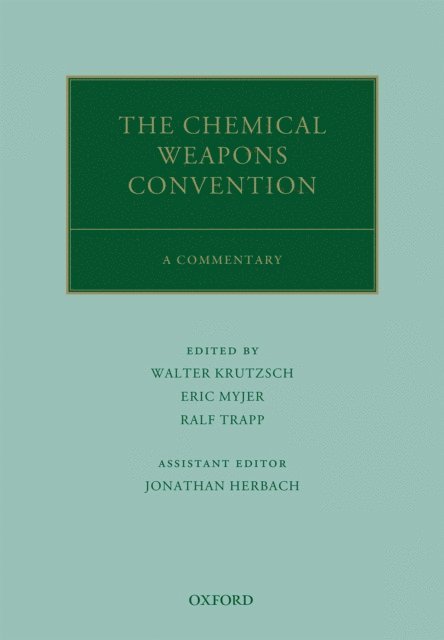
This book provides an article-by-article commentary on the text of the Chemical Weapons Convention (CWC) and its Annexes, one of the cornerstone disarmament and arms control agreements. It requires the verified elimination of an entire category of weapons of mass destruction and their means of production by all its States Parties within established time lines, and that prohibits any activities to develop or otherwise acquire such weapons.Cross-cutting chapters alongside the detailed commentary, by those intimately involved in the development of the Convention, assess the history of the efforts to prohibit chemical weapons, the adoption of the Convention and the work of the Preparatory Commission, the entry into force of the Convention to the Second Review Conference, and the need for a new approach for the governance of chemical weapons.Written by those involved in its creation and implementation, this book critically reviews the practices adopted in implementing the Convention, as well as the challenges ahead, and provides legal commentary on, and guidance for, its future role. It assesses how to adapt its implementation to advances in science and technology, including the discovery of new chemicals and the development of biochemical ''non-lethal'' compounds that influence behaviour. It addresses the legal framework within which the Organization for the Prohibition of Chemical Weapons (OPCW) takes decisions, both with regard to the OPCW''s own regulatory framework and regarding wider international norms, accepted principles, and practices. The Commentary draws conclusions on how the prohibitions against chemical weapons can be strengthened and the stature of the OPCW protected. It highlights the involvement of industry and academia in this prohibition, creating a symbiosis between effective governance and the legal framework of the Convention.This book is an authoritative, scholarly work for anyone interested in the Chemical Weapons Convention, in international disarmament and arms control law, and in the work of international organizations, and a practical guide for individuals and institutions involved in the Convention''s day-to-day implementation.
E-bok
Engelska, 20141 977 kr
Läs direkt efter köp
This book provides an article-by-article commentary on the text of the Chemical Weapons Convention (CWC) and its Annexes, one of the cornerstone disarmament and arms control agreements. It requires the verified elimination of an entire category of weapons of mass destruction and their means of production by all its States Parties within established time lines, and that prohibits any activities to develop or otherwise acquire such weapons.Cross-cutting chapters alongside the detailed commentary, by those intimately involved in the development of the Convention, assess the history of the efforts to prohibit chemical weapons, the adoption of the Convention and the work of the Preparatory Commission, the entry into force of the Convention to the Second Review Conference, and the need for a new approach for the governance of chemical weapons.Written by those involved in its creation and implementation, this book critically reviews the practices adopted in implementing the Convention, as well as the challenges ahead, and provides legal commentary on, and guidance for, its future role. It assesses how to adapt its implementation to advances in science and technology, including the discovery of new chemicals and the development of biochemical ''non-lethal'' compounds that influence behaviour. It addresses the legal framework within which the Organization for the Prohibition of Chemical Weapons (OPCW) takes decisions, both with regard to the OPCW''s own regulatory framework and regarding wider international norms, accepted principles, and practices. The Commentary draws conclusions on how the prohibitions against chemical weapons can be strengthened and the stature of the OPCW protected. It highlights the involvement of industry and academia in this prohibition, creating a symbiosis between effective governance and the legal framework of the Convention.This book is an authoritative, scholarly work for anyone interested in the Chemical Weapons Convention, in international disarmament and arms control law, and in the work of international organizations, and a practical guide for individuals and institutions involved in the Convention''s day-to-day implementation.
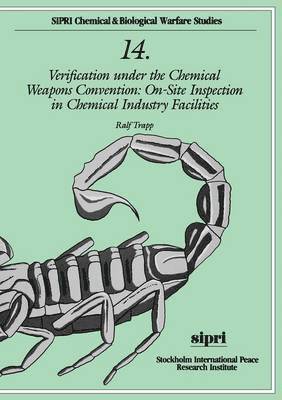
Verification under the Chemical Weapons Convention
On-site Inspection in Chemical Industry Facilities
Häftad, Engelska, 1993
1 012 kr
Skickas inom 3-6 vardagar
This volume is the first comprehensive analysis of a number of on-site test inspections which have been conducted in the chemical industry. These inspections were conducted in order to design and test the verification mechanisms for a future international Chemical Weapons Convention (CWC). Conclusions are drawn from these experiences about the manner in which such inspection could be conducted in future, problems encountered in the inspection process are described, and suggestions are made how the verification system of the CWC might be finalized so as to function most efficiently. Information is also presented which will broaden understanding of how such inspections will be conducted, what their limits will be and how the concerns of the chemical industry can be addressed.
Inbunden, Engelska, 2014
3 117 kr
Skickas inom 3-6 vardagar
This book provides an article-by-article commentary on the text of the Chemical Weapons Convention (CWC) and its Annexes, one of the cornerstone disarmament and arms control agreements. It requires the verified elimination of an entire category of weapons of mass destruction and their means of production by all its States Parties within established time lines, and that prohibits any activities to develop or otherwise acquire such weapons.Cross-cutting chapters alongside the detailed commentary, by those intimately involved in the development of the Convention, assess the history of the efforts to prohibit chemical weapons, the adoption of the Convention and the work of the Preparatory Commission, the entry into force of the Convention to the Second Review Conference, and the need for a new approach for the governance of chemical weapons.Written by those involved in its creation and implementation, this book critically reviews the practices adopted in implementing the Convention, as well as the challenges ahead, and provides legal commentary on, and guidance for, its future role. It assesses how to adapt its implementation to advances in science and technology, including the discovery of new chemicals and the development of biochemical 'non-lethal' compounds that influence behaviour. It addresses the legal framework within which the Organization for the Prohibition of Chemical Weapons (OPCW) takes decisions, both with regard to the OPCW's own regulatory framework and regarding wider international norms, accepted principles, and practices. The Commentary draws conclusions on how the prohibitions against chemical weapons can be strengthened and the stature of the OPCW protected. It highlights the involvement of industry and academia in this prohibition, creating a symbiosis between effective governance and the legal framework of the Convention.This book is an authoritative, scholarly work for anyone interested in the Chemical Weapons Convention, in international disarmament and arms control law, and in the work of international organizations, and a practical guide for individuals and institutions involved in the Convention's day-to-day implementation.
Inbunden, Engelska, 2020
1 958 kr
Skickas inom 10-15 vardagar
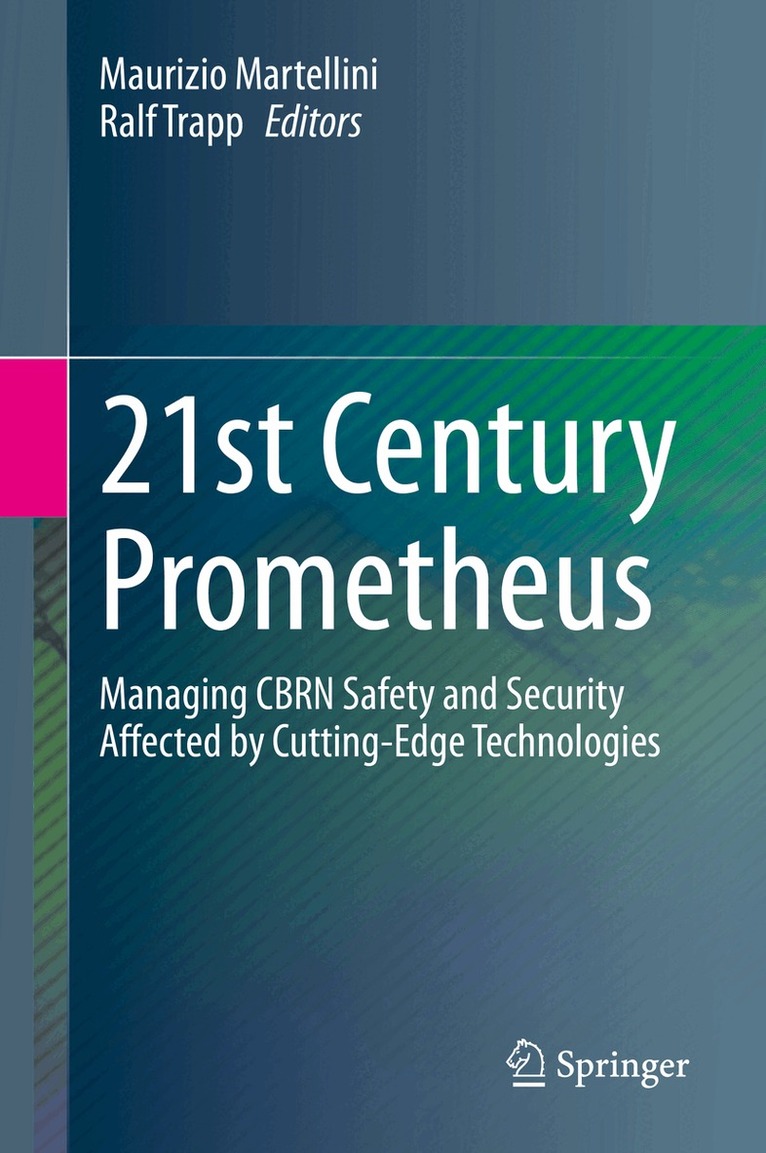
This book describes the evolving CBRN risk landscape and highlights advances in the “core” CBRN technologies, including when combined with (improvised) explosive devices (CBRNe threats). It analyses how associated technologies create new safety and security risks, challenging certain assumptions that underlie current control regimes. The book also shows how technologies can be enablers for more effective strategies to mitigate these risks.21st-century safety and security risks emanating from chemical, biological, radiological and nuclear materials – whether resulting from natural events, accidents or malevolent use - are increasingly shaped by technologies that enable their development, production or use in ways that differ from the past. Artificial intelligence, the use of cyberspace, the revolution in the life sciences, new manufacturing methods, new platforms and equipment for agent delivery, hypersonic weapons systems, information tools utilised in hybrid warfare – these and other technologies are reshaping the global security environment and CBRN landscape. They are leading to a growing potential for highly targeted violence, and they can lead to greater instability and vulnerability worldwide. At the same time, technology offers solutions to manage CBRN risks. Examples are faster detection, more accurate characterisation of the nature and origin of CBRN agents, new forensic investigation methods, or new medical treatments for victims of CBRN incidents. New educational concepts help to foster a culture of responsibility in science and technology and strengthen governance. New training methods help develop practical skills to manage CBRN risks more effectively.The book concludes that there is a growing need for a holistic framework towards CBRN risk mitigation. Traditional arms control mechanisms such as global, regional or bilateral treaties and export controls are still needed, as they provide a necessary legal and institutional framework. But laws and technology denial alone will not suffice, and institutional mechanisms can at times be weak. Given the pace of technological progress and the diffusion of critical knowledge, tools and materials, policymakers must accept that CBRN risks cannot be eliminated altogether. Instead, society has to learn to manage these risks and develop resilience against them. This requires a “softer”, broadly based multi-stakeholder approach involving governments, industry, the research and development communities, educators, and civil society. Furthermore, educating policymakers that cutting-edge technologies may seriously affect global strategic stability could create incentives for developing a more creative and contemporary arms control strategy that fosters cooperation rather than incremental polarisation.
E-bok
Engelska, 20201 672 kr
Läs direkt efter köp
This book describes the evolving CBRN risk landscape and highlights advances in the “core” CBRN technologies, including when combined with (improvised) explosive devices (CBRNe threats). It analyses how associated technologies create new safety and security risks, challenging certain assumptions that underlie current control regimes. The book also shows how technologies can be enablers for more effective strategies to mitigate these risks.21st-century safety and security risks emanating from chemical, biological, radiological and nuclear materials – whether resulting from natural events, accidents or malevolent use - are increasingly shaped by technologies that enable their development, production or use in ways that differ from the past. Artificial intelligence, the use of cyberspace, the revolution in the life sciences, new manufacturing methods, new platforms and equipment for agent delivery, hypersonic weapons systems, information tools utilised in hybrid warfare – these and other technologies are reshaping the global security environment and CBRN landscape. They are leading to a growing potential for highly targeted violence, and they can lead to greater instability and vulnerability worldwide. At the same time, technology offers solutions to manage CBRN risks. Examples are faster detection, more accurate characterisation of the nature and origin of CBRN agents, new forensic investigation methods, or new medical treatments for victims of CBRN incidents. New educational concepts help to foster a culture of responsibility in science and technology and strengthen governance. New training methods help develop practical skills to manage CBRN risks more effectively.The book concludes that there is a growing need for a holistic framework towards CBRN risk mitigation. Traditional arms control mechanisms such as global, regional or bilateral treaties and export controls are still needed, as they provide a necessary legal and institutional framework. But laws and technology denial alone will not suffice, and institutional mechanisms can at times be weak. Given the pace of technological progress and the diffusion of critical knowledge, tools and materials, policymakers must accept that CBRN risks cannot be eliminated altogether. Instead, society has to learn to manage these risks and develop resilience against them. This requires a “softer”, broadly based multi-stakeholder approach involving governments, industry, the research and development communities, educators, and civil society. Furthermore, educating policymakers that cutting-edge technologies may seriously affect global strategic stability could create incentives for developing a more creative and contemporary arms control strategy that fosters cooperation rather than incremental polarisation.
Häftad, Engelska, 2021
1 416 kr
Skickas inom 10-15 vardagar
This book describes the evolving CBRN risk landscape and highlights advances in the “core” CBRN technologies, including when combined with (improvised) explosive devices (CBRNe threats). It analyses how associated technologies create new safety and security risks, challenging certain assumptions that underlie current control regimes. The book also shows how technologies can be enablers for more effective strategies to mitigate these risks.21st-century safety and security risks emanating from chemical, biological, radiological and nuclear materials – whether resulting from natural events, accidents or malevolent use - are increasingly shaped by technologies that enable their development, production or use in ways that differ from the past. Artificial intelligence, the use of cyberspace, the revolution in the life sciences, new manufacturing methods, new platforms and equipment for agent delivery, hypersonic weapons systems, information tools utilised in hybrid warfare – these and other technologies are reshaping the global security environment and CBRN landscape. They are leading to a growing potential for highly targeted violence, and they can lead to greater instability and vulnerability worldwide. At the same time, technology offers solutions to manage CBRN risks. Examples are faster detection, more accurate characterisation of the nature and origin of CBRN agents, new forensic investigation methods, or new medical treatments for victims of CBRN incidents. New educational concepts help to foster a culture of responsibility in science and technology and strengthen governance. New training methods help develop practical skills to manage CBRN risks more effectively.The book concludes that there is a growing need for a holistic framework towards CBRN risk mitigation. Traditional arms control mechanisms such as global, regional or bilateral treaties and export controls are still needed, as they provide a necessary legal and institutional framework. But laws and technology denial alone will not suffice, and institutional mechanisms can at times be weak. Given the pace of technological progress and the diffusion of critical knowledge, tools and materials, policymakers must accept that CBRN risks cannot be eliminated altogether. Instead, society has to learn to manage these risks and develop resilience against them. This requires a “softer”, broadly based multi-stakeholder approach involving governments, industry, the research and development communities, educators, and civil society. Furthermore, educating policymakers that cutting-edge technologies may seriously affect global strategic stability could create incentives for developing a more creative and contemporary arms control strategy that fosters cooperation rather than incremental polarisation.
Del 1989 - Sitzungsberichte der Akademie der Wissenschaften der Ddr / N. Mathematik, Naturwissenschaften, Techn
Kontrolle Der Nichtproduktion Chemischer Waffen
Inbunden, Tyska, 1990
1 773 kr
Skickas inom 5-8 vardagar
E-bok
PDF, Tyska, 20221 410 kr
Läs direkt efter köp
Keine ausfuhrliche Beschreibung fur "e;Kontrolle der Nichtproduktion chemischer Waffen"e; verfugbar.
E-bok
PDF, Engelska, 20231 832 kr
Läs direkt efter köp
This Commentary on the verification provisions of the Chemical Weapons Convention builds on a previous publication by the same authors - A Commentary on the Chemical Weapons Convention (Kluwer 1994). It focuses on the verification regime established under the Convention and analyses the results of the preparatory phase as well as the practical experience gathered by the OPCW since the entry into force of the Chemical Weapons Convention in 1997. The book follows the methodological approach taken in the earlier publication - a paragraph by paragraph discussion of the text. It discusses those provisions which are relevant for the areas of verification where the OPCW has actually conducted inspections and thus acquired practical experience (i.e. routine inspections of chemical weapons and related facilities, and facilities related to the chemicals listed under Schedule 1 and 2). The book is intended to stimulate and enrich the debate on a number of practical as well as legal issues that have emerged during the practical implementation. It will be of interest to National Authorities and to diplomats following the implementation of the Chemical Weapons Convention, but also to practitioners in the chemical industry and related trade associations, international lawyers and political scientists - whether specialists or generalists, and the interested public.
E-bok
PDF, Engelska, 20237 177 kr
Läs direkt efter köp