Ralph W. Mathisen – författare
Visar alla böcker från författaren Ralph W. Mathisen. Handla med fri frakt och snabb leverans.
10 produkter
Law, Society, and Authority in Late Antiquity
E-bok, 2001
2492 kr
Lägg i varukorg
The sixteen papers in this volume investigate the links between law and society during Late Antiquity (260-640 CE). On the one hand, they consider how social changes such as the barbarian settlement and the rise of the Christian church resulted in the creation of new sources of legal authority, …
Law, Society, and Authority in Late Antiquity
Inbunden, 2001
3933 kr
Lägg i varukorg
The sixteen papers in this volume investigate the links between law and society during Late Antiquity (260-640 CE). On the one hand, they consider how social changes such as the barbarian settlement and the rise of the Christian church resulted in the creation of new sources of legal authority, …
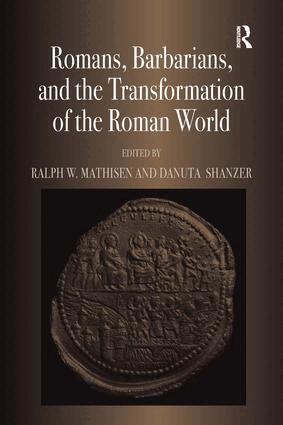
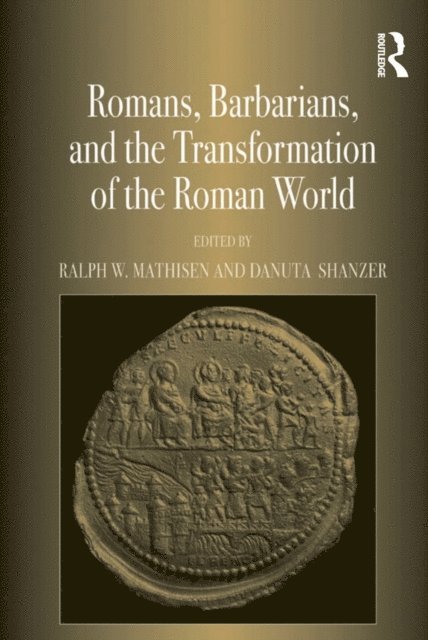
Romans, Barbarians, and the Transformation of the Roman World
Cultural Interaction and the Creation of Identity in Late Antiquity
Av Ralph W. Mathisen, Danuta Shanzer
Inbunden, 2011
3262 kr
Lägg i varukorg
One of the most significant transformations of the Roman world in Late Antiquity was the integration of barbarian peoples into the social, cultural, religious, and political milieu of the Mediterranean world. The nature of these transformations was considered at the sixth biennial Shifting …
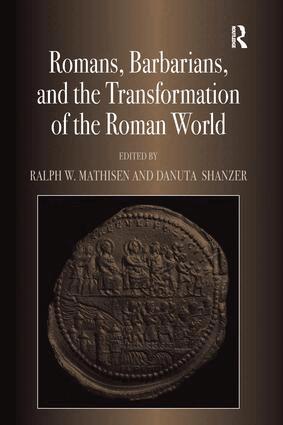
Romans, Barbarians, and the Transformation of the Roman World
Cultural Interaction and the Creation of Identity in Late Antiquity
Av Ralph W. Mathisen, Danuta Shanzer
Häftad, 2016
955 kr
Lägg i varukorg
One of the most significant transformations of the Roman world in Late Antiquity was the integration of barbarian peoples into the social, cultural, religious, and political milieu of the Mediterranean world. The nature of these transformations was considered at the sixth biennial Shifting …
Romans, Barbarians, and the Transformation of the Roman World
Cultural Interaction and the Creation of Identity in Late Antiquity
Av Danuta Shanzer, Ralph W. Mathisen
E-bok, 2016
1124 kr
Lägg i varukorg
One of the most significant transformations of the Roman world in Late Antiquity was the integration of barbarian peoples into the social, cultural, religious, and political milieu of the Mediterranean world. The nature of these transformations was considered at the sixth biennial Shifting …
Romans, Barbarians, and the Transformation of the Roman World
Cultural Interaction and the Creation of Identity in Late Antiquity
Av Danuta Shanzer, Ralph W. Mathisen
E-bok, 2016
1124 kr
Lägg i varukorg
One of the most significant transformations of the Roman world in Late Antiquity was the integration of barbarian peoples into the social, cultural, religious, and political milieu of the Mediterranean world. The nature of these transformations was considered at the sixth biennial Shifting …
Battle of Vouillé, 507 CE
Where France Began
Av Ralph W. Mathisen, Danuta Shanzer
Inbunden, 2012
1752 kr
Lägg i varukorg
This volume highlights the heretofore largely neglected Battle of Vouillé in 507 CE, when the Frankish King Clovis defeated Alaric II, the King of the Visigoths. Clovis’ victory proved a crucial step in the expulsion of the Visigoths from Francia into Spain, thereby leaving Gaul largely to the …
People, Personal Expression, and Social Relations in Late Antiquity, Volume I
With Translated Texts from Gaul and Western Europe
Inbunden, 2003
1234 kr
Tillfälligt slut
Late Antiquity, which lies between Classical Antiquity and the Middle Ages (ca. A.D. 250-750), heralded the gradual decline of Mediterranean classical civilization, and the initial formation of a strictly western European, Christian society. During this period, three momentous developments …
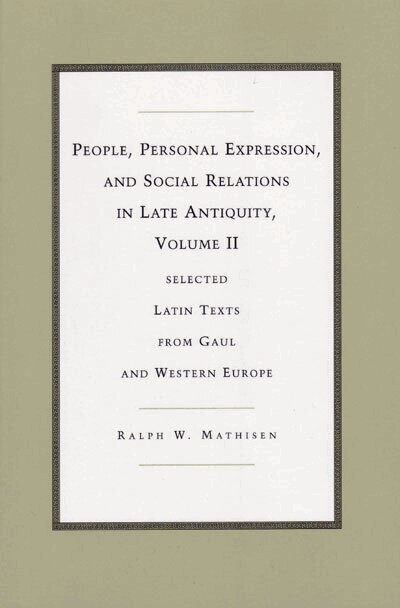
People, Personal Expression, and Social Relations in Late Antiquity, Volume II
Selected Latin Texts from Gaul and Western Europe
Inbunden, 2003
1234 kr
Tillfälligt slut
Late Antiquity, which lies between Classical Antiquity and the Middle Ages (ca. A.D. 250-750), heralded the gradual decline of Mediterranean classical civilization, and the initial formation of a strictly western European, Christian society. During this period, three momentous developments …