Ram B. Singh – författare
Visar alla böcker från författaren Ram B. Singh. Handla med fri frakt och snabb leverans.
7 produkter
The Role of Functional Food Security in Global Health
Av Ronald Ross Watson, Ram B. Singh m. fl.
Häftad, 2018
2011 kr
Lägg i varukorg
The Role of Functional Food Security in Global Health presents a collective approach to food security through the use of functional foods as a strategy to prevent under nutrition and related diseases. This approach reflects the views of the Food and Agriculture Organization of the United Nations, …
Role of Functional Food Security in Global Health
Av Toru Takahashi, Ram B. Singh m. fl.
E-bok, 2018
2842 kr
Lägg i varukorg
The Role of Functional Food Security in Global Health presents a collective approach to food security through the use of functional foods as a strategy to prevent under nutrition and related diseases. This approach reflects the views of the Food and Agriculture Organization of the United Nations, …
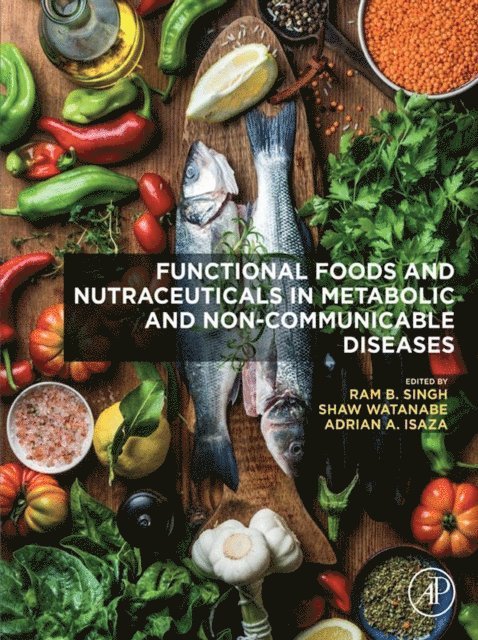
Functional Foods and Nutraceuticals in Metabolic and Non-communicable Diseases
Av Ram B. Singh
Häftad, 2021
2082 kr
Lägg i varukorg
Functional Foods and Nutraceuticals in Metabolic and Non-communicable Diseases presents strategies for the prevention of non-communicable diseases and undernutrition through the use of functional foods and nutraceuticals. Research has shown that the use of certain functional foods and …
Pathophysiology, Risk factors and Management of Chronic Heart Failure, Volume 2
Av Ram B. Singh, Jan Fedacko m. fl.
Häftad, 2024
1686 kr
Kommande
Pathophysiology, Risk factors and Management of Chronic Heart Failure, Volume 2 is the second of two separate but closely related volumes which aim to provide an inclusive overview on Chronic Heart Failure (CHF).This second volume is focused on the therapies of various kinds, management, guidelines …
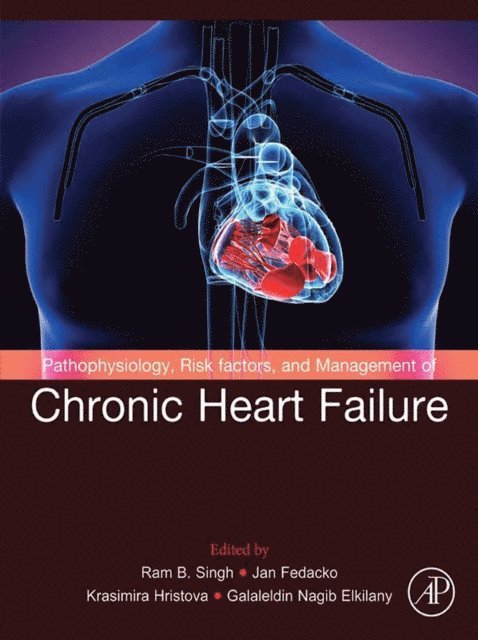
Pathophysiology, Risk Factors, and Management of Chronic Heart Failure
Av Ram B. Singh, Jan Fedacko m. fl.
Häftad, 2024
1686 kr
Lägg i varukorg
Chronic Heart Failure: Pathophysiology, Risk Factors, and Mechanisms aims to provide an inclusive overview on Chronic Heart Failure (CHF). This book is focused on the epidemiology, classification, molecular mechanisms, pathophysiology, causes, identification and interactions of heart failure. It …
Pathophysiology, Risk Factors, and Management of Chronic Heart Failure
Av Galal Eldin Nagib Elkilany, Krasimira Hristova m. fl.
E-bok, 2024
2329 kr
Lägg i varukorg
Chronic Heart Failure: Pathophysiology, Risk factors, and Mechanisms is the first of two separate but closely related volumes which aim to provide an inclusive overview on Chronic Heart Failure (CHF).This first volume is focused on the epidemiology, classification, molecular mechanisms, …
Functional Foods and Nutraceuticals in Metabolic and Non-communicable Diseases
Av Ram B. Singh
E-bok, 2021
2927 kr
Lägg i varukorg
Functional Foods and Nutraceuticals in Metabolic and Non-communicable Diseases presents strategies for the prevention of non-communicable diseases and undernutrition through the use of functional foods and nutraceuticals. Research has shown that the use of certain functional foods and …