Raman Sukumar - Böcker
Visar alla böcker från författaren Raman Sukumar. Handla med fri frakt och snabb leverans.
4 produkter
4 produkter
1 757 kr
Skickas inom 5-8 vardagar
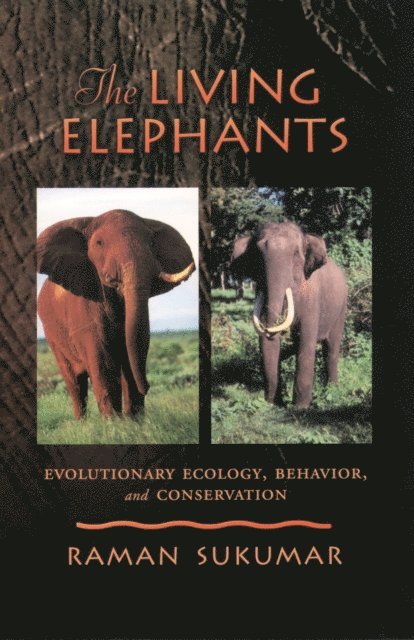
The Living Elephants is the authoritative resource for information on both Asian and African elephants. From the ancient origins of the proboscideans to the present-day crisis of the living elephants, this volume synthesizes the behavior, ecology and conservation of elephants, while covering also the history of human interactions with elephants, all within the theoretical framework of evolutionary biology. The book begins with a survey of the 60-million year evolutionary history of the proboscideans emphasizing the role of climate and vegetation change in giving rise to a bewildering array of species, but also discussing the possible role of humans in the late Pleistocene extinction of mastodonts and mammoths. The latest information on the molecular genetics of African and Asian elephants and its taxonomic implications are then presented. The rise of the elephant culture in Asia, and its early demise in Africa are traced along with an original interpretation of this unique animal-human relationship. The book then moves on to the social life of elephants as it relates to reproductive strategies of males and females, development of behavior in young, communication, ranging patterns, and societal organization. The foraging strategies of elephants, their impact on the vegetation and landscape are then discussed. The dynamics of elephant populations in relation to hunting for ivory and their population viability are described with the aid of mathematical models. A detailed account of elephant-human interactions includes a treatment of crop depredation by elephants in relation to their natural ecology, manslaughter by elephants, habitat manipulation by humans, and a history of the ivory trade and poaching in the two continents. The ecological information is brought together in the final chapter to formulate a set of pragmatic recommendations for the long-term conservation of elephants. The broadest treatment of the subject yet undertaken, by one of the leading workers in the field, Raman Sukumar, the book promises to bring the understanding of elephants to a new level. It should be of interest not only to biologists but also a broader audience including field ecologists, wildlife administrators, historians, conservationists and all those interested in elephants and their future.
706 kr
Kommande
1 932 kr
Skickas inom 5-8 vardagar
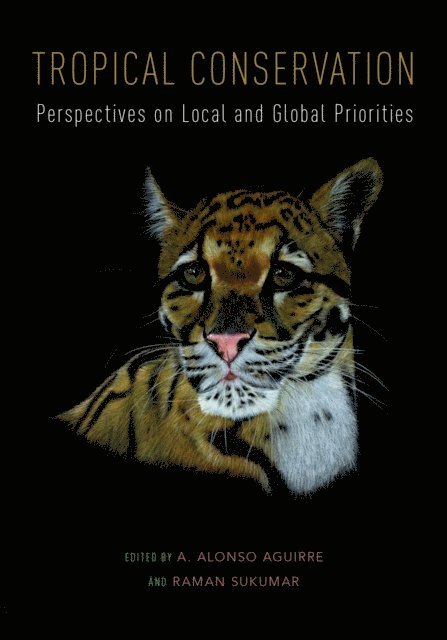
The tropics and subtropics are home to about 75% of the global human population. Cultural, economic, and political circumstances vary enormously across this vast geography of some 170 countries and territories. The regions not only harbor the world's poorest countries but their human populations are growing disproportionally faster than in temperate zones. Some countries are developing rapidly -- Brazil, China, India, and Mexico being obvious examples, while others still remain in the poverty trap.This region contains an astonishing proportion of global biodiversity; some 90% of plant and animal species by some measures. Its contribution to human well-being is astounding. It was the birthplace for our species; and it hosts a myriad of plant and animal species which products feed us, keep us healthy, and supply us with a variety of material goods. The tropics and subtropics are also a natural laboratory where some of humanity's most important scientific discoveries have been made. Such biodiversity has enormous implications for research priorities, capacity building, and policy to address the challenges of conserving this region.Tropical Conservation: Perspectives on Local and Global Priorities drew the majority of its contributors from this growing pool of scientists and practitioners working in Latin America, Africa, and Asia. It introduces important conservation concepts and illustrates their application as the authors directly capture real world experiences in their home countries in preventing biodiversity loss and sustaining ecological health. Today, no part of the world can be viewed in isolation, and we further codify and integrate a range of approaches for addressing global threats to nature and environmental sustainability, including climate change and emerging diseases. Five sections structure the major themes.
705 kr
Skickas inom 7-10 vardagar
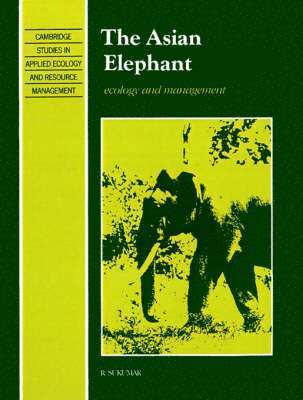
The Asian elephant has had a unique cultural association with people. Unfortunately, elephants and people have also been in conflict, resulting in the decline in elephants throughout their former range in Southern Asia. This book provides an ecological analysis of elephant-human interaction and its implication for the conservation of elephants. The foraging habits of elephants and their impact on vegetation are considered, along with the interactions that occur between elephants and humans. The ecological data provide the basis for recommendations on elephant conservation and management, keeping in view the socio-economic imperatives of the Asian region. This first comprehensive account of Asian elephant ecology will be of particular interest to conservation biologists and mammalogists.