Ramesh Jain - Böcker
Visar alla böcker från författaren Ramesh Jain. Handla med fri frakt och snabb leverans.
12 produkter
12 produkter
2 173 kr
Skickas inom 10-15 vardagar
Both the way we look at data, through a DBMS, and the nature of data we ask a DBMS to manage have drastically evolved over the last decade, moving from text to images (and to sound to a lesser extent). Visual representations are used extensively within new user interfaces. Powerful visual approaches are being experimented for data manipulation, including the investigation of three dimensional display techniques. Similarly, sophisticated data visualization techniques are dramatically improving the understanding of the information extracted from a database. On the other hand, more and more applications use images as basic data or to enhance the quality and richness of data manipulation services. Image management has opened a wide area of new research topics in image understanding and analysis. The IFIP 2.6 Working Group on Databases strongly believes that a significant mutual enrichment is possible by confronting ideas, concepts and techniques supporting the work of researcher and practitioners in the two areas of visual interfaces to DBMS and DBMS management of visual data. For this reason, IFIP 2.6 has launched a series of conferences on Visual Database Systems. The first one has been held in Tokyo, 1989. VDB-2 was held in Budapest, 1991. This conference is the third in the series. As the preceding editions, the conference addresses researchers and practitioners active or interested in user interfaces, human-computer communication, knowledge representation and management, image processing and understanding, multimedia database techniques and computer vision.
849 kr
Skickas inom 7-10 vardagar
Humans are the best functioning example of multimedia communication and computing - that is, we understand information and experiences through the unified perspective offered by our five senses. This innovative textbook presents emerging techniques in multimedia computing from an experiential perspective in which each medium - audio, images, text, and so on - is a strong component of the complete, integrated exchange of information or experience. The authors' goal is to present current techniques in computing and communication that will lead to the development of a unified and holistic approach to computing using heterogeneous data sources. Gerald Friedland and Ramesh Jain introduce the fundamentals of multimedia computing, describing the properties of perceptually encoded information, presenting common algorithms and concepts for handling it, and outlining the typical requirements for emerging applications that use multifarious information sources. Designed for advanced undergraduate and beginning graduate courses, the book will also serve as an introduction for engineers and researchers interested in understanding the elements of multimedia and their role in building specific applications.
554 kr
Skickas inom 10-15 vardagar
Motion-based recognition deals with the recognition of an object and/or its motion, based on motion in a series of images. In this approach, a sequence containing a large number of frames is used to extract motion information. The advantage is that a longer sequence leads to recognition of higher level motions, like walking or running, which consist of a complex and co-ordinated series of events. Unlike much previous research in motion, this approach does not require explicit reconstruction of shape from the images prior to recognition. This book provides a state-of-the-art study of this rapidly developing discipline. It consists of a collection of invited chapters by researchers throughout the world covering various aspects of motion-based recognition including lipreading, gesture recognition, facial expression recognition, gait analysis, cyclic motion detection, and activity recognition. This volume should be of interest to researchers and postgraduate students whose work involves computer vision, robotics and image processing.
565 kr
Skickas inom 7-10 vardagar
This book introduces the concept of Event Mining for building explanatory models from analyses of correlated data. Such a model may be used as the basis for predictions and corrective actions. The idea is to create, via an iterative process, a model that explains causal relationships in the form of structural and temporal patterns in the data. The first phase is the data-driven process of hypothesis formation, requiring the analysis of large amounts of data to find strong candidate hypotheses. The second phase is hypothesis testing, wherein a domain expert's knowledge and judgment is used to test and modify the candidate hypotheses.The book is intended as a primer on Event Mining for data-enthusiasts and information professionals interested in employing these event-based data analysis techniques in diverse applications. The reader is introduced to frameworks for temporal knowledge representation and reasoning, as well as temporal data mining and pattern discovery. Also discussed are the design principles of event mining systems. The approach is reified by the presentation of an event mining system called EventMiner, a computational framework for building explanatory models. The book contains case studies of using EventMiner in asthma risk management and an architecture for the objective self. The text can be used by researchers interested in harnessing the value of heterogeneous big data for designing explanatory event-based models in diverse application areas such as healthcare, biological data analytics, predictive maintenance of systems, computer networks, and business intelligence.
347 kr
Skickas inom 7-10 vardagar
This book introduces the concept of Event Mining for building explanatory models from analyses of correlated data. Such a model may be used as the basis for predictions and corrective actions. The idea is to create, via an iterative process, a model that explains causal relationships in the form of structural and temporal patterns in the data. The first phase is the data-driven process of hypothesis formation, requiring the analysis of large amounts of data to find strong candidate hypotheses. The second phase is hypothesis testing, wherein a domain expert's knowledge and judgment is used to test and modify the candidate hypotheses.The book is intended as a primer on Event Mining for data-enthusiasts and information professionals interested in employing these event-based data analysis techniques in diverse applications. The reader is introduced to frameworks for temporal knowledge representation and reasoning, as well as temporal data mining and pattern discovery. Also discussed are the design principles of event mining systems. The approach is reified by the presentation of an event mining system called EventMiner, a computational framework for building explanatory models. The book contains case studies of using EventMiner in asthma risk management and an architecture for the objective self. The text can be used by researchers interested in harnessing the value of heterogeneous big data for designing explanatory event-based models in diverse application areas such as healthcare, biological data analytics, predictive maintenance of systems, computer networks, and business intelligence.
630 kr
Skickas inom 5-8 vardagar
2 173 kr
Skickas inom 10-15 vardagar
Both the way we look at data, through a DBMS, and the nature of data we ask a DBMS to manage have drastically evolved over the last decade, moving from text to images (and to sound to a lesser extent). Visual representations are used extensively within new user interfaces. Powerful visual approaches are being experimented for data manipulation, including the investigation of three dimensional display techniques. Similarly, sophisticated data visualization techniques are dramatically improving the understanding of the information extracted from a database. On the other hand, more and more applications use images as basic data or to enhance the quality and richness of data manipulation services. Image management has opened a wide area of new research topics in image understanding and analysis. The IFIP 2.6 Working Group on Databases strongly believes that a significant mutual enrichment is possible by confronting ideas, concepts and techniques supporting the work of researcher and practitioners in the two areas of visual interfaces to DBMS and DBMS management of visual data. For this reason, IFIP 2.6 has launched a series of conferences on Visual Database Systems. The first one has been held in Tokyo, 1989. VDB-2 was held in Budapest, 1991. This conference is the third in the series. As the preceding editions, the conference addresses researchers and practitioners active or interested in user interfaces, human-computer communication, knowledge representation and management, image processing and understanding, multimedia database techniques and computer vision.
368 kr
Skickas inom 10-15 vardagar
Table of Contents: Introduction / Event Data Models / Implementing an Event Data Model / Querying Events / Storytelling with Events / An Emerging Application / Conclusion
554 kr
Skickas inom 10-15 vardagar
This book presents a framework for converting multitudes of data streams available today including weather patterns, stock prices, social media, traffic information, and disease incidents into actionable insights based on situation recognition. It computationally defines the notion of situations as an abstraction of millions of data points into actionable insights, describes a computational framework to model and evaluate such situations and presents an open-source web-based system called EventShop to implement them without necessitating programming expertise.The book is useful for both practitioners and researchers working in the field of situation-aware computing. It acts as a primer for data-enthusiasts and information professionals interested in harnessing the value of heterogeneous big data for building diverse situation-based applications. It also can be used as a reference text by researchers working in areas as varied as database design, multimodel concept recognition, and middle-ware and ubiquitous computing to design and develop frameworks that allow users to create their own situation recognition frameworks.
554 kr
Skickas inom 10-15 vardagar
This book presents a framework for converting multitudes of data streams available today including weather patterns, stock prices, social media, traffic information, and disease incidents into actionable insights based on situation recognition.
554 kr
Skickas inom 10-15 vardagar
Motion-based recognition deals with the recognition of an object and/or its motion, based on motion in a series of images. In this approach, a sequence containing a large number of frames is used to extract motion information. The advantage is that a longer sequence leads to recognition of higher level motions, like walking or running, which consist of a complex and coordinated series of events. Unlike much previous research in motion, this approach does not require explicit reconstruction of shape from the images prior to recognition. This book provides the state-of-the-art in this rapidly developing discipline. It consists of a collection of invited chapters by leading researchers in the world covering various aspects of motion-based recognition including lipreading, gesture recognition, facial expression recognition, gait analysis, cyclic motion detection, and activity recognition. Audience: This volume will be of interest to researchers and post- graduate students whose work involves computer vision, robotics and image processing.
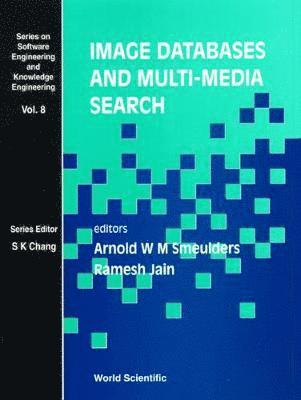
Del 8 - Series On Software Engineering And Knowledge Engineering
Image Databases And Multi-media Search
Inbunden, Engelska, 1998
1 879 kr
Tillfälligt slut
The World Wide Web and the Internet are signs that things will be very different in the future. And what is so striking about this computer-age future is that it comes incredibly fast and is incredibly overwhelming. Anyone who has surfed the Web has exclaimed at one point or another that there is so much information available, so much to search and so much to keep up with.Where Lycos and AltaVista are already accepted tools for textual information, image and multimedia search engines are the natural answers in the quest for pictorial information. This book provides a state-of-the-art description of that field. It contains the proceedings of a valuable workshop in Amsterdam, where people gathered to discuss the progress in the field. The topics cover computational methods of searching for pictures, the powerful pictorial clues in the recognition of objects, storage and indexing of objects in a database, and, ways to access the requested pictorial information.